
Messieurs les noyés de la Seine
French-language chanson performed by Belgian singer Fud Leclerc; Belgium's entry at the inaugural Eurovision Song Contest in 1956, noted for its melancholic river imagery and place in early contest history.
Overview
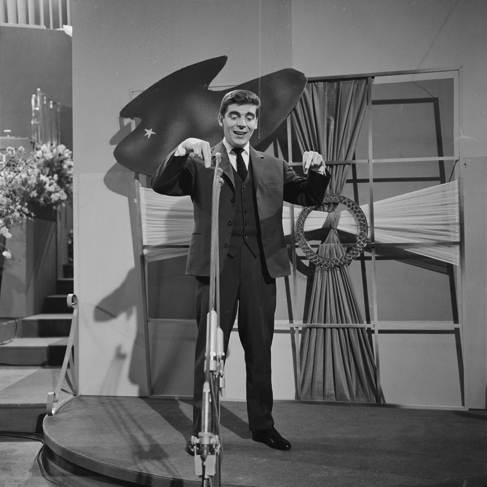
"Messieurs les noyés de la Seine" (French for "Drowned men of the Seine") is a French-language song written by Robert Montal, Jean Miret and Jacques Say and performed by Belgian singer Fud Leclerc. It was one of Belgium's entries at the first Eurovision Song Contest held in 1956. The piece belongs to the mid‑century francophone chanson tradition and is characterised by a sombre, narrative lyric that uses the Seine river as a central image.
Image gallery
2 Images
Composition and lyrical theme
The song follows chanson conventions of the period, favouring storytelling and vocal expression over contemporary pop hooks. Its lyrics evoke scenes of the Seine and those who have perished in its waters, treating the river as a symbol of loss, memory and aspects of urban life. Musically, arrangements of the era tended to be restrained, with orchestral or acoustic backing that foregrounded the singer's delivery and the text.
Performance at Eurovision 1956
Fud Leclerc performed the song at the inaugural Eurovision Song Contest in Lugano, Switzerland. The first contest allowed each participating country to submit two songs, and only the winner was publicly announced, so detailed rankings for many entries were not published. The 1956 contest is notable for establishing a pan‑European broadcast format and for featuring a diverse selection of national styles, including chanson from francophone countries.
Reception and legacy
Although not among the best‑known Eurovision entries today, "Messieurs les noyés de la Seine" has interest for historians of popular song and of the contest's early years. Recordings and archival broadcasts occasionally surface on collector sites and in media retrospectives. The song illustrates how the contest initially accommodated a range of musical traditions and how lyric‑driven chanson represented French‑language culture on the European stage.
Recordings and availability
Original 1950s recordings, if preserved, are most likely held by radio and television archives or by private collectors. Discography listings and digitised transfers may appear in collections devoted to early Eurovision material or to postwar francophone popular music. Researchers and fans consult such sources to study performance style, orchestration and historical context.
Credits and further information
- The English rendering of the title is commonly given as "Drowned men of the Seine".
- Songwriting and credit details are noted in music reference listings and archival documentation: see lyrics and credits.
- Audio and discographic references for the recording are available through collector databases and archive catalogues: recording references.
- Biographical information on the performer Fud Leclerc and his career appears in artist overviews and contest retrospectives: Fud Leclerc.
- Contextual information about the 1956 Eurovision Song Contest, its format and participating entries can be found in historical summaries and contest databases: Eurovision 1956 details.
As with many early popular recordings, cautious verification is advisable when consulting secondary sources. Where original broadcasts or pressings survive, they provide the clearest evidence of performance practice and arrangement choices for songs such as "Messieurs les noyés de la Seine." The entry remains a compact example of mid‑twentieth century francophone songwriting presented on an international stage.
Questions and answers
Q: What is "Messieurs les noyés de la Seine"?
A: "Messieurs les noyés de la Seine" is a song by Belgian singer Fud Leclerc.
Q: Who wrote "Messieurs les noyés de la Seine"?
A: "Messieurs les noyés de la Seine" was written by Robert Montal, Jean Miret, and Jacques Say.
Q: In which year did "Messieurs les noyés de la Seine" represent Belgium in the Eurovision Song Contest?
A: "Messieurs les noyés de la Seine" represented Belgium in the Eurovision Song Contest in 1956.
Q: What does "Messieurs les noyés de la Seine" mean in English?
A: "Messieurs les noyés de la Seine" means "Drowned men of the Seine" in English.
Q: Who was the singer of "Messieurs les noyés de la Seine"?
A: The singer of "Messieurs les noyés de la Seine" was Belgian singer Fud Leclerc.
Q: How many people wrote "Messieurs les noyés de la Seine"?
A: Three people wrote "Messieurs les noyés de la Seine": Robert Montal, Jean Miret, and Jacques Say.
Q: What was the role of "Messieurs les noyés de la Seine" in the Eurovision Song Contest?
A: "Messieurs les noyés de la Seine" represented Belgium in the Eurovision Song Contest in 1956.
Related articles
Author
AlegsaOnline.com Messieurs les noyés de la Seine Leandro Alegsa
URL: https://en.alegsaonline.com/art/64130
Sources
- eurovision.tv : "Final of Lugano 1956" · web.archive.org
- eurovision.tv : "Fud Leclerc - Belgium — Lugano 1956" · web.archive.org
- esc-history.com : "Belgium 1956"
- andtheconductoris.eu : "Léo Souris"
- eurovision.tv : "Lugano 1956" · web.archive.org