
Mergoscia (Ticino, Switzerland)
Mergoscia is an Italian-speaking mountain municipality above Lago di Vogorno in the Verzasca valley, canton Ticino. It is known for terraced slopes, traditional stone houses and hiking access.
Overview
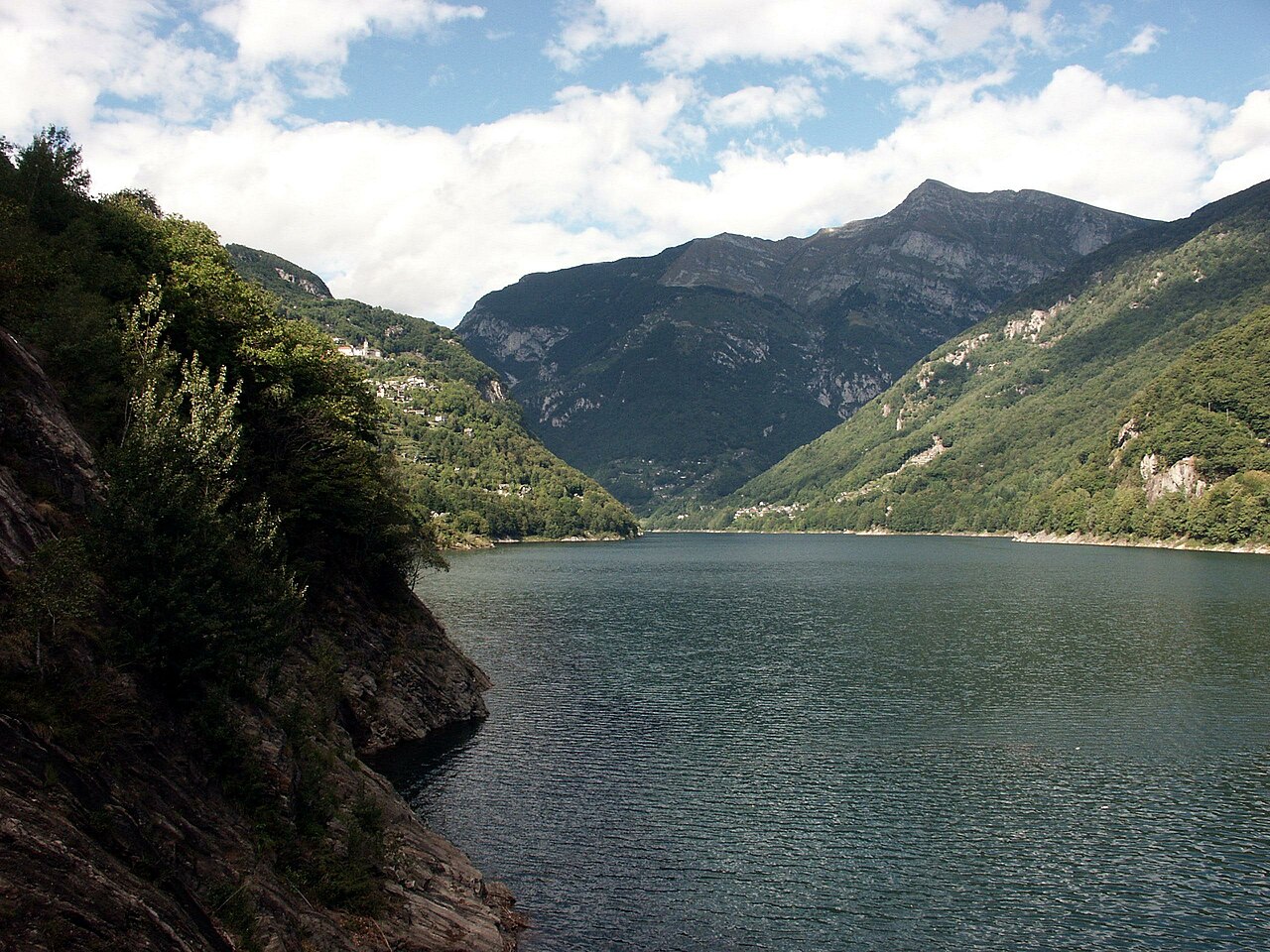
Mergoscia is a small municipality of the district of Locarno in the canton of Ticino in Switzerland. The village sits on a sunny slope above the reservoir formed by the Verzasca river and overlooks Lago di Vogorno. Italian is the dominant language and the settlement retains the character of a traditional mountain village with narrow lanes, compact stone houses and panoramic views across the valley.
Image gallery
7 Images


Geography and setting
Perched above the Verzasca valley, Mergoscia occupies steep, terraced terrain that shows long-standing human adaptation to a mountain environment. Dry-stone walls, chestnut groves and small cultivated plots are typical of the landscape. From the village one finds paths that descend towards the valley floor and viewpoints that offer wide vistas of the surrounding ridges and the blue surface of the reservoir below.
History and architecture
The village developed over centuries as a rural community linked to agriculture, forestry and seasonal migration. Built heritage includes compact stone houses, wooden balconies and covered passageways that reflect traditional Ticinese building methods. Many houses and farm terraces illustrate techniques used to make steep slopes productive and to protect against erosion.
Economy and local life
Historically based on subsistence agriculture, chestnut cultivation and livestock grazing, the local economy today combines small-scale farming with crafts, services and limited visitor accommodation. Everyday life in Mergoscia follows seasonal rhythms and local associations play an active role in maintaining communal spaces and cultural traditions.
Access, recreation and tourism
Mergoscia is reached by a local road from the valley and by a network of footpaths that attract hikers and nature enthusiasts. The area is popular for walking, photography and quiet exploration of rural architecture rather than intensive mass tourism. The proximity of the Verzasca valley and the reservoir makes the village a convenient base for day hikes and excursions.
Conservation and visitor guidance
Conservation of terraces, stone walls and traditional buildings is important for local identity and landscape quality. Visitors are encouraged to follow marked trails, respect private property and support local services. Information about facilities and rules for protected areas can usually be found through cantonal or municipal sources.
Further information
Related articles
Author
AlegsaOnline.com Mergoscia (Ticino, Switzerland) Leandro Alegsa
URL: https://en.alegsaonline.com/art/63962
Sources
- bfs.admin.ch : "Arealstatistik Standard - Gemeinden nach 4 Hauptbereichen"
- bfs.admin.ch : "Ständige Wohnbevölkerung nach Staatsangehörigkeitskategorie Geschlecht und Gemeinde; Provisorische Jahresergebnisse; 2018"
- commons.wikimedia.org : Mergoscia