
Mellophone
A mid-range brass instrument commonly used in marching bands as a forward-projecting substitute for the French horn; described here by design, history, uses, and variants.
Overview
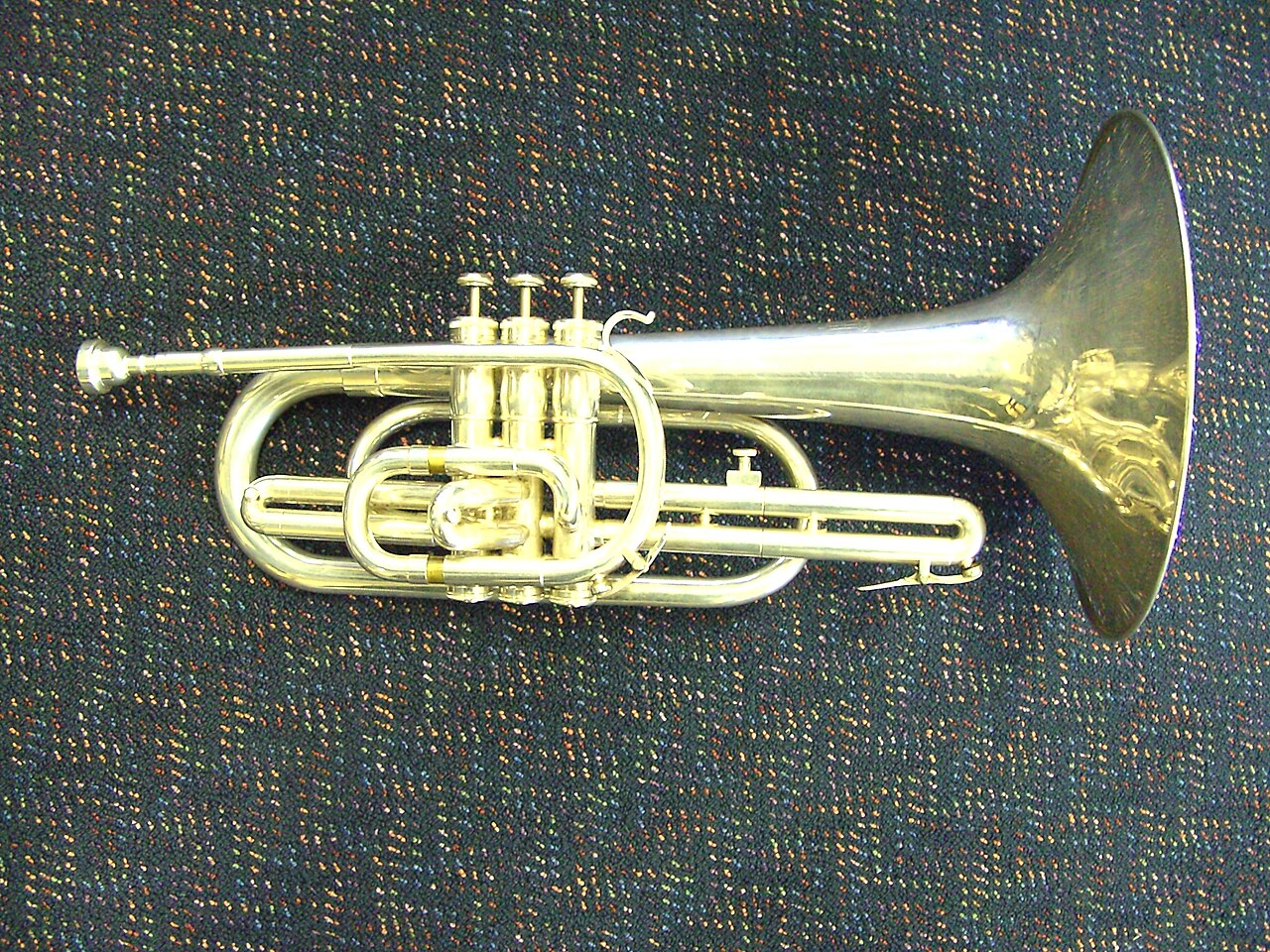
The mellophone is a brass instrument occupying a middle register between the trumpet and the French horn. It is widely used as a marching-band or drum-corps alternative to the orchestral horn because its forward-facing bell and compact wrap make it easier to carry and hear on the field. Although it aims to reproduce something of the horn's timbre, the mellophone's sound and playing technique have distinct habits and demands.
Image gallery
5 Images



Design and key characteristics
Visually the mellophone resembles a large trumpet with additional tubing and a much bigger bell. Most modern instruments have three valves (piston or rotary) and a conical bore that helps produce a warmer tone than a trumpet. Players may use mouthpieces closer to a horn or to a cornet/trumpet depending on desired response and ensemble blending. The bell points forward to project sound toward audiences and microphones, which is especially useful outdoors.
History and development
The mellophone evolved as bands and corps sought a practical way to represent horn parts where the French horn's rear-facing bell and complex wrap were impractical. Throughout the 19th and 20th centuries, instrument makers experimented with several bore sizes, bell shapes and valve configurations to balance playability, tone and projection. The instrument established itself in marching and popular-music contexts rather than the symphony orchestra.
Uses and examples
Mellophones are most commonly heard in marching bands, drum corps and other outdoor ensembles. They often replace French horn parts to retain mid-range harmony and melodic lines while ensuring adequate projection. Solo repertoire is limited compared with horn literature, but arrangers frequently adapt horn material. In some studio or pop settings a mellophone or mellophonium has been used for its distinctive tonal color.
Variants and comparisons
- Marching mellophone: built for durability and forward projection; frequently used in marching ensembles.
- Concert/valved horn substitutes: some models aim for closer timbral match to the horn and may use different mouthpieces or bore dimensions.
- Mellophonium and related instruments: historically linked designs with different tuning or bore choices sought to bridge horn and brass choir roles.
Compared with the trumpet, the mellophone has a wider, more conical tubing and a larger bell, producing a darker, less brassy sound. Compared with the French horn it sacrifices some of the horn's complex overtone richness but gains direct projection and easier intonation in a marching context.
Related articles
Author
AlegsaOnline.com Mellophone Leandro Alegsa
URL: https://en.alegsaonline.com/art/63679