
Artificial turf (synthetic grass)
Artificial turf is a man-made surface designed to resemble natural grass. Widely used for sports, landscaping and commercial sites, it reduces watering and mowing but raises environmental, heat, and wear concerns.
Overview
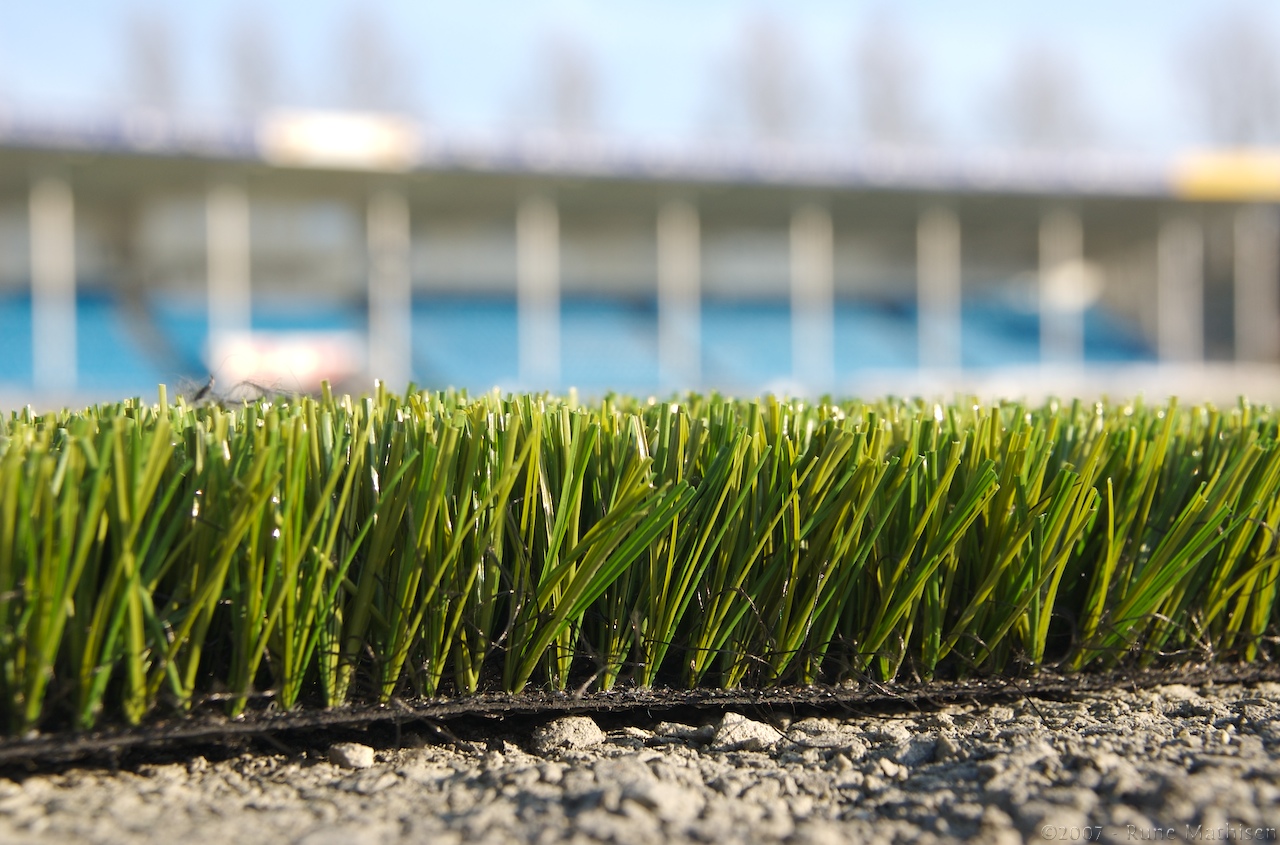
Artificial turf, also called synthetic turf or artificial grass, is a manufactured surface intended to simulate the appearance and basic functions of natural grass. It is constructed from polymer fibers and backing materials that are fixed to a stable base, often with some kind of infill to support the fibers. Artificial turf is used where maintaining live turf is difficult or costly, including sports stadiums, playgrounds, rooftops, and private lawns. Designers seek to balance visual similarity to grass with durability, drainage, and safety.
Image gallery
10 Images


Construction and types
Modern systems vary in fiber composition and installation technique. The main components are a textile face, a backing that anchors the fibers, infill material placed between fibers, and a prepared subbase for drainage and stability. Common fiber polymers include polyethylene and polypropylene; some systems use synthetic materials blended or texturized to resemble blades. Infill options range from sand and crumb rubber to organic materials such as cork or coconut husk. Variations are often described in generations: earlier short-pile systems, mid-era sand/rubber-infilled systems, and contemporary long-pile or stitched systems designed for improved cushioning and play characteristics.
History and development
The first high-profile installation of artificial grass occurred in the 1960s when a synthetic surface was placed in a major indoor stadium after natural grass failed to thrive under dome conditions. The early products were marketed under trade names that became widely recognized. Since that time the technology has evolved from a hard, short-pile carpet to more sophisticated systems that try to replicate turf resilience, ball behavior, and athlete comfort. Research and product cycles have focused on reducing heat, improving shock absorption, and addressing environmental concerns.
Uses and maintenance
Artificial turf is most commonly associated with sports fields — including football, soccer, baseball, and field hockey — because it offers a consistent playing surface and withstands heavy use. It is also installed in residential lawns, commercial landscaping, playgrounds, and on terraces. Typical maintenance tasks differ from natural grass: debris removal, occasional power brushing to keep fibers upright, topping up infill, seam inspection and repair, and periodic sanitizing. While watering and mowing are not required, surface cleaning and infill management remain important for performance and hygiene.
Advantages and disadvantages
- Advantages: lower irrigation needs, predictable surface performance, extended usability in adverse weather, and reduced routine mowing.
- Disadvantages: limited service life compared with well-maintained natural grass, potential for higher surface temperatures, disposal or recycling challenges at end of life, and the need for specialized repairs.
Environmental, safety and regulatory issues
Artificial turf raises several environmental and health considerations. Runoff and microplastic shedding from infill and fibers can affect local drainage and ecosystems; some infill materials have prompted assessment for chemical contaminants. Surface temperatures can exceed ambient air temperature substantially on sunny days, creating heat stress concerns for players. Because of these issues, some jurisdictions and buyers evaluate alternatives such as organic infill, increased shading, or hybrid systems that combine natural grass with synthetic reinforcement. Guidance on safe installation, maintenance, and end-of-life disposal continues to evolve as manufacturers and regulators collect more data.
Distinctions and notable facts
Artificial turf should not be confused with hybrid turf systems that integrate live grass with synthetic reinforcement to improve wear tolerance. When researching products or projects, compare fiber type, pile height, infill composition, warranty and maintenance requirements. For historical background and product examples, see references and manufacturer material; for sports-specific standards consult governing bodies that set performance and safety criteria for playing surfaces. For general information about applications beyond sports, such as landscaping or rooftop systems, consult installation guides and local codes for drainage and fire performance.
Further reading: materials and composition overview, sports field considerations, and residential and commercial applications.
Related articles
Author
AlegsaOnline.com Artificial turf (synthetic grass) Leandro Alegsa
URL: https://en.alegsaonline.com/art/6357