
Matthias Sindelar — Austrian footballer and icon of the Wunderteam
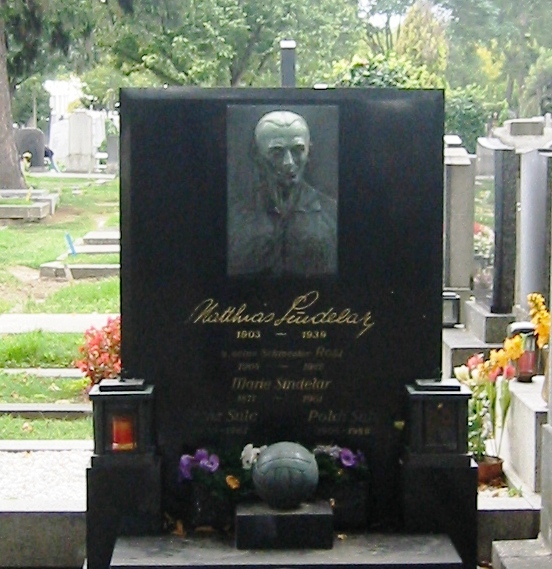
Matthias Sindelar (1903–1939) was an influential Austrian footballer nicknamed the “Mozart of football.” A creative forward for Austria’s 1930s national side, his elegant play and mysterious death made him a national legend.
Overview
Matthias Sindelar (born 10 February 1903 — died 23 January 1939) is remembered as one of Austria’s most gifted footballers. Often called the "Mozart of football" and "Der Papierene" (the Paperman) because of his slender build and graceful movement, Sindelar combined creativity and technical skill to become the public face of Austrian football in the early 1930s. He starred for the national side and drew admiration across Europe for his vision and ball control.
Image gallery
4 Images


Playing style and career
Sindelar played primarily as a creative forward and deep-lying centre forward, a role that let him orchestrate attacks as much as finish them. He was noted for delicate dribbling, a subtle sense of timing, intelligent movement between the lines, and an emphasis on technique over physical force. These qualities earned him enduring nicknames and the reputation of an artist on the pitch.
At international level he represented the Austria national team, appearing regularly during the era of the so-called Wunderteam. His club career unfolded in Vienna, where his performances made him a household name and a central figure in Austria’s footballing renaissance of the interwar years.
Historical context and later life
Sindelar’s peak coincided with a golden period for Austrian football under progressive coaching and tactical innovation. That team played an influential style that attracted attention beyond Austria’s borders. The political upheavals of the late 1930s — including the Anschluss of 1938 — affected Austrian sport as well as society, and Sindelar’s life and final years were touched by those events.
He died suddenly in January 1939. The official cause recorded was carbon monoxide poisoning, but the circumstances of his death, and his reputed responses to offers to play for the German team after annexation, have led to speculation and debate. Because some details remain unresolved and have been variously interpreted, accounts often treat theories cautiously rather than as established fact.
Legacy and recognition
Sindelar’s influence on Austrian football has endured. He is frequently cited among the nation’s greatest players and was selected in Austria’s "Team of the Century" by later generations seeking to honor the country’s best performers. Beyond statistics, his legacy is cultural: journalists, fans and historians point to his elegant style as emblematic of an earlier, celebrated era of the game.
- Nicknames: "Mozart of football" and Der Papierene (the Paperman).
- Birth and death: 10 February 1903 — 23 January 1939.
- Nationality: Austrian.
- Profession: football player and national team icon.
- National team: represented the Austria national team during its celebrated 1930s period.
For readers interested in further study, contemporary match reports, period biographies and museum displays on interwar Austrian sport explore Sindelar’s playing methods and the cultural meanings attached to his life and death. His name remains a touchstone in discussions of football as both athletic competition and cultural expression.
Related articles
Author
AlegsaOnline.com Matthias Sindelar — Austrian footballer and icon of the Wunderteam Leandro Alegsa
URL: https://en.alegsaonline.com/art/62903
Sources
- rsssf.com : rsssf.com/miscellaneous/unb-italy-19.html
- rsssf.com : rsssf.com/miscellaneous/ital-recintlp.html
- austriasoccer.at : austriasoccer.at/LSP/1930_39/1937/s1937_02.htm
- rsssf.com : Austria - Record International Players
- rsssf.com : "Matthias Sindelar - International Goals"