
Arthit Kamlang-ek
Thai army leader (1925–2015) who served as Commander-in-Chief of the Royal Thai Army (1982–1986) and Supreme Commander of the Royal Thai Armed Forces (1983–1986).
Arthit Kamlang-ek (Thai: อาทิตย์ กำลังเอก, pronounced [ʔaːtʰít kamlaŋʔèːk]; 31 August 1925 – 19 January 2015) was a senior Thai military officer who held two of the kingdom's top armed forces posts in the early 1980s. He is best known for serving as Commander-in-Chief of the Royal Thai Army from 1982 to 1986 and as Supreme Commander of the Royal Thai Armed Forces from 1983 to 1986. Contemporary descriptions identify him simply as a career general with a significant public profile.
Image gallery
3 Images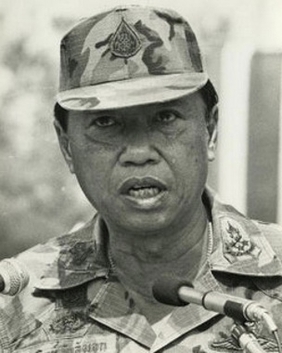


Roles and responsibilities
As Commander-in-Chief of the Royal Thai Army, Arthit led the kingdom's largest military branch and directed army policies, personnel assignments, and operations. The office of Supreme Commander, which he held concurrently for part of his tenure, is charged with coordinating among the army, navy and air force and advising civilian leaders on national defence matters. Holding both posts placed him near the center of Thailand's defence establishment and public security decision-making during his term.
Historical context
Arthit's period in senior command coincided with a complex era for Thailand and Southeast Asia. The early 1980s remained influenced by Cold War geopolitics, regional insurgencies and transitions toward more stable civilian governance in some countries. Within Thailand, the military continued to be an important institution in politics and national security. His leadership years are often referenced in studies of the Thai armed forces' organization and civil–military relations during that decade.
Notable aspects and legacy
- Tenure dates: Army Commander-in-Chief (1982–1986); Supreme Commander (1983–1986).
- Public profile: Held high visibility as a senior military figure and adviser to government officials.
- Retirement and death: He left active service in the mid-1980s and died on 19 January 2015 at age 89.
Assessments of Arthit's long-term legacy vary: military historians note his role in directing the army during a transitional era, while analysts of Thai politics view his career as part of a broader pattern in which senior military officers occupied influential national roles. For more detail on Thai military ranks, institutions and the period in which he served, see general reference works and specialised studies on Thailand's political history and armed forces.
Further reading and reference links: Thai name and script, military rank context, Royal Thai Army overview, Royal Thai Armed Forces structure.
Related articles
Author
AlegsaOnline.com Arthit Kamlang-ek Leandro Alegsa
URL: https://en.alegsaonline.com/art/6259