
Mario Pinball Land
Mario Pinball Land is a 2004 pinball-action game for the Game Boy Advance by Fuse Games and published by Nintendo, combining traditional pinball mechanics with Mario-themed levels and objectives.
Overview
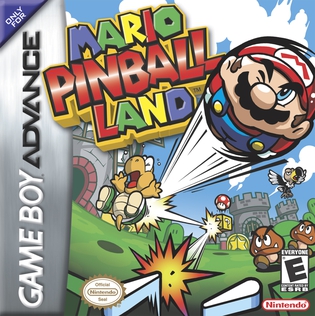
Mario Pinball Land is a pinball-style action game built around characters and locations from Nintendo's Mario franchise. It was developed by Fuse Games and released for the Game Boy Advance. Nintendo served as the publisher. The title adapts familiar pinball elements—flippers, bumpers and ramps—to a portable, level-based structure that places the player in control of a rolling Mario rather than a standard steel ball. For more background on the developer, see Fuse Games, and for publisher information visit Nintendo.
Image gallery
2 Images
Gameplay and mechanics
The game blends classic pinball physics with platforming and exploration. Players operate flippers to keep Mario in play while navigating themed tables that act like short stages. Progression typically requires hitting targets, activating switches, and reaching specific zones to open a path to the next area or a boss encounter.
- Pinball basics: flippers, bumpers, ramps and spinners.
- Stage objectives: clear targets, unlock gates, reach boss rooms.
- Character touches: Mario serves as the ball and can transform when needed for specific tasks.
For a concise classification of the game's genre and features, consult the game's profile entry.
Development and release
Developed during the early 2000s, the project aimed to bring pinball gameplay into the Mario universe on a handheld platform. The game reached Japanese stores on August 26, 2004 (Japan release), was released in North America on October 4, 2004 (North America release), and appeared in Europe on November 26, 2004 (Europe release).
Reception and legacy
Reviews were mixed: critics often praised the inventive premise and faithful Mario presentation but noted limitations stemming from the GBA hardware and control or camera challenges that affected precision play. Despite varied critical response, the title is remembered as an unusual Mario spin-off that experimented with merging two distinct gameplay traditions.
Notable features and distinctions
The game stands out for applying franchise characters and level themes to pinball design, producing a compact, table-like-level progression rather than endless arcade play. Its blend of exploration, simple puzzles and pinball physics provides a different kind of Mario experience aimed at handheld play sessions and collectors of franchise curiosities.
Related articles
Author
AlegsaOnline.com Mario Pinball Land Leandro Alegsa
URL: https://en.alegsaonline.com/art/61999