
Madre de Dios Region, Peru: Amazon rainforest, rivers, and conservation
Madre de Dios is a southeastern Peruvian region in the Amazon Basin, centered on Puerto Maldonado. Known for high biodiversity, rivers, national parks, ecotourism and pressures from gold mining and deforestation.
Madre de Dios is a region of Peru situated in the southeastern Amazon Basin. Its administrative capital is Puerto Maldonado. The region lies along the upper Amazon drainage and takes its name from the Madre de Dios River. It shares international borders with Brazil and Bolivia and forms one of the country's principal tropical forest areas within Peru. Madre de Dios combines extensive primary forest, river floodplains and human settlements clustered mainly along waterways.

Image gallery
3 Images
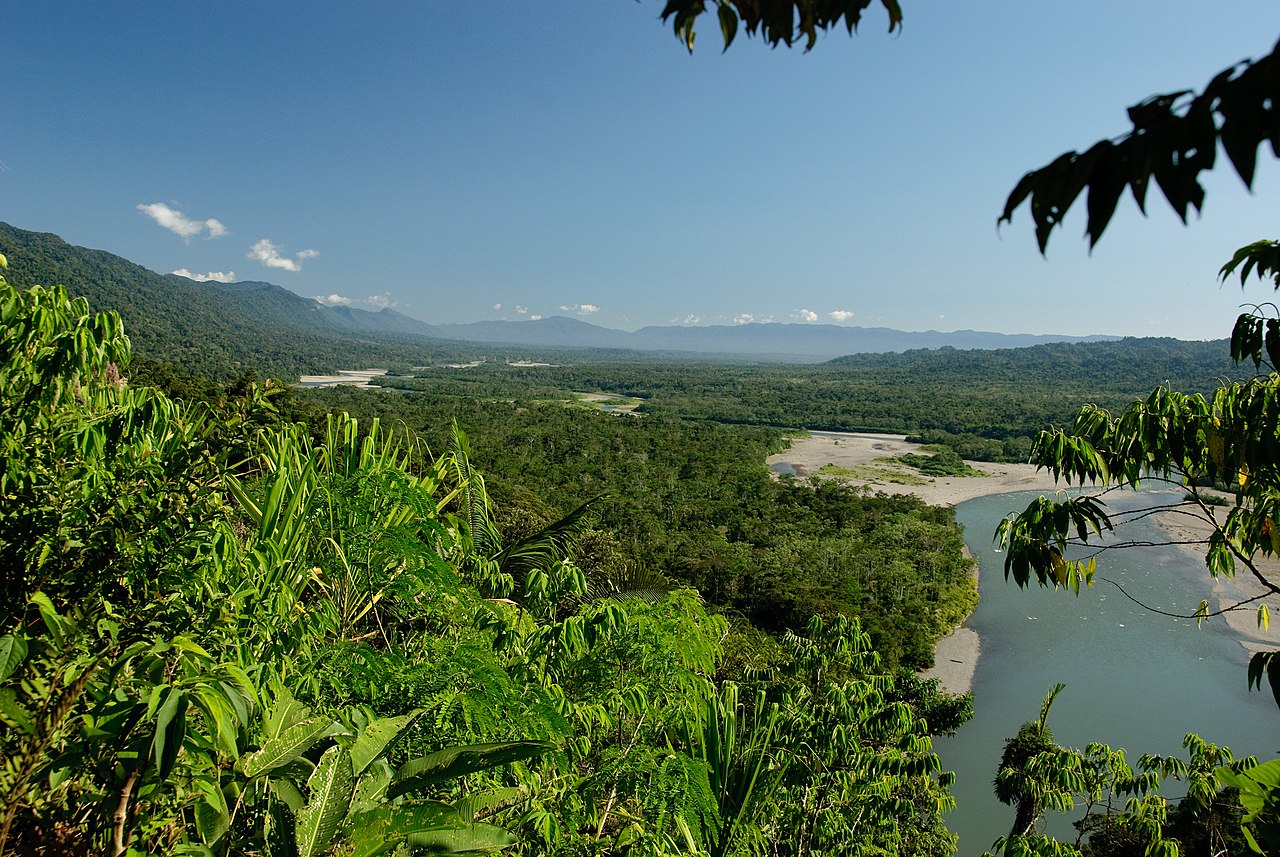

Landscape and natural features
The region sits largely at low elevation and is dominated by humid rainforest, seasonal white-water and black-water rivers, and varzea floodplains. Characteristic habitats include terra firme forest, riverine gallery forest, and oxbow lakes formed by meandering rivers. The tropical climate is hot and humid with pronounced rainy and drier months, supporting year-round biological productivity.

Biodiversity and protected areas
Madre de Dios is noted for very high biological diversity and many endemic and migratory species. Major protected areas and conservation sites include:
- Tambopata National Reserve
- Bahuaja-Sonene National Park
- Community concessions and private conservation areas that promote research and ecotourism
These areas support populations of macaws, tapirs, river dolphins, primates and countless insects and plants, making the region important for conservation and scientific study.
People, economy and threats
The local economy combines small-scale agriculture, fisheries, sustainable timber harvesting, and growing ecotourism centered on wildlife lodges and river excursions. At the same time, illegal and informal gold mining has expanded in parts of the region, causing forest loss, soil disturbance and mercury contamination of rivers. Deforestation for agriculture and infrastructure is an ongoing conservation concern.
History, governance and significance
Historically, the area has been home to indigenous groups as well as settlers from other parts of Peru and neighboring countries. As an administrative region it plays an outsized role in national biodiversity conservation and in debates over sustainable development in Amazonia. Government agencies, local communities and international partners work on protected-area management, enforcement against illegal mining, and programs that promote alternative livelihoods and scientific research.
For further reading on the region's geography, conservation status and travel information, see regional resources and authoritative conservation portals linked above.
Related articles
Author
AlegsaOnline.com Madre de Dios Region, Peru: Amazon rainforest, rivers, and conservation Leandro Alegsa
URL: https://en.alegsaonline.com/art/60521