
M (1931 film)
M, directed by Fritz Lang and released in 1931, is a landmark German crime-thriller about a city's hunt for a child murderer. Known for its sound experiments, moral complexity, and Peter Lorre's breakout role.
Overview
M, originally released in Germany as M – Eine Stadt sucht einen Mörder, is a 1931 crime drama and psychological thriller film directed by Fritz Lang. It tells the story of a city terrorized by a child murderer and the parallel efforts of police and the criminal community to capture him. The movie marked a decisive moment in the transition from silent cinema to sound filmmaking; it was Lang's first feature made with synchronized sound technology.
Image gallery
2 Images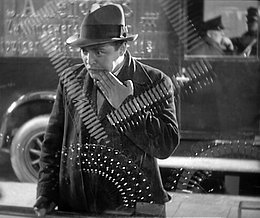
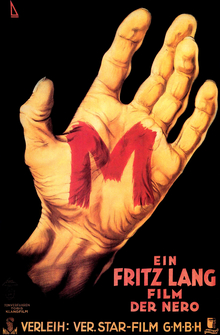
Plot and themes
The narrative concentrates on a man pursued as a serial killer of children and on how fear reshapes civic life. Rather than a conventional detective story, it examines social panic, collective guilt, and the thin line between law and vigilantism. The conflict culminates in a morally fraught trial that raises questions about justice, responsibility, and the value of human life.
Production, style, and innovations
The film combines spare, expressionist visuals with careful use of sound — footsteps, ambient city noise, and a simple whistled motif that became an identifying device for the killer. Lang and his co-writer Thea von Harbou shaped a tight screenplay that relies on atmosphere and editing rhythms instead of excess exposition. The city itself functions as a character: crowded streets, children at play, and claustrophobic interiors contribute to an oppressive mood.
Cast and performances
Peter Lorre, in his first major screen role, gained wide attention for a restrained, unsettling performance that balances vulnerability and menace; the role launched his international career as an actor. Supporting roles include police officials, ordinary citizens, and figures from the criminal underworld, which in the story coordinates its own manhunt against the murderer.
Reception and legacy
Contemporaneously and in later criticism, M has been praised for its narrative clarity, psychological depth, and technical audacity. It is frequently cited as one of Lang's most accomplished works and a touchstone in the history of crime cinema. Filmmakers and critics point to its influence on later thrillers and on portrayals of urban anxiety in 20th century film culture.
Notable facts and further reading
- Screenplay by Fritz Lang and Thea von Harbou, collaborators from the silent era.
- Uses sound motifs—especially whistling—as a dramatic device to characterize guilt and recognition.
- Combines police procedural elements with a critique of mass response to crime.
- For more context on the film's production and impact, consult dedicated film histories and archival materials: original German title and credits, genre studies, and director biographies such as those linked here: Lang and writings about Lorre.
Questions and answers
Q: What is M?
A: M is a 1931 German drama-thriller movie directed by Fritz Lang and starring Peter Lorre.
Q: Who wrote M?
A: M was written by Fritz Lang and his wife Thea von Harbou.
Q: What is M about?
A: M is about the actions of a serial killer of children and the manhunt for him carried out by the police and the criminal underworld.
Q: When was M released?
A: M was released in 1931.
Q: Who stars in M?
A: M stars Peter Lorre.
Q: What is Lang's opinion of M?
A: Lang deemed M to be his magnum opus.
Q: Why is M considered a classic?
A: M is considered a classic due to its iconic portrayal of the manhunt for a serial killer and the direction and performances delivered by the cast and crew.
Related articles
Author
AlegsaOnline.com M (1931 film) Leandro Alegsa
URL: https://en.alegsaonline.com/art/60173
Sources
- bbfc.co.uk : "M (A)"
- bloody-disgusting.com : "Now I Lay Me Down To Sleep: A Brief History of Child Murder in Cinema"
- securesite.chireader.com : Reader Archive-Extract: 1997/970808/M
- criterion.com : "The Mark of M"
- nytimes.com : "The Daesseldorf Murders"