
Lurtigen (former municipality in Fribourg, Switzerland)
Lurtigen was a small municipality in the See district of the canton of Fribourg, Switzerland. It merged into the municipality of Murten in 2016. This article summarizes its geography, history and local character.
Overview
Lurtigen (French: Lourtens) was a small rural municipality located in the district of See in the canton of Fribourg, in western Switzerland. Nestled near the shores of Lake Murten, the village formed part of a bilingual region where German is predominant but French also has a local presence. Lurtigen functioned as an independent municipal community until the mid-2010s.
Image gallery
2 Images
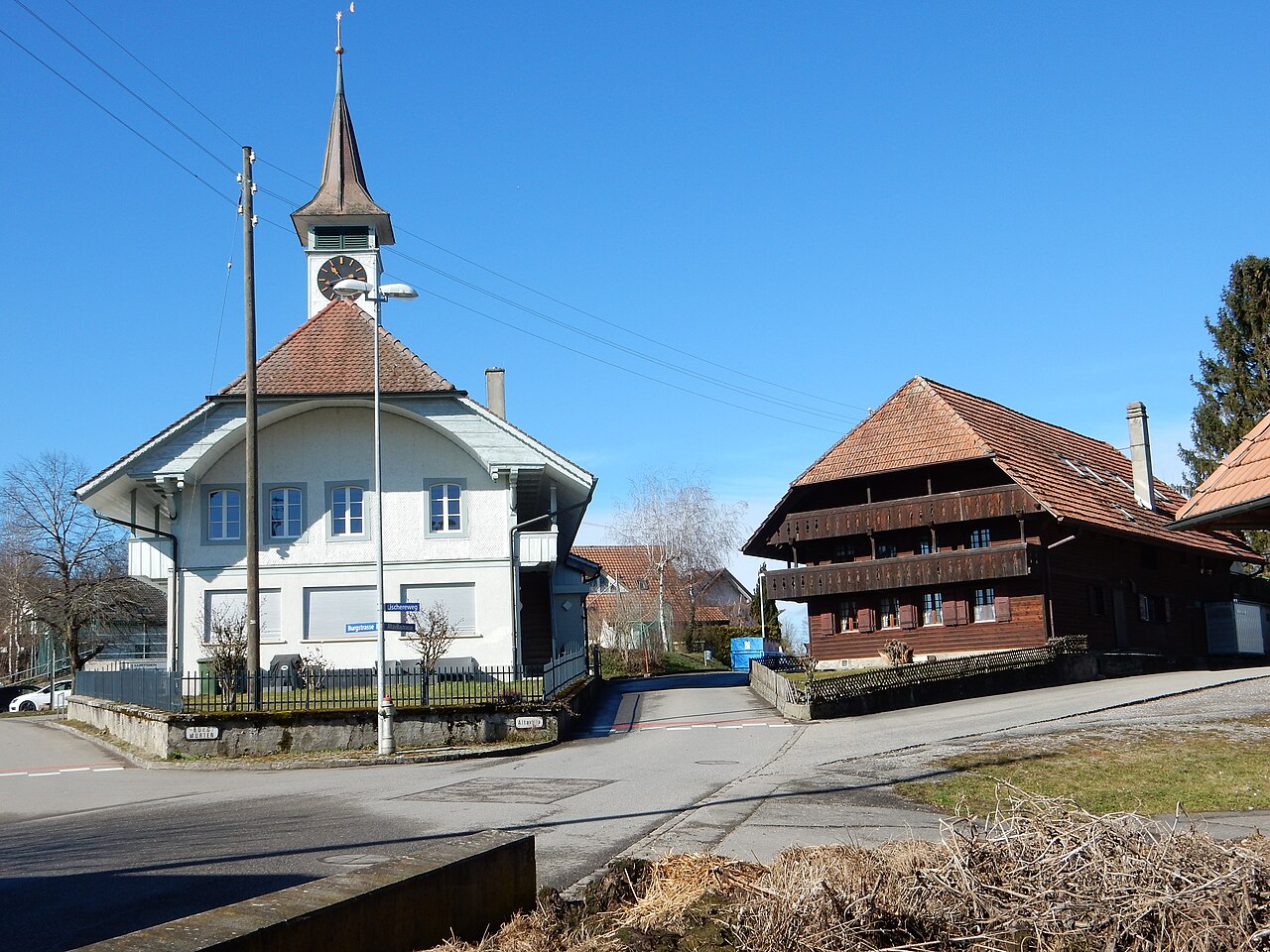
Geography and administration
The settlement pattern in and around Lurtigen reflected typical small-scale agricultural villages of the Swiss Plateau: a compact village center surrounded by farmland and meadows, with nearby minor roads linking it to larger towns. Administratively it belonged to the See district, an area that straddles the linguistic border in Fribourg and centers on the town of Murten.
History and merger
Like many villages in the region, Lurtigen has medieval roots and developed over centuries as an agrarian community with local parish and communal institutions. On 1 January 2016 Lurtigen ceased to be an independent municipality when it merged, together with Courlevon, Jeuss and Salvenach, into the larger municipality of Murten. The consolidation was part of a broader trend of municipal mergers intended to improve administrative efficiency and public services.
Economy, transport and community life
The local economy historically centered on agriculture, with many residents commuting to nearby towns for work, education and commerce. Public transport connections and regional roads link the area to Murten and to the cantonal capital, offering access to services while retaining a rural character. Community life typically revolves around local events, village associations and the parish.
Legacy and notable facts
- Former municipal institutions, records and symbols (such as the local council and coat of arms) remain of interest for local history and genealogy.
- Its bilingual surroundings make the area representative of the cultural boundary between German- and French-speaking Switzerland.
- As part of Murten after 2016, Lurtigen now contributes to a larger municipal structure while preserving its village identity.
Related articles
Author
AlegsaOnline.com Lurtigen (former municipality in Fribourg, Switzerland) Leandro Alegsa
URL: https://en.alegsaonline.com/art/59976
Sources
- bfs.admin.ch : Nomenklaturen – Amtliches Gemeindeverzeichnis der Schweiz