
Love Actually (2003 film)
A 2003 British ensemble romantic comedy‑drama by Richard Curtis that interweaves multiple stories about love and relationships, set mainly in London with scenes in France and the United States.
Overview
Love Actually is a 2003 British romantic comedy-drama written and directed by Richard Curtis. The film unfolds in the weeks leading up to Christmas and interlaces a number of short, connected stories that examine different forms of love: romantic attraction, familial bonds, friendship and grief. Most of the action takes place in London, with notable sequences in Marseille and elsewhere in France, and a brief subplot set in Wisconsin in the United States.
Image gallery
2 Images
Structure and themes
The film uses an ensemble cast and a vignette structure: a series of distinct but occasionally overlapping narratives that shift tone from broad comedy to quieter drama. Recurring themes include love after loss, unrequited affection, marital strain, and the complications of modern relationships. The intercut format allows the film to present contrasts—comic misunderstandings alongside sincere, melancholic moments—and to explore how ordinary people encounter emotional turning points.
- Newly elected prime minister and a member of his staff
- A widower guiding his stepson through first love
- An author who retreats abroad after a breakup
- A married couple confronting temptation and honesty
- Young people experiencing first crushes and heartbreak
Cast and characters
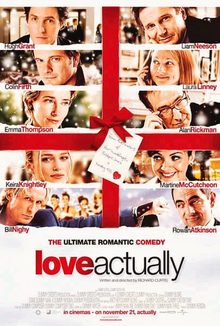
The film features a large ensemble whose performances shaped its reception: Hugh Grant, Liam Neeson, Colin Firth, Laura Linney, Emma Thompson, Alan Rickman, Keira Knightley, Martine McCutcheon, Bill Nighy and Rowan Atkinson. The ensemble approach lets the film move quickly between comic set pieces and more reflective scenes while keeping the emotional stakes distinct for each storyline.
Production, release and reception
Produced and released in the early 2000s, the film achieved commercial success and quickly became associated with holiday viewing in the United Kingdom and elsewhere. Critics were divided: many praised its wit, performances and memorable moments, while others questioned the balance of tonal shifts and the ethics of some scenes. Over time the film has prompted discussion about consent, privacy and representation in particular sequences, and these conversations form part of its ongoing cultural legacy. The soundtrack mixes seasonal and popular music and helped to popularize several memorable moments from the film.
Legacy, adaptations and sequel
Love Actually remains a seasonal touchstone for many viewers and has inspired parodies, stage adaptations and homages. In 2017 a short charity sequel reunited parts of the cast for a televised special, reflecting the film's continued presence in popular culture. For more detailed production notes, contemporary reviews and archival material, consult reputable film guides and primary sources.
Related articles
Author
AlegsaOnline.com Love Actually (2003 film) Leandro Alegsa
URL: https://en.alegsaonline.com/art/59518
Sources
- imdb.com : "Love Actually (2003) - Box office / business"
- boxofficemojo.com : "Love Actually"