
Loie Fuller — pioneer of modern dance and theatrical lighting
Loie Fuller (1862–1928) was an American dancer and stage inventor who created flowing fabric dances and advanced theatrical lighting techniques, shaping modern dance and performance design in the Belle Époque.
Overview
Loie Fuller (January 15, 1862 – January 1, 1928) was an American performer and innovator whose work helped define early modern dance and theatrical lighting. Largely self-taught, she developed a signature stage vocabulary that combined voluminous silk costumes and controlled illumination to create shifting, sculptural images in motion. Her work was widely exhibited in Europe and the United States during the late 19th and early 20th centuries.
Image gallery
8 Images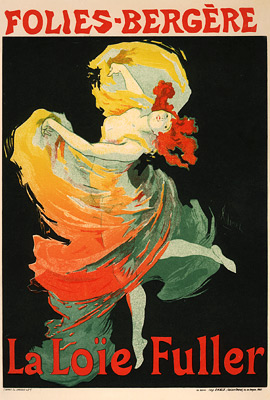


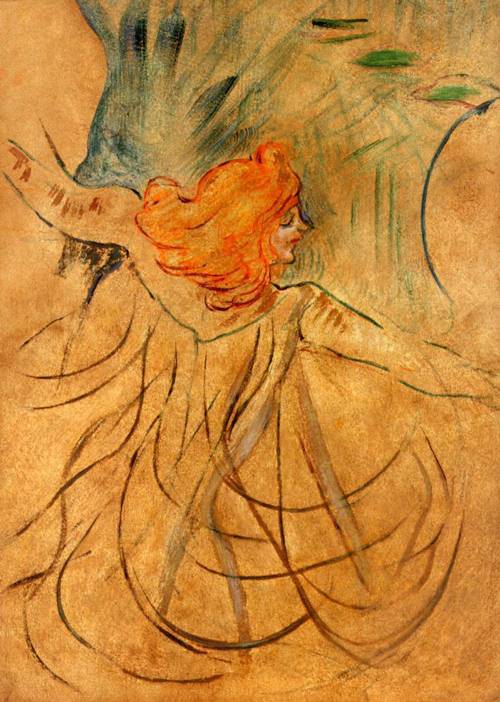


Early life and career
Fuller began on the American stage without formal dance training, gaining experience in popular theater and vaudeville. A chance experience with an overlong skirt led her to experiment with fabric and movement; she refined those experiments into repeatable performance pieces. For summaries of her early stage work and acting background see accounts of her acting career.
Serpentine dance and stage technique
Her best-known gesture, often called the serpentine or veil dance, relied on extremely lightweight silk skirts and long yards of material manipulated by wires and bodies to create continuous, flowing shapes. Fuller emphasized silhouette, rhythm, and the interplay of concealment and revelation. Movement and fabric were only part of the effect: she treated light itself as an active, shaping component of choreography.
Innovations in lighting and design
Fuller was an early adopter and experimenter with electric stage lighting. She used colored filters, layered sources, and spotlights to transform translucent fabric into luminous color fields. Her approach anticipated later developments in stagecraft by insisting that lighting be integral to expressive design rather than merely a means of visibility. She also sought ways to protect and control some of her technical methods from unauthorized copying.
Performance, reception, and collaborations
Performing frequently in Paris, Fuller became associated with the Belle Époque and the Art Nouveau milieu, admired by artists, writers, and designers of the period. While she worked primarily as a solo act, her performances intersected with contemporary visual arts and musical experimentation. Critics and audiences often described her shows in visual rather than strictly dance terms, emphasizing atmosphere and spectacle.
Legacy and influence
Fuller’s emphasis on abstraction, light, and the sculptural potential of fabric influenced subsequent generations of performers, choreographers, and lighting designers. Her experiments helped expand ideas about what dance could be—moving beyond narrative to focus on form, color, and sensory effect. Modern resources on early modern dance discuss her contributions in broader histories; see modern dance resources for context.
Notable facts
- Signature effect: flowing silk veils manipulated to create changing, organic forms.
- Technical focus: pioneering use of electric light and color as integral to performance.
- Cultural role: a prominent figure of Belle Époque performance and visual modernism.
An often-repeated anecdote describes the moment an overlong skirt suggested a new direction for performance; Fuller developed that intuition into a lifelong practice of technical and aesthetic experimentation. For more on specific episodes from her experiments and stagecraft see contemporary reports and collections of historical materials at further accounts.
Questions and answers
Q: Who is Loie Fuller?
A: Loie (or Loïe) Fuller was a pioneer of modern dance.
Q: Did Loie Fuller have any dance training?
A: No, she had no dance training.
Q: How did Loie Fuller get her experience on the stage?
A: Loie Fuller got her experience on the stage by acting.
Q: What led Loie Fuller to develop her ideas into a dance?
A: A chance experiment with an over-long skirt gave Loie Fuller ideas which she eventually developed into a dance.
Q: When was Loie Fuller born and when did she die?
A: Loie Fuller was born on January 15, 1862, and she died on January 1, 1928.
Q: Which type of dance is Loie Fuller considered a pioneer of?
A: Loie Fuller is considered a pioneer of modern dance.
Q: What is Loie Fuller's background in dance and acting?
A: Loie Fuller had no dance training, but she got experience acting on the stage.
Related articles
Author
AlegsaOnline.com Loie Fuller — pioneer of modern dance and theatrical lighting Leandro Alegsa
URL: https://en.alegsaonline.com/art/58896