
Little River (Oklahoma)
A 90-mile tributary of the Canadian River in central Oklahoma, the Little River is part of the Arkansas–Mississippi watershed and supports local ecology, recreation, and agricultural uses.
The Little River is a modest but regionally important stream in central Oklahoma. Approximately 90 miles (145 km) long, it is a tributary of the Canadian River and therefore belongs to the larger Arkansas–Mississippi river system. Its waters ultimately reach the United States Gulf coast via the Arkansas and Mississippi rivers.
Image gallery
2 Images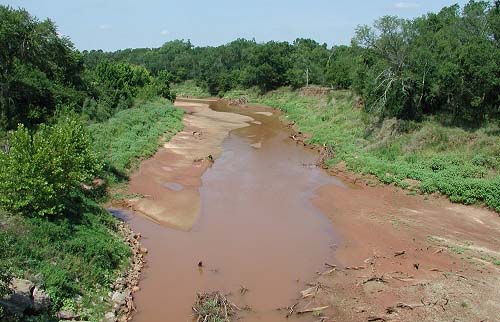

Course and physical characteristics
The river rises in central Oklahoma and flows across rural landscapes before joining the Canadian River. Its course features alternating reaches of shallow, sand- or gravel-bottom channel and broader, slower pools. Flow is influenced by seasonal rainfall and by upstream impoundments on connected waterways, so discharge can vary markedly through the year.
Ecology and environment
Riparian corridors along the Little River support cottonwood, willow, and other native vegetation that provide habitat for birds, amphibians, and fish. Wetlands and backwater areas are important for local biodiversity. Like many plain-state streams, the Little River faces pressures from agricultural runoff, altered flow regimes, and periodic sedimentation.
Uses and human connections
- Recreation: sections are used for fishing, small-boat paddling, and wildlife viewing.
- Agriculture and water supply: local farms and ranches use nearby water resources and floodplain soils.
- Flood management: natural floodplains along the river help absorb high flows, while regional infrastructure modifies flow in places.
The Little River flows through largely rural parts of Oklahoma, and communities nearby have long relied on its corridor for resources and transport. It is part of a broader network of plains rivers that have shaped settlement patterns and land use in the region.
Name and distinguishing notes
"Little River" is a common river name in the United States; this Oklahoma stream should not be confused with other Little Rivers in neighboring states. Its identity as a Canadian River tributary links it to larger interstate watershed dynamics and to the extensive drainage system that ultimately empties into the Mississippi River.
Related articles
Author
AlegsaOnline.com Little River (Oklahoma) Leandro Alegsa
URL: https://en.alegsaonline.com/art/58517