
ARPANET: the pioneering packet‑switched research network
ARPANET was a US Department of Defense–funded packet‑switched network begun in 1969 that demonstrated key technologies that became the Internet, including early protocols and networked resource sharing.
Overview
The ARPANET (Advanced Research Projects Agency Network) was an experimental wide‑area network funded by the United States Department of Defense and first deployed in 1969. It demonstrated practical implementations of packet switching and early internetworking protocols. ARPANET connected research institutions and government laboratories to share computing resources, exchange messages and test new networking concepts that later evolved into the global Internet (Internet).
Image gallery
10 Images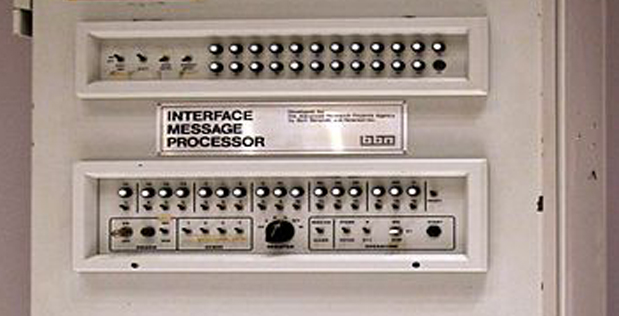


Design and key components
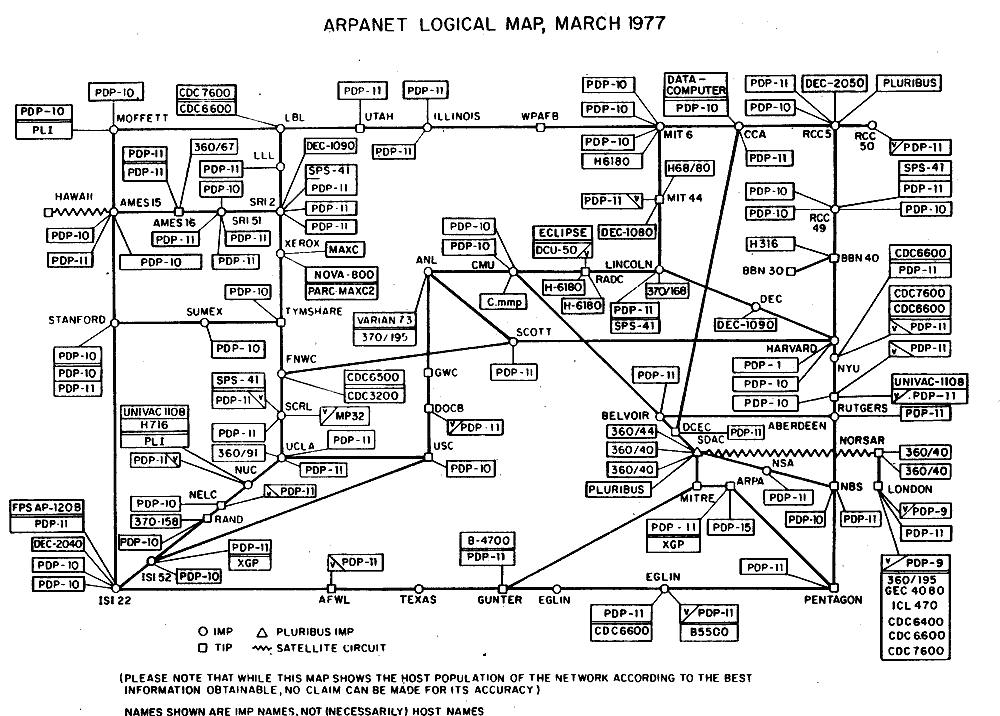
ARPANET used a distributed architecture built around small packet switching nodes and host computers. Physical and logical design elements included:
- Interface Message Processors (IMPs): specialized minicomputers that handled packet routing between hosts.
- Hosts: research computers and terminals at universities and laboratories that ran application software.
- Protocols: early network control programs and experimental protocols that established reliable delivery and sessions; these experiments led to standardized suites such as TCP/IP.
Many design choices were motivated by fault tolerance, efficient use of bandwidth and the need to interconnect heterogeneous computer systems.
History and development
ARPANET was initiated by the Advanced Research Projects Agency (ARPA) of the U.S. Department of Defense (DoD) as a research platform. Initial deployments linked a handful of sites in the United States and grew steadily as new universities, research centers and government labs joined. Through the 1970s and early 1980s ARPANET served as a proving ground for packet routing, email, remote login and file transfer. The adoption of the Transmission Control Protocol and Internet Protocol (TCP/IP) on ARPANET in 1983 was a turning point that enabled broader interconnection of disparate networks.
Uses, examples and legacy
Researchers used ARPANET to exchange data, collaborate across institutions and develop networking software. Several widely used internet applications trace their origins to work on ARPANET, including email and early remote access tools. The protocols and operational experience gained on ARPANET directly informed the design and expansion of the modern Internet; many operational concepts and standards still reflect lessons from those early years.
Distinguishing facts and significance
ARPANET is notable as one of the first large‑scale packet‑switched networks and as a catalyst for protocol standardization. It moved from a research network to a backbone for academic networks before being phased out as the broader Internet infrastructure took over. It is often cited in histories of computing and networking as the bridge between theoretical ideas about packet switching and widespread practical deployment.
For technical overviews and historical documents, see resources indexed by participating agencies and archives, or follow introductory materials on packet switching and the evolution of Internet protocols. Additional institutional histories are available through archives associated with ARPA and the Department of Defense.
Related articles
Author
AlegsaOnline.com ARPANET: the pioneering packet‑switched research network Leandro Alegsa
URL: https://en.alegsaonline.com/art/5826