
United States Department of Defense
Overview of the United States Department of Defense: mission, organization, civilian leadership, services, agencies, authorities, history, and contemporary roles.

The United States Department of Defense (DoD) is the executive department responsible for organizing, training, and equipping the nation's armed forces. It operates within the United States federal government framework and oversees the principal instruments of national power employed to deter conflict and, if necessary, conduct military operations. The DoD provides forces and capabilities across domains to defend national interests and support allied security. Its administrative headquarters are located in The Pentagon in Washington, D.C., and it works closely with the President and the National Security Council. The Department is responsible for the management of the United States military and its global posture; the civilian head is the Secretary of Defense, who reports to the President.
Image gallery
10 Images




Organization and principal components
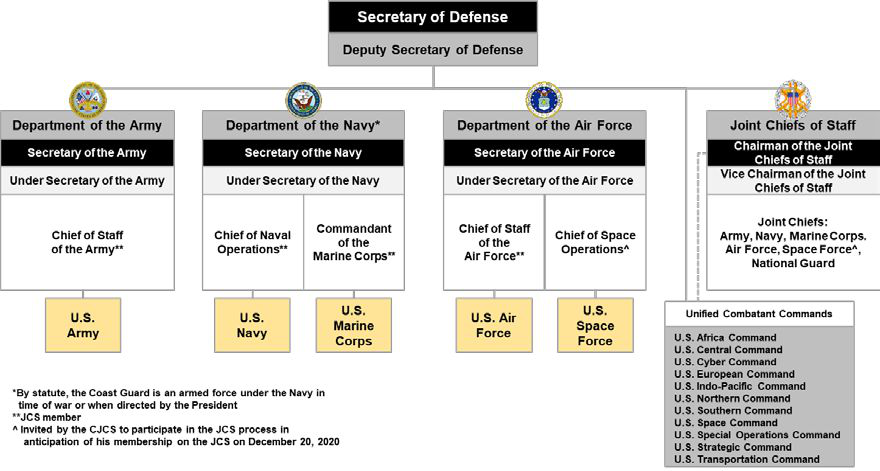
The DoD is a large, integrated organization composed of military departments, defense agencies, joint staffs, and combatant commands. The principal military departments are the Department of the Army, the Department of the Navy (which includes the U.S. Navy and the U.S. Marine Corps), and the Department of the Air Force (which also encompasses the U.S. Space Force). In addition to the service departments, the DoD houses specialized agencies such as the National Security Agency and the Defense Intelligence Agency, which provide intelligence, signals, and analytical support for defense planning and operations.
Civilian leadership, chain of command, and oversight
The Secretary of Defense leads the department and is the principal defense policy advisor to the President. Under the Secretary are civilian and uniformed leaders, including service secretaries and the Chairman of the Joint Chiefs of Staff, who advises on military matters. The legal chain of command for operations runs from the President to the Secretary of Defense to combatant commanders during assigned missions. Civilian oversight is provided by Congress through authorization, appropriation, and legislative oversight functions, which shape policy, budgets, and legal authorities.
Combatant commands and joint operations
To conduct operations, the DoD employs unified combatant commands organized by region or function. These commands integrate forces from the various services to execute assigned missions. Joint doctrine and training aim to enable interoperability among land, sea, air, space, and cyber forces and to align resources with strategic objectives. Combatant commanders operate under a joint chain of command and are responsible for planning and executing missions within their areas of responsibility.
Roles, functions, and capabilities
The Department sets military strategy, conducts operations, manages procurement and logistics, and administers personnel and benefits programs for service members and dependents. It oversees force readiness, sustainment, research and development, and acquisition of weapons systems. The DoD plays a central role in intelligence collection, cyber operations, and space activities as part of a broader national security enterprise. It maintains deterrent forces and plans for both conventional and strategic contingencies.
Relationship with other services and agencies
Certain maritime and homeland security functions fall outside routine DoD control in peacetime. For example, the United States Coast Guard typically operates under civilian authority but may be transferred to DoD control during wartime or by presidential order when its missions align with defense requirements. The National Guard serves a dual state-federal role and can be federally activated for national missions; arrangements for command and control depend on statute and executive direction. Transfers of authority among departments reflect legal frameworks and policy decisions.
Budget, personnel, and acquisition
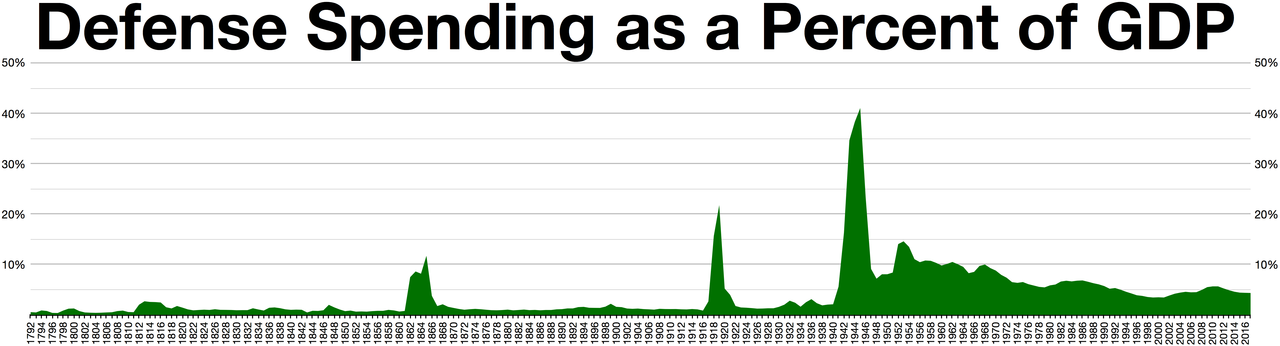
The Department manages complex budgeting and acquisition systems intended to deliver capabilities while ensuring accountability. Budget priorities balance readiness, modernization, sustainment, and personnel costs. Procurement procedures and defense industrial base relationships influence how equipment, technology, and services are developed and fielded. Because of scale and technical complexity, acquisition processes often receive legislative and independent review to improve efficiency and oversight.
Intelligence, cyber, and space
Modern defense responsibilities extend beyond traditional domains. Intelligence agencies within the DoD support military planning and operations, while cyber and space activities have become integral to national defense. The department coordinates with other government agencies and allies on information sharing, defensive cyber measures, resilient communications, and protecting critical space-based assets. Organizational arrangements have adapted to incorporate these domains into planning and command structures.
History and evolution
The Department of Defense was established in the aftermath of World War II as part of efforts to unify military policy and administration. Over time it has evolved to address new technologies, changing geopolitics, and emerging threats. Structural changes and reforms have periodically reshaped how services cooperate and how joint capabilities are organized, reflecting lessons learned from conflicts and advances in military science.
Legal framework and accountability
The DoD operates under U.S. law, international law, and treaty obligations. Military justice, rules of engagement, and oversight mechanisms govern conduct and ensure accountability. Congressional committees, inspectors general, and independent review bodies contribute to transparency and corrective action when needed. Legal authorities also govern deployment, use of force, and the transfer of forces among civil and military authorities.
International cooperation and alliances
The Department works with allied and partner militaries through combined exercises, training, interoperability programs, and coalition operations. Such cooperation supports collective defense arrangements and helps address regional crises, humanitarian assistance, and peacekeeping when requested. Partnerships and alliances are key elements of broader U.S. defense strategy and force posture around the world.
For official organizational charts, doctrine, and updated leadership information, consult primary government sources and published DoD materials available through official portals and oversight reports. Additional references and official resources may be found via the department's published documents and authorized communications.
Related articles
Author
AlegsaOnline.com United States Department of Defense Leandro Alegsa
URL: https://en.alegsaonline.com/art/103028