
Baidu Baike: China’s large, commercial online encyclopedia
Baidu Baike is a Chinese-language, company-run online encyclopedia owned by Baidu. Launched in 2006, it grew rapidly and is notable for its scale, integration with Baidu search and government-aligned content moderation.
Overview
Baidu Baike (Chinese name) is an online encyclopedia operated by the Chinese internet company Baidu. Created to serve Chinese-language readers, it functions as a centrally managed, user-editable reference resource that is tightly integrated with Baidu's search and product ecosystem. It began operating in 2006 and expanded quickly to become one of the largest collections of Chinese-language articles.
Image gallery
1 Image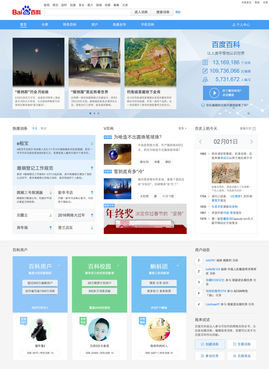
Structure and key features
Baidu Baike blends community contributions with company oversight rather than following the open, volunteer model of some other encyclopedias. Typical features include:
- Article pages with text, images and basic metadata.
- Tools for registered users to create and edit entries, plus structured templates for common topics.
- Editorial review, automated filters and site policies that govern permitted content.
- Integration with search, multimedia and commercial profiles for businesses and public figures.
Content is presented in Chinese and is reachable through Baidu's web and mobile interfaces.
History and growth
Baidu Baike launched in 2006. It saw rapid expansion in the following decade: published counts reported by observers put its article total in the millions—about five million by 2013 and substantially higher later in the decade. By comparison, Chinese-language Wikipedia had far fewer articles in the same periods. The service's growth has been driven by its visibility in Baidu search and active efforts to recruit contributors.
Governance, moderation and legal context
Baidu Baike operates within the regulatory environment of the People’s Republic of China. As a result it applies content restrictions and moderation to meet government requirements and platform rules; this includes removal or alteration of material judged sensitive under applicable laws and regulations. Editorial oversight combines volunteer edits, paid staff moderation and automated systems to enforce site policies and compliance; critics have highlighted these policies as a key difference from open-license encyclopedias (content moderation and restrictions).
Uses, reception and criticism
Users consult Baidu Baike for quick reference, local cultural topics, company profiles and practical information. It is widely used in mainland China because of its prominence in search results. Common criticisms focus on potential commercial influence, uneven article quality, limited transparency of editorial rules, and the impact of regulatory compliance on coverage of certain political or historical subjects.
Distinctions and notable facts
Baidu Baike differs from collaborative, free-license encyclopedias in several ways: ownership by a private company, tighter editorial controls, and licensing and reuse conditions that are not equivalent to an open-content model. It is often compared to Chinese Wikipedia when assessing the landscape of Chinese-language online references. For more background on the platform and its context, see Baidu’s information pages and analyses by independent observers (search and platform context). Additional commentary on moderation and regulatory compliance is available through media and research sources (policy-related coverage).
Related articles
Author
AlegsaOnline.com Baidu Baike: China’s large, commercial online encyclopedia Leandro Alegsa
URL: https://en.alegsaonline.com/art/8342