
Limousin — former region of central France
Limousin was a sparsely populated, rural former administrative region of central France centred on Limoges, known for Limousin cattle, Limoges porcelain and its 2016 merger into Nouvelle-Aquitaine.

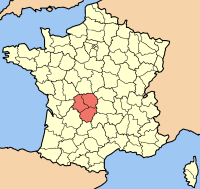
Limousin was a former administrative region in central France, now part of the larger administrative region of Nouvelle-Aquitaine. It lay within the western edge of the Massif Central and was long recognised for its rural landscapes, mixed woodland and pastoral farmland. The regional capital and largest city was Limoges, famed for its porcelain and enamel work; the city's craft and industrial heritage is often discussed alongside the town-level history of Limoges itself. For context on the national administrative system see general resources on France.
Image gallery
3 Images

Geography and climate
Limousin occupied roughly 17,000 square kilometres of inland terrain, with upland plateaus, river valleys and wooded hills. Major rivers such as the Vienne cross the area, feeding wider watersheds. The climate is temperate, with relatively cool winters and moderate rainfall compared with coastal regions; soils and pastures made the territory well suited to cattle farming and mixed agriculture. Extensive forests supported traditional forestry activity and a characteristic biodiversity of central western France.
Administrative divisions and population
The modern administrative region comprised three departments, each with distinct physical and cultural features:
- Corrèze — a department of valleys, sandstone plateaus and historic market towns.
- Creuse — notable for its very low population density and rural character.
- Haute-Vienne — contains Limoges and more urbanised corridors and industrial sites.
Before the territorial reform of 2016, Limousin had a population of roughly seven hundred thousand people and was one of France's least densely populated regions. Demographic patterns included population decline in some rural communes and a concentration of public services, commerce and employment in Limoges and a few other towns.

History and cultural identity
The area corresponds in part to the historical province of Limousin and has long-standing cultural roots, including a regional variety of the Occitan language often called Limousin. During the Middle Ages and later periods local crafts and trades flourished; Limoges in particular became renowned for medieval enamel and, from the 18th century, for industrial porcelain production. Despite the 2016 administrative merger, regional identity remains visible in local festivals, gastronomy and the continued use of traditional place names.
Economy and notable products
The economy combined agriculture and livestock farming with forestry, small-scale industry and public-sector services. The Limousin cattle breed, a beef cattle variety originating in the region, is well known internationally. Limoges porcelain and decorative arts are important cultural and economic symbols that continue to attract collectors and tourists. Over recent decades the regional economy has become increasingly service-oriented, with education, health and public administration playing significant roles in employment and local public life (services).
Transport, tourism and research
Transport links include regional roads and rail connections centred on Limoges, which link the area to larger urban centres. Tourism emphasises natural landscapes, hiking, heritage villages and artisanal traditions. Local research institutions and museums preserve collections related to porcelain, medieval art and rural history, offering resources for visitors and scholars interested in the region's material culture.
For further local information consult departmental and regional resources linked above and municipal sites that provide practical details on administration, cultural events and tourism in the former Limousin region.
Related articles
Author
AlegsaOnline.com Limousin — former region of central France Leandro Alegsa
URL: https://en.alegsaonline.com/art/58107