
Limit (mathematics)
A limit is the value that a function or sequence approaches as its argument or index approaches a point. Limits formalize approach and are foundational for continuity, derivatives, and integrals in analysis.
Overview — In mathematics a limit captures the behavior of a function or sequence as its input approaches a particular point or infinity. Informally, a limit says what value the outputs get arbitrarily close to even if the function is not defined exactly at that point. For background reading about mathematical context see mathematical concepts.
Image gallery
2 Images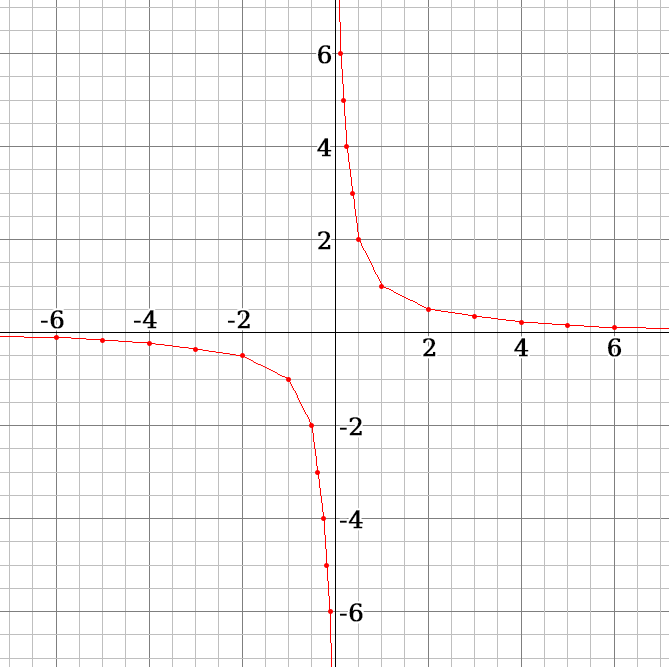

Formal meanings
The most common formalization uses the epsilon–delta definition for functions: we write lim_{x->a} f(x)=L to mean that for every small positive epsilon there exists a delta neighborhood of a so that whenever 0<|x-a|<delta the values |f(x)-L| are less than epsilon. Sequence limits use a similar formulation with indices: lim_{n->infty} a_n = L. Basic introductions to functions and sequences can be found at functions and sequences.
Types, properties, and common facts
Limits come in several forms: two-sided limits, one-sided limits (from the left or right), limits at infinity, and infinite limits where values grow without bound. Basic algebraic rules permit addition, multiplication and division of limits when the individual limits exist. Important tools include the squeeze theorem and tests for indeterminate forms like 0/0 or ∞/∞; useful methods for resolving these include algebraic simplification and calculus techniques.
Examples and techniques
Classic examples illustrate the idea: lim_{x->0} (sin x)/x = 1, and rational functions often approach finite values or vertical/horizontal asymptotes depending on degree. When direct substitution gives an indeterminate form, one may factor, conjugate, expand series, or apply rules such as L'Hôpital's rule to evaluate the limit. Elementary worked examples and exercises are often collected in textbooks and online resources like tutorial pages.
History and importance
The limit concept evolved in the development of calculus and was rigorized in the 19th century by analysts such as Cauchy and Weierstrass. Limits underlie the definitions of continuity, derivative and definite integral and remain central in real analysis, complex analysis, and applied mathematics. Distinguishing the limit value from the function's actual value at a point is a recurring theme in study and applications.
Related articles
Author
AlegsaOnline.com Limit (mathematics) Leandro Alegsa
URL: https://en.alegsaonline.com/art/58089