
Liedertswil — small municipality in Basel-Landschaft, Switzerland
Overview of Liedertswil, a small Swiss municipality in the Waldenburg district of the canton Basel-Landschaft: geography, history, local life and notable characteristics.
Liedertswil (Swiss German: Tschoppehof) is a small municipality in the Waldenburg district of the canton of Basel-Landschaft in Switzerland. Nestled in the rolling hills typical of the region, it combines rural character with proximity to larger towns in the canton. The local spoken language is Swiss German, while official business is conducted in standard German.
Image gallery
3 Images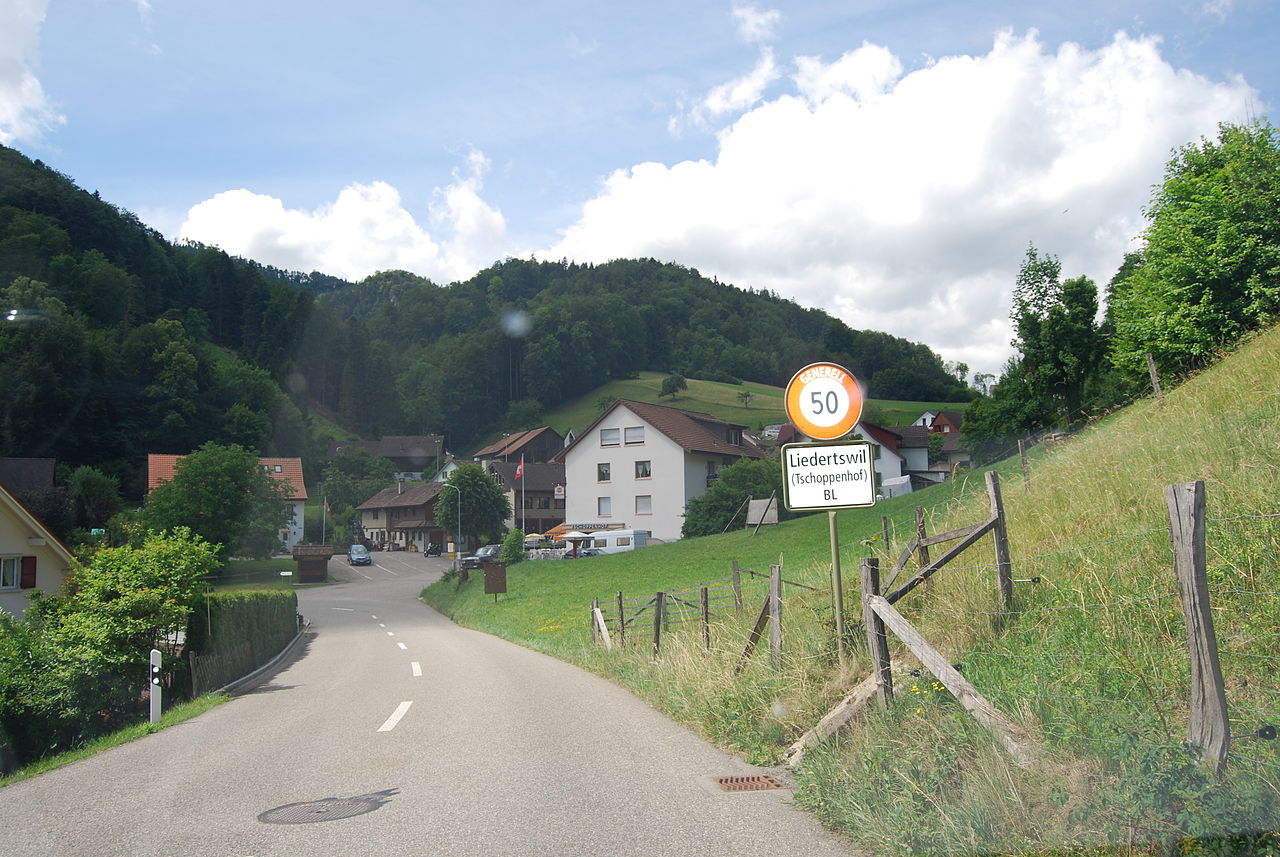


Geography and administration
Liedertswil occupies a compact territory of farmland, meadows and small woodland patches typical of northwestern Switzerland. As a municipality it is administered by a local council that handles communal services, planning and local regulations under the authority of cantonal institutions. Its landscape supports agriculture and provides a quiet residential environment for commuters.
History and development
Like many settlements in the region, Liedertswil has medieval roots and developed over centuries around farming and local craft. It remained relatively small and rural through industrialisation, with gradual changes in the 19th and 20th centuries as transport and economic ties to nearby towns strengthened. Historic structures and field boundaries still reflect traditional land use.
Economy and daily life
The local economy is a mix of small-scale agriculture, local services and residents who commute to jobs in larger towns and cities. Daily life in Liedertswil typically centres on community institutions, seasonal farming activities and recreational use of surrounding countryside. Public transport and regional roads connect the municipality to the wider Basel-Landschaft area.
Culture, events and notable facts
Community life includes village festivals, voluntary associations and maintenance of regional traditions. The Swiss German name Tschoppehof reflects the local dialect and cultural identity. Liedertswil exemplifies the many small municipalities in Switzerland that preserve rural character while participating in cantonal and national civic life.
Practical information
- Administration: local municipal council under cantonal oversight.
- Language: Swiss German dialect locally; German for official matters.
- Access: connected by regional roads and public transport links to neighbouring centres.
For official and up-to-date information about services, events and local governance, consult the municipality's published resources or cantonal portals via the links above.
Related articles
Author
AlegsaOnline.com Liedertswil — small municipality in Basel-Landschaft, Switzerland Leandro Alegsa
URL: https://en.alegsaonline.com/art/57829
Sources
- bfs.admin.ch : "Arealstatistik Standard - Gemeinden nach 4 Hauptbereichen"
- bfs.admin.ch : "Ständige Wohnbevölkerung nach Staatsangehörigkeitskategorie Geschlecht und Gemeinde; Provisorische Jahresergebnisse; 2018"
- commons.wikimedia.org : Liedertswil