
Legnica — city in Lower Silesia, Poland
Legnica is a historic city in Lower Silesia, Poland, on the Kaczawa (Katzbach) river. It has medieval roots, over 100,000 residents and landmarks such as Piast Castle and a medieval market square.
Overview
Legnica (German: Liegnitz) is a city in Poland in the western part of the country. The Kaczawa River, historically known as the Katzbach, flows through the town. Legnica has a population of over 100,000 and lies within reach of the larger regional centre Wrocław. Its location places it near the borders with Germany and the Czech Republic, making it part of a Central European cross-border region.
Image gallery
10 Images



Geography and administration
Legnica occupies a river valley amid the plains of Lower Silesia and forms part of the historical region of Silesia. The surrounding landscape includes agricultural land and urbanised industrial zones. The city functions as an administrative and service centre for the surrounding area and offers municipal services, health care and branches of regional higher education institutions.
History
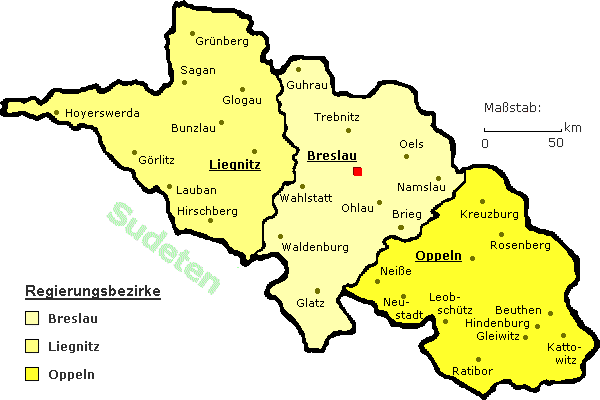
Legnica has medieval origins and grew as a regional trading and ducal centre. It was associated with the Piast dynasty of Silesian dukes and is remembered for events such as the battle fought nearby during the Mongol invasions in 1241. Over centuries the town was part of various Silesian principalities and later came under the authority of larger states; in the modern era it was incorporated into Prussia and served as the seat of a Silesian administrative district (a Regierungsbezirk in German terms). In the 20th century Legnica experienced wartime upheaval, postwar population movements and a long period with a significant Soviet military presence that left visible marks on the urban fabric.
Landmarks and culture
The city's historic core retains medieval and later layers of architecture. Notable sites include the Piast castle complex, the medieval market square and historic parish churches. Museums, theatres and cultural festivals reflect Silesian traditions and the mixed Central European heritage of the area. Visitors and residents alike identify the market square and the castle as focal points of local identity and tourism.
Economy and transport
Legnica's contemporary economy combines light industry, services and commerce. The city is close to one of Poland's important copper-mining districts and benefits from associated supply chains and employment. Transport links include regional rail connections and major road corridors that link Legnica with Wrocław and other centres; cross-border routes provide access toward Germany and the Czech Republic. Local public transport, regional buses and rail services support daily commuting and freight movements.
Education and society
Legnica offers schools, cultural institutions and branches of higher-education providers that serve students from the city and surrounding region. Community life includes civic organisations, cultural events and opportunities for outdoor recreation along the Kaczawa (Katzbach) river and nearby green areas.
Further reading and resources
Further information about Legnica's history, architecture and contemporary development is available in regional guides and municipal resources that document the city's Silesian and Central European context. Local archives and cultural institutions provide detailed perspectives on Legnica's past and present.
Related articles
Author
AlegsaOnline.com Legnica — city in Lower Silesia, Poland Leandro Alegsa
URL: https://en.alegsaonline.com/art/57008