
Lech Trzeciakowski — Polish historian of Greater Poland and Polish–German relations
Lech Trzeciakowski (1931–2017) was a Polish historian who studied Greater Poland, the Prussian partition and Polish–German relations. He directed the Western Institute in Poznań and influenced regional historical debate.
Lech Trzeciakowski (24 December 1931 – 7 January 2017) was a Polish historian based in Poznań, Poland. He is known for careful archival research into the history of Greater Poland, the social and administrative effects of the Prussian partition, and the complex political and cultural relations between Poles and Germans in the modern era. Trzeciakowski combined scholarly work with participation in regional public debate, aiming to make local and national history accessible to broader audiences.
Image gallery
1 Image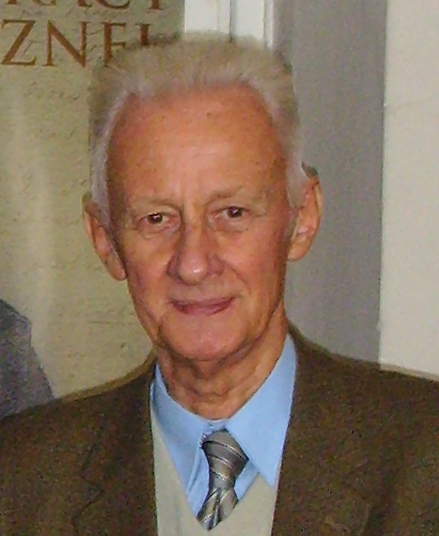
Career and main roles
Trzeciakowski spent most of his professional life working in Poznań, where he taught, researched and collaborated with archival institutions. From 1974 to 1978 he served as director of the Western Institute (Instytut Zachodni) in Poznań, a research centre dedicated to studies of Poland's western and northern territories and to issues arising from Polish–German relations. Under his leadership the institute continued to function as a forum for scholarly analysis, documentation and public discussion of borderland history and related political issues.
Research focus and contributions
His scholarship concentrated on topics that illuminate long-term processes in regional identity and interethnic relations. Trzeciakowski examined administrative policies, schooling, language and cultural institutions under Prussian rule and explored how policies of state power affected everyday life and collective memory. He published monographs and articles, edited volumes and took part in conferences that linked specialist research with teaching and commemoration.
- Prussian partition and its institutional legacy;
- Polish–German relations in Greater Poland and border regions;
- local and regional history of Poznań and surrounding districts;
- the role of archives, public policy and cultural institutions in shaping memory.
Method and approach
Trzeciakowski is remembered for a documentary, evidence-based approach. He relied on archival sources, administrative records and local collections to reconstruct social processes and decisions that affected communities over decades. Rather than focusing on grand narrative alone, he aimed to show how policies were implemented on the ground and how people adapted, resisted or accommodated to changing rulers and institutions.
Public engagement and legacy
Beyond academic publishing, Trzeciakowski engaged with school programs, exhibitions and public lectures that sought to bring historical findings into civic discussion. His work contributed to a more nuanced public understanding of regional history and the legacies of nineteenth- and twentieth-century state policies. He died in Poznań on 7 January 2017 after a battle with cancer; obituaries and institutional notices marked his passing and summarized his contributions to scholarship and public life. For further biographical notes and notices see an obituary and related profiles: obituary and notices. More general information about his life and the region he studied can be found via institutional pages and regional histories linked from his profile at academic and library entries.
Related articles
Author
AlegsaOnline.com Lech Trzeciakowski — Polish historian of Greater Poland and Polish–German relations Leandro Alegsa
URL: https://en.alegsaonline.com/art/56853
Sources
- iz.poznan.pl : Instytut Zachodni
- poznan.onet.pl : Zmarł historyk prof. Lech Trzeciakowski