
Le Puy-en-Velay: historic town and pilgrimage center in France
Le Puy-en-Velay is a historic town in south-central France, prefecture of Haute-Loire, noted for its volcanic skyline, Romanesque cathedral, pilgrimage routes to Santiago de Compostela, lace and green lentils.
Overview
Le Puy-en-Velay is a small city and commune that serves as the prefecture of the Haute-Loire department in the Auvergne-Rhône-Alpes region of France. It is best known as a medieval pilgrimage center and for its distinctive volcanic skyline dominated by steep rock outcrops.
Image gallery
10 Images



Geography and natural features
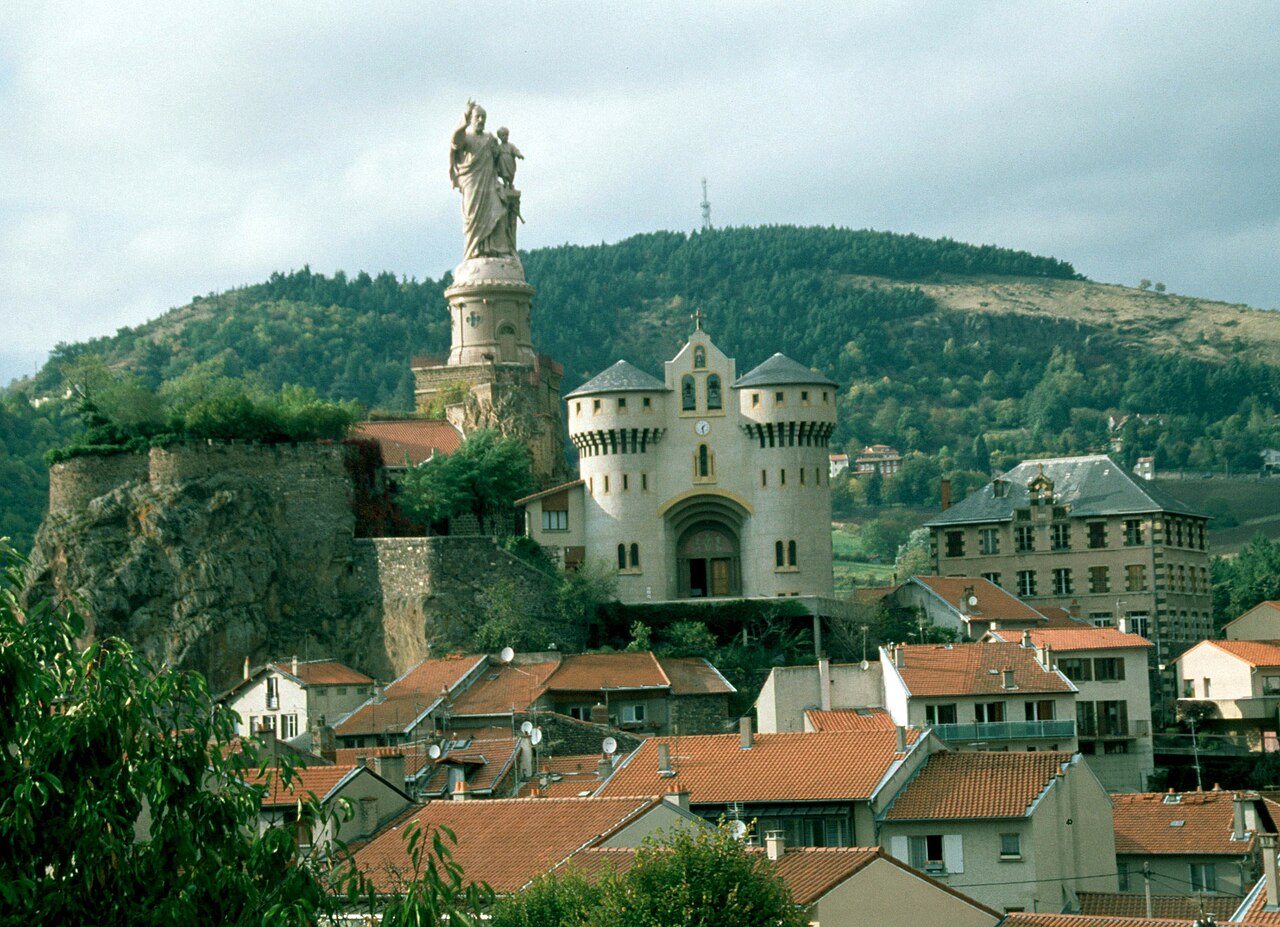
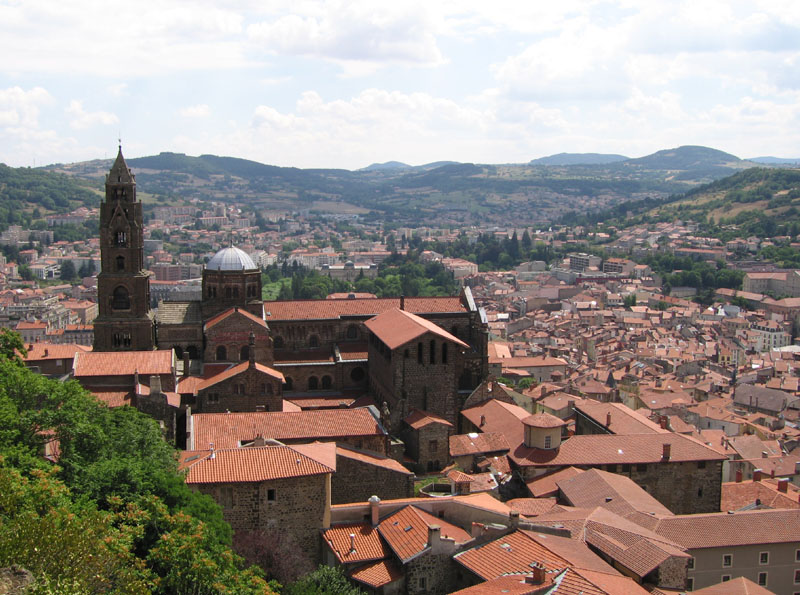
The town sits on ancient volcanic terrain: isolated basalt and trachyte plugs rise above the valley and shape the built environment. These rocky needles and cones provide natural defensive positions where chapels and fortifications were established, producing the dramatic silhouette visible from surrounding plains.
History and religious significance
Le Puy developed around early Christian worship and a celebrated Marian shrine. Its cathedral, an important Romanesque ensemble, has been a destination for pilgrims for many centuries and is one of the recognized starting points for the Via Podiensis, a major French route to Santiago de Compostela. For this reason the town figures among the heritage sites associated with the medieval pilgrimage routes.
Notable landmarks
- Cathédrale Notre-Dame du Puy – a Romanesque cathedral known for its architecture and historical importance to pilgrims.
- Chapel of Saint-Michel d'Aiguilhe – a small chapel built atop a volcanic needle reached by a stairway of many steps.
- Statue of the Virgin (Notre-Dame de France) – a 19th-century iron monument visible on one of the rock outcrops.
- Medieval streets, old stone houses and viewpoints that reveal the town's volcanic setting.
Culture, products and economy
The town is associated with traditional crafts such as bobbin lace and with local agricultural products, most famously the green lentil known as the Lentille verte du Puy, which has a protected reputation. Tourism, pilgrim services and small-scale industry are important to the local economy.
Visiting and significance
Visitors come for religious history, scenic panoramas and regional gastronomy. Le Puy-en-Velay combines geological interest, medieval architecture and living cultural traditions, making it a compact example of how landscape and faith shaped many historic towns in France.
Related articles
Author
AlegsaOnline.com Le Puy-en-Velay: historic town and pilgrimage center in France Leandro Alegsa
URL: https://en.alegsaonline.com/art/56670