
Haute-Loire — department of south-central France
Haute-Loire is a mountainous department in Auvergne-Rhône-Alpes, named for the Loire river. Known for Le Puy-en-Velay, volcanic landscapes, lentils, and historic pilgrimage architecture.
Haute-Loire is a French département in the Auvergne-Rhône-Alpes area of south-central France. Its Occitan name is noted as Naut Léger. The department takes its name from the Loire — one of France's major waterways — and the river's valley shapes much of the local geography and settlement pattern. Administratively it is one of the territorial divisions commonly referred to in French as a département.
Image gallery
8 Images


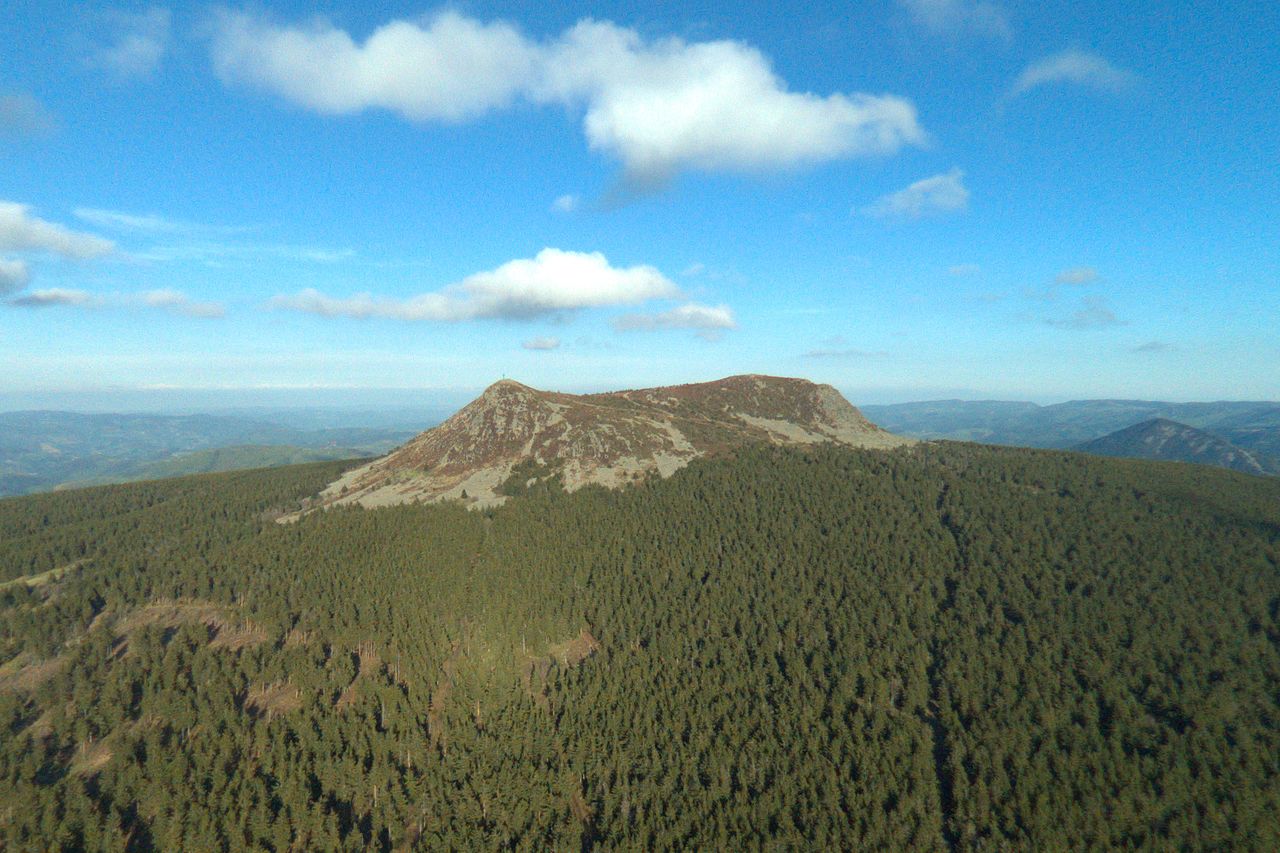

Geography and landscape
Haute-Loire occupies part of the Massif Central and features a mix of volcanic hills (locally called puys), rolling plateaus and river valleys. Elevations vary from upland plateaus to steep basalt cones, producing a landscape valued for outdoor activities and traditional farming. The department lies within the broader Auvergne-Rhône-Alpes region and displays a climate that ranges from mountain-influenced to more temperate in the lower valleys, shaped by altitude and exposure.
History and cultural identity
The territory has deep historical roots visible in Romanesque churches, medieval towns and pilgrimage routes. Le Puy-en-Velay, the department's prefecture, is a long-standing departure point for pilgrims heading to Santiago de Compostela and preserves important religious monuments. Local languages and traditions reflect Occitan and Auvergnat influences, and the area's identity is tied to both rural crafts and ecclesiastical heritage.
Administration, towns and economy
Major towns include Le Puy-en-Velay, Brioude and Yssingeaux. The department is organized into arrondissements and communes typical of France's local government structure. Economic activity blends agriculture (notably the famous lentils of Le Puy), small-scale industry, artisanry such as lace-making, and an expanding tourism sector that capitalizes on hiking, heritage sites and local gastronomy.
Tourism and notable features
- Cultural landmarks: medieval cathedrals and Romanesque churches; UNESCO-recognized routes connected to Le Puy.
- Natural attractions: volcanic cones, river valleys and trails for walking and cycling.
- Local products: lentilles du Puy and traditional crafts tied to community identity.
For more administrative or travel information consult official sources and regional guides: official department pages and other reference portals provide practical details, maps and seasonal advice for visitors and residents alike.
Questions and answers
Q: Where is Haute-Loire located?
A: Haute-Loire is located in the Auvergne-Rhône-Alpes region of south-central France.
Q: What does Occitan: Naut Léger mean?
A: Occitan: Naut Léger is the Occitan name for Haute-Loire.
Q: What is Haute-Loire named after?
A: Haute-Loire is named after the Loire river.
Q: What is a département in France?
A: A département is an administrative division in France.
Q: Is Haute-Loire in the north or south of France?
A: Haute-Loire is in the south of France.
Q: Which region is Haute-Loire a part of?
A: Haute-Loire is a part of the Auvergne-Rhône-Alpes region.
Q: What is the significance of the Loire river in Haute-Loire?
A: Haute-Loire is named after the Loire river, which runs through the département.
Related articles
Author
AlegsaOnline.com Haute-Loire — department of south-central France Leandro Alegsa
URL: https://en.alegsaonline.com/art/42855
Sources
- hauteloire.fr : "Le Président"
- insee.fr : "Département de la Haute-Loire (43)"
- insee.fr : "Populations légales 2014 des départements et des collectivités d'outre-mer"
- splaf.free.fr : "Historique de la Haute-Loire"
- hauteloire.fr : "Histoire des départements"
- peakbagger.com : "Mont Mézenc, France"
- annuaire-mairie.fr : "Ville du Puy-en-Velay"
- insee.fr : "Département de la Haute-Loire (43)"
- insee.fr : "Régions, départements, arrondissements, cantons et communes"
- insee.fr : "Département de la Haute-Loire (43) et Arrondissements"
- legifrance.gouv.fr : "Décret n° 2014-162 du 17 février 2014 portant délimitation des cantons dans le département de la Haute-Loire"
- habitants.fr : "Habitants du départment: Haute-Loire (07)"