
Kungsbacka Municipality
Coastal municipality in Halland County, Sweden, centered on the town of Kungsbacka. Noted for its proximity to Gothenburg, coastal landscape, historical sites and mixed urban‑rural character.
Kungsbacka Municipality (Swedish: Kungsbacka kommun) is a local government area in western Sweden. It is an administrative municipality within Halland County, located along the coast of southern Sweden. The municipal seat and largest town is Kungsbacka, which functions as the region's commercial and service centre.
Image gallery
4 Images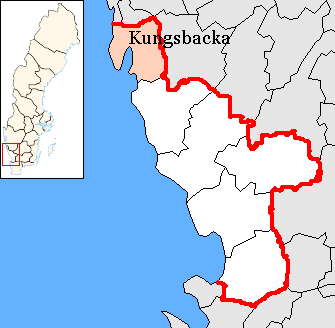


Geography and settlements
The municipality occupies a coastal strip with a mix of archipelago, beaches and inland farmland. Landscapes range from low-lying shoreline and peninsulas to forested hinterland and river valleys. Besides the central town of Kungsbacka, the municipality contains several smaller localities and villages that combine seaside communities with agricultural areas.
History and development
The area has a long human presence shaped by maritime trade, agriculture and fishing, and its modern municipal boundaries were formed through 20th‑century local government consolidations. In recent decades Kungsbacka has developed into an important commuter and suburban area because of its good transport links to Gothenburg, while retaining historical sites and rural landscapes.
Transport and economy
Connectivity is a distinguishing feature: the municipality is served by regional rail and major roads that provide frequent connections to larger urban centres. The local economy blends retail and services concentrated in the town, light industry, agriculture and tourism. Many residents commute to jobs elsewhere while contributing to a diversified local economy.
Culture, attractions and public services
Kungsbacka offers cultural institutions, historic estates and coastal attractions. Notable points of interest include manor houses and coastal castles, nature reserves and beaches that draw seasonal visitors. The municipal government is responsible for schools, social services, planning and local infrastructure, balancing growth with conservation of natural and cultural resources.
Notable facts
- The municipality is part of the broader Gothenburg commuter region, which influences housing and development patterns.
- Its coastal position makes maritime recreation and nature tourism important to local identity and economy.
- Local planning often focuses on managing growth while protecting shoreline and rural character.
Related articles
Author
AlegsaOnline.com Kungsbacka Municipality Leandro Alegsa
URL: https://en.alegsaonline.com/art/54618
Sources
- scb.se : "Statistiska centralbyrån den 1 januari 2010"
- scb.se : "SCB, Befolkningsstatistik 30 juni 2012"