
Aredale, Iowa
Aredale is a small rural city in Butler County, Iowa, United States, known for its agricultural setting, close-knit community, and role in regional rural life.
Aredale is a small city located in the U.S. state of Iowa. It sits within the agricultural landscape of the American Midwest and is one of many modest communities that together form the region's rural fabric. For basic municipal information and local notices, residents and visitors often refer to official pages or regional guides such as the municipal listing at Aredale's local page.
Image gallery
1 Image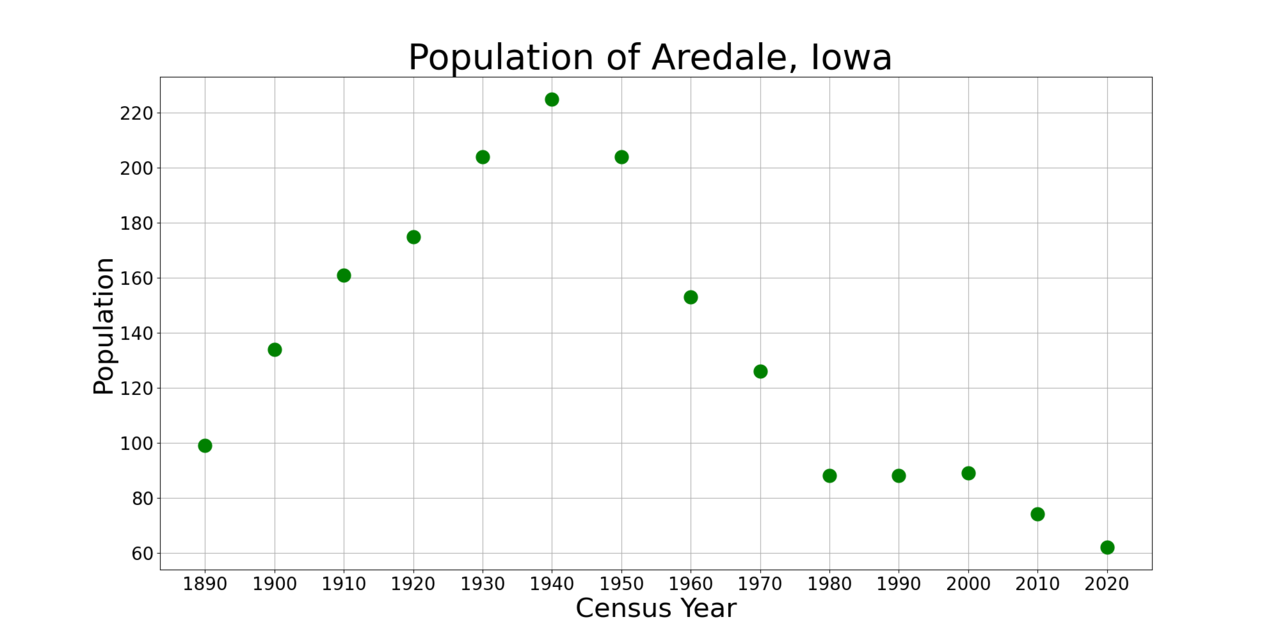
Characteristics
Aredale is characterized by low population density, a landscape dominated by farms and open fields, and a built environment that typically includes a handful of residences, community buildings and agricultural facilities. The local economy is centered on agriculture and services that support farming, though many residents commute to nearby towns for employment, education, and retail. The townscape and daily life tend to reflect seasonal cycles, with planting and harvest times shaping local activity.
History and development
Like many small Iowa towns, Aredale developed in connection with settlement and transportation patterns of the late 19th and early 20th centuries. Communities in this region grew around farmsteads, crossroads, and rail lines, providing centers for trade, grain storage and social life. Over time, changes in agriculture, transportation and demographics have influenced Aredale's size and role, with farm consolidation and urban migration affecting population trends.
Community and services
Despite its modest scale, Aredale typically offers local institutions that anchor community life: a municipal structure, community halls or churches, and basic infrastructure maintained by local and county governments. Residents rely on nearby larger towns for hospitals, broad education services and specialized shopping. Recreational opportunities in the surrounding countryside include walking, cycling and outdoor seasonal activities common to Iowa's temperate continental climate.
Significance and contemporary notes
Small places such as Aredale illustrate broader themes in rural America: the importance of agriculture to regional identity, the persistence of close-knit social networks, and the challenges of sustaining services as populations shift. For context within national systems and programs, Aredale is part of the United States civic framework and its residents participate in county and state affairs like communities across the country (United States). Visitors and researchers often view towns like Aredale as windows into Midwestern rural life and its ongoing changes.
- Typical features: agricultural economy, small residential clusters, community institutions.
- Common trends: demographic shifts, consolidation of services, commuting to nearby towns.
Related articles
Author
AlegsaOnline.com Aredale, Iowa Leandro Alegsa
URL: https://en.alegsaonline.com/art/5414
Sources
- census.gov : "US Gazetteer files: 2000 and 1990"