
Klingons: cultural profile of a Star Trek warrior species
Klingons are a fictional warrior species from Star Trek, known for a martial code of honor, distinctive appearance and language (tlhIngan). They evolved from antagonists to uneasy allies of the Federation.
Overview
The Klingons are a fictional extraterrestrial species in the Star Trek universe, presented as a proud, warlike civilization organized under an Empire. Introduced on television in the 1960s, Klingons originally served as recurring adversaries to the United Federation of Planets but later became complex allies and cultural rivals. Their self-name in the constructed tongue is tlhIngan, usually rendered in English as "Klingon."
Image gallery
3 Images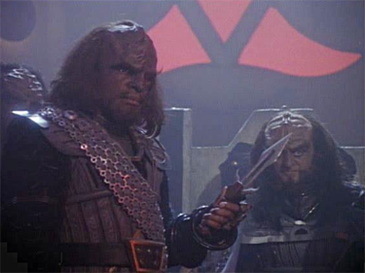


Physical traits and social structure
Klingons are usually depicted as humanoid but physically robust, with heavy bone structure and marked facial features in later depictions. Their societies emphasize martial skill, loyalty to clan and state, and elaborate ceremonies. Authority in Klingon society typically rests with a Chancellor and a High Council; honor, reputation, and battlefield prowess govern status and legal outcomes. Rituals for rites of passage, funerary customs, and formal dueling underscore the cultural focus on courage and duty.
Culture, ethics and language
Central to Klingon identity is a code of conduct that prizes honor and valor. Storylines across the franchise portray this code as comparable to historical warrior traditions such as bushido, and it has been presented in ways that invite comparison to various earthly warrior ideals from Japanese samurai codes to contemporary military cultures. Linguistically, the Klingon language (tlhIngan Hol) was developed into a usable constructed language by linguist Marc Okrand and has since been expanded by fans and scholars into a full grammar and vocabulary used in literature and performance.
Origins in the franchise and political symbolism
The species was created for television by writers in the original series; early scripts and casting choices established Klingons as stand-ins for terrestrial political rivals of the era. Their portrayal in the first series drew on Cold War-era tensions between the United States and the Soviet Union, and episodes reflected fears and misunderstandings common to that period such as the Cold War. Over subsequent films and series, producers refined Klingon appearance, politics and lore, deepening the culture and introducing treaties and alliances — for example, the Khitomer Accords in later continuity that marked a turning point toward détente with the Federation.
Notable features, objects and characters
- Weapons: Klingon melee arms, most famously the curved bladed bat'leth and smaller daggers, are iconic symbols of their martial tradition.
- Religion and mythology: Figures such as Kahless act as cultural founders and exemplars in Klingon lore.
- Notable characters: Several recurring Klingons, including Worf, have served as lenses through which television and film have explored questions of identity, assimilation and loyalty.
Legacy and cultural impact
As a fictional construct, Klingons have influenced science fiction and popular culture beyond their on-screen roles. The community of fans who study and speak tlhIngan Hol, the proliferation of Klingon-themed music, literature and staged rituals, and the species' role in allegorical storytelling make them one of the franchise's most enduring inventions. Their evolution from one-dimensional opponents to a richly detailed civilization mirrors broader changes in storytelling that favor cultural nuance over simple binaries.
For further reading on language, history and cultural analysis within the franchise, see resources linked across official and fan sites for deeper primary and secondary material.
Klingon language | Star Trek | Cold War | United States | Soviet Union | bushido | Japanese
Related articles
Author
AlegsaOnline.com Klingons: cultural profile of a Star Trek warrior species Leandro Alegsa
URL: https://en.alegsaonline.com/art/53947