
Kim Il-sung Square
Major public square in Pyongyang, North Korea, used for state ceremonies, military parades, and public gatherings along the Taedong River.
Overview
Kim Il-sung Square is the principal ceremonial plaza in the capital of North Korea. Located beside the Taedong River in central Pyongyang, it functions as a formal stage for national displays of state power, public celebration, and mass gatherings. The open, paved expanse is one of the most frequently photographed urban spaces in the city and serves as a focal point for civic ritual and visual representation of the regime.
Image gallery
8 Images




Location and layout
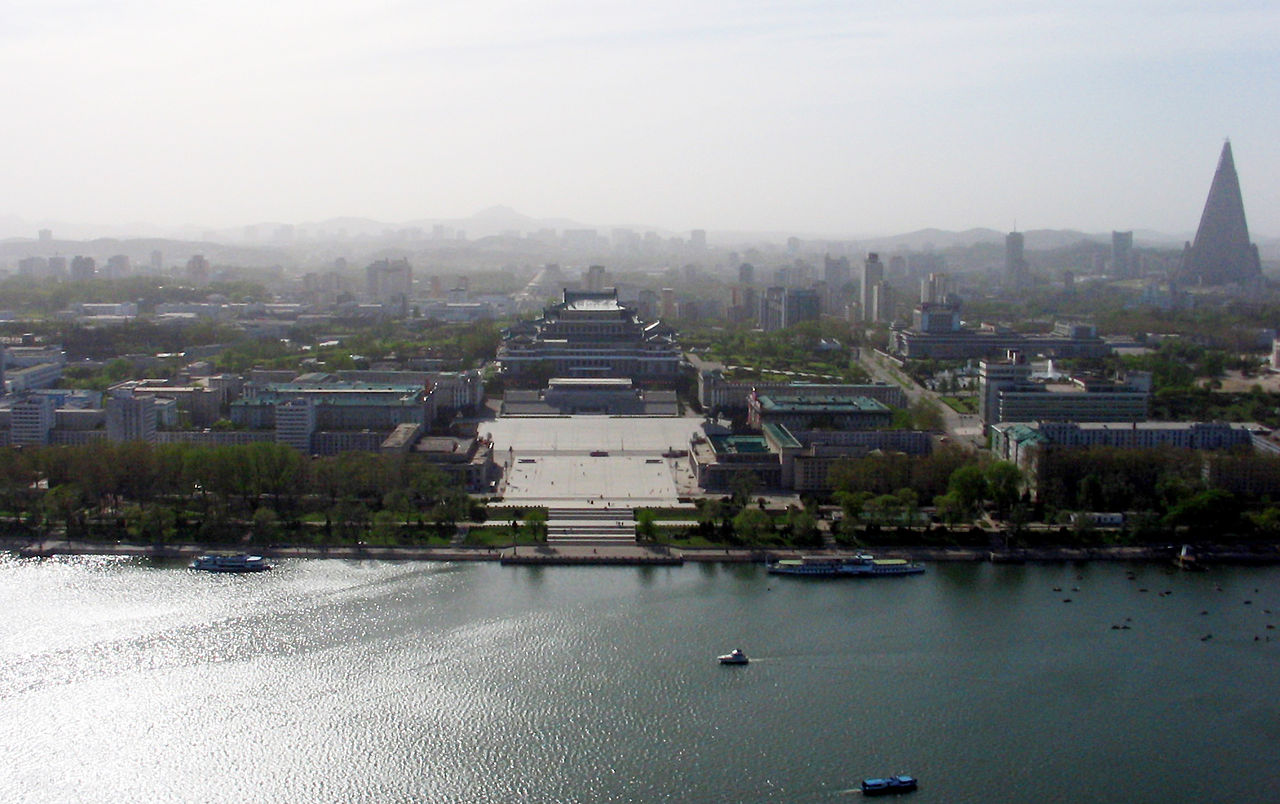
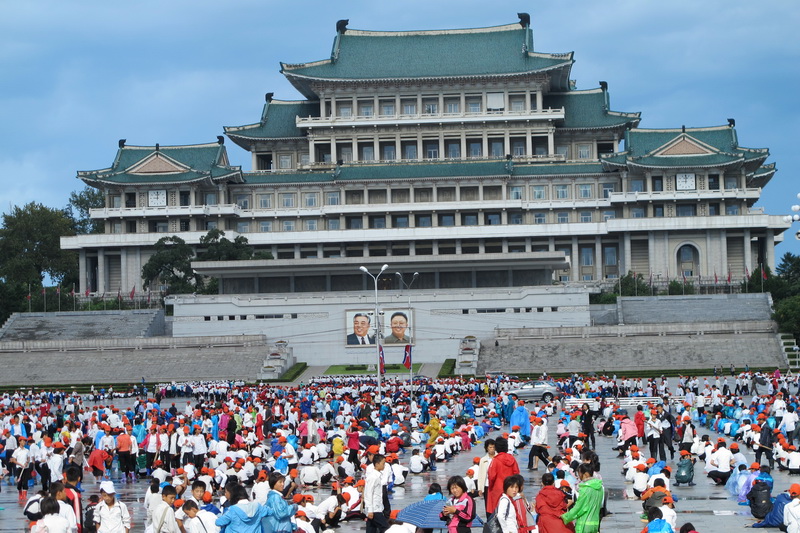
The square fronts the riverbank and presents a broad, level surface designed to accommodate large numbers of participants and vehicles. Its setting emphasizes visibility from both riverside promenades and elevated viewing areas on surrounding buildings. The plaza is bounded by state institutions, government-facing façades and terraces that often include stepped stands or seating for officials. Visitors and observers commonly see the square in relation to prominent landmarks across the Taedong River.
Characteristics and features
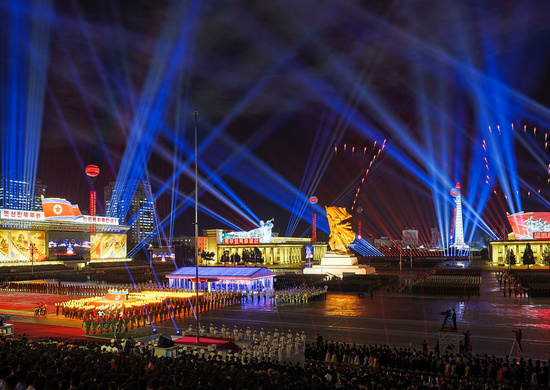
The design of the square stresses clear sightlines and flexibility: there are few permanent fixtures in the central area, allowing unimpeded marching formations, motorized columns and choreographed displays. Surrounding balustrades, stairways and raised platforms permit dignitaries and invited audiences to observe events from an official vantage point. Lighting and sound systems are periodically installed for evening ceremonies and televised broadcasts.
Uses and notable events
Kim Il-sung Square is used for a range of state-organized activities. Typical uses include:
- Military parades and processions staged for national holidays and anniversaries.
- Mass rallies, demonstrations of loyalty and orchestrated public performances.
- Ceremonial gatherings, flag-raising events and televised commemorations.
These events are choreographed for large-scale visual effect and frequently attract attention from domestic and foreign media, as well as official photographers.
History and significance
Named after the country’s founding leader, the square symbolizes centralized authority and collective display. Over time it has become an urban stage where political narratives are made visible through disciplined formations and public ritual. While access is controlled and activities are state-managed, the plaza remains a defining element of Pyongyang’s public geography and national iconography.
Access and public context
Access to the square is tightly regulated; public attendance at major events is often organized, and photography or movement during official ceremonies is subject to oversight. For foreigners, views of the square are commonly obtained from official tour routes, riverside vantage points and state-guided visits. The square’s prominence in the cityscape makes it an enduring symbol of Pyongyang’s political life and a frequent focal point for visitors seeking to understand North Korean public ritual.
Coordinates and map references are often cited in travel and reference sources when describing the square’s position along the Taedong River.
Related articles
Author
AlegsaOnline.com Kim Il-sung Square Leandro Alegsa
URL: https://en.alegsaonline.com/art/53448