
Kerning in Typography: adjusting space between letterforms
Kerning is the typographic adjustment of space between individual letter pairs to improve visual balance, legibility and aesthetic harmony in text and display settings.
Overview
Kerning is the intentional adjustment of horizontal space between specific pairs of letters to create a visually consistent and readable sequence of characters. It is a core practice in typography used for both body text and display type. While often subtle, kerning affects how a sequence of letters is perceived: poorly kerned text can look uneven, cramped, or loose, whereas careful kerning yields smoother letter-to-letter transitions and improved legibility.
Image gallery
3 Images

How kerning works and where it is applied
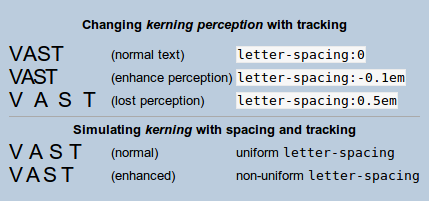
Kerning modifies spacing at the pair level, unlike tracking (or letter-spacing), which uniformly alters spacing across a range of characters. Adjustments can be positive (adding space) or negative (reducing space) depending on the shapes involved. Commonly adjusted pairs include combinations where one letter's shape intrudes into the optical field of its neighbor, for example AV, To, or Wa. Most modern fonts include kerning tables describing recommended pair adjustments, and layout programs offer both automatic and manual kerning controls.
Methods and technologies
There are two principal approaches to kerning in digital typesetting: metric kerning and optical kerning. Metric kerning uses pair data embedded in the font (from the designer) to apply predefined adjustments. Optical kerning analyzes glyph outlines and computes spacing algorithmically, which can be useful when mixing fonts or when the font lacks complete kerning information. OpenType fonts may include extensive kerning pairs and contextual rules to handle many letter combinations.
Examples and practical considerations
Designers often kern prominent text such as headlines, logos, and signage more carefully than body copy, because small visual inconsistencies become more obvious at large sizes. Typical manual adjustments correct awkward gaps around angled or oversized characters. Below are examples and common workflow steps:
- Look for distracting spaces in display text: sequences like AV, LY, Te.
- Choose metric kerning when using a font as intended by its designer; use optical kerning to reconcile mixed-font settings.
- Apply manual kerning sparingly and consistently; excessive tweaking can introduce new rhythm problems.
History and relation to other typographic practices
Kerning has roots in manual typesetting, where physical sorts were moved or modified so adjacent letters fit together. Metal type sometimes required cutting away parts of a piece to avoid collisions, and early printing used ligatures—single pieces that represent two letters—to solve recurring problems. Today, ligatures remain a related but distinct concept: they are specially designed combined glyphs, while kerning is an adjustment of spacing between separate glyphs. Both techniques aim to improve legibility and visual unity.
Importance and common pitfalls
Good kerning supports readability and strengthens brand presentation; poor kerning can make text look amateurish. Automated tools reduce effort, but designers should proof important materials by eye. Over-kerned text can create uneven word color (the overall darkness or lightness of text on a page), so balance is crucial. For further technical background on typographic practice and legibility, see related resources.
Related articles
Author
AlegsaOnline.com Kerning in Typography: adjusting space between letterforms Leandro Alegsa
URL: https://en.alegsaonline.com/art/53019