
Katsushika Hokusai — Japanese ukiyo-e master and printmaker
Katsushika Hokusai (1760–1849) was a Japanese ukiyo-e painter and printmaker best known for The Great Wave and his landscape series. This article outlines his life, style, major works, and lasting influence.
Overview
Katsushika Hokusai (葛飾北斎, October 31, 1760–May 10, 1849) is one of the most influential figures in Japanese art. In the Japanese naming order the family name is Katsushika. He became renowned as a painter and designer of woodblock prints in the ukiyo-e tradition, creating images that broadened the subject matter of that genre beyond urban pleasures to include sweeping landscapes, nature studies and everyday life.
Image gallery
10 Images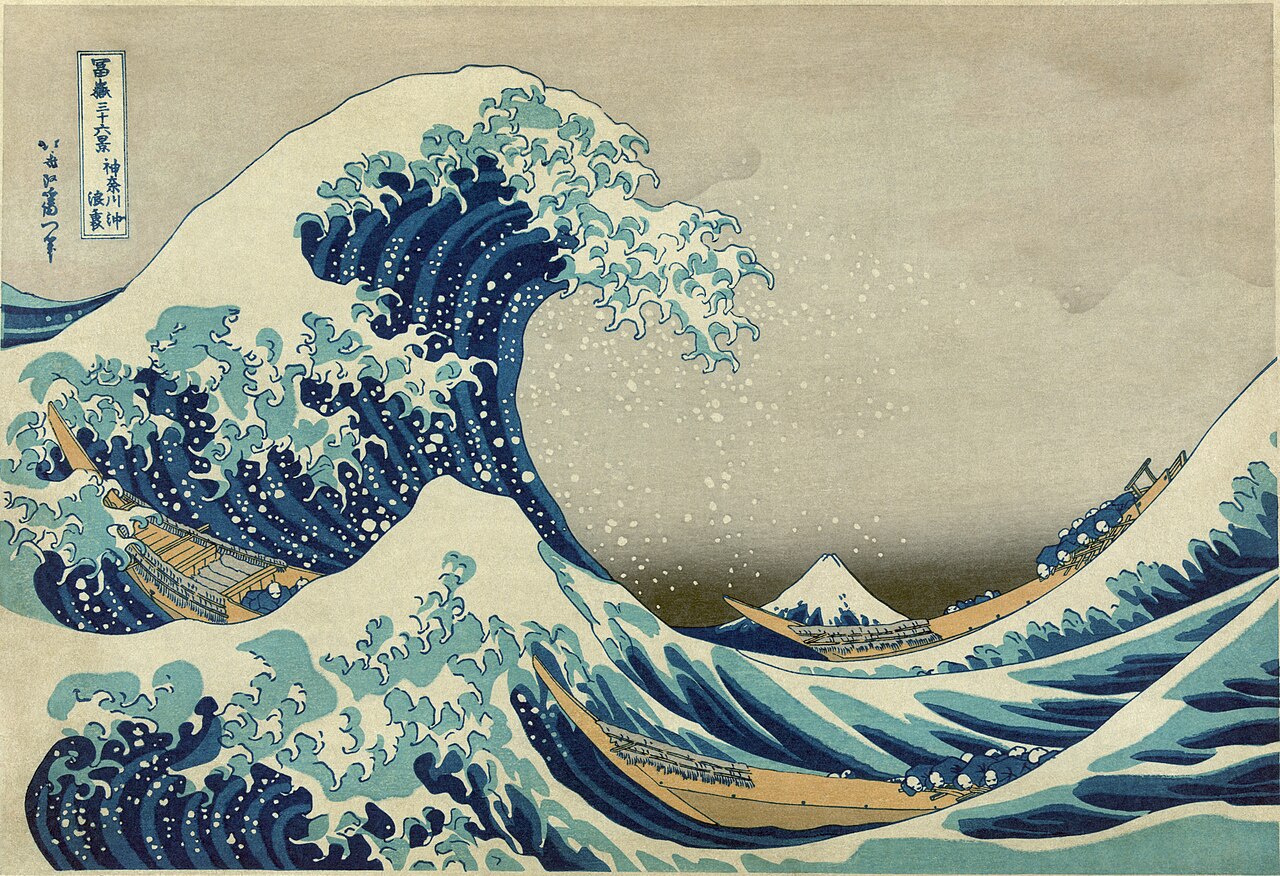


Life and names
Hokusai spent most of his working life in Edo (modern Tokyo). Over many decades he adopted numerous art-names as was common for Japanese artists of the time; these name changes marked shifts in style, workshop affiliation, or personal reinvention. His long career produced paintings, sketches, illustrated books and thousands of print designs.
Style, materials and technique
Hokusai worked primarily in woodblock print production, collaborating with carvers and printers to translate his designs into editions. He embraced new materials such as synthetic Prussian blue, which helped produce the vivid blues seen in coastal scenes. His compositions are noted for bold line work, inventive perspective, and economical use of color while combining traditional Japanese aesthetics with novel viewpoints influenced by imported Western techniques.
Major works and series
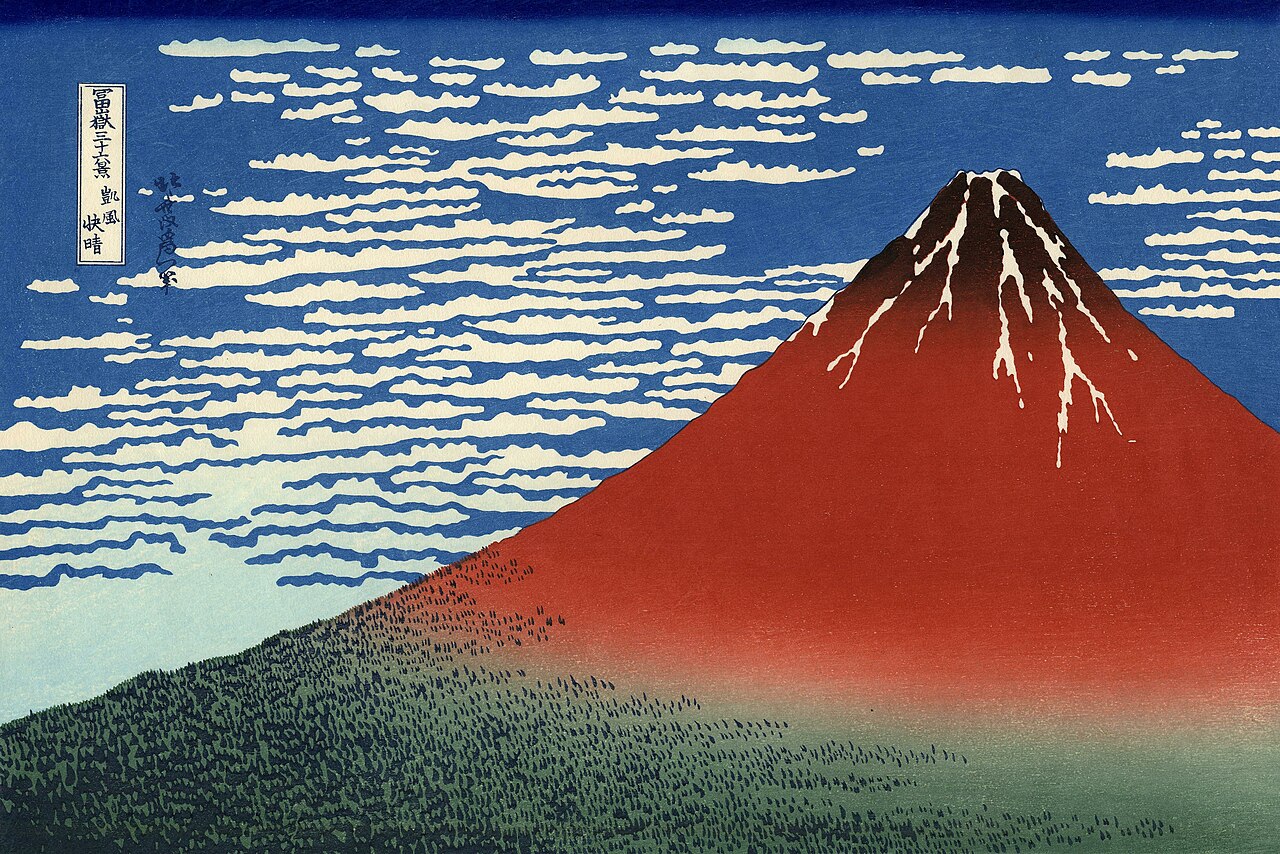
Hokusai is best known internationally for the image commonly called The Great Wave off Kanagawa, part of the series Thirty-six Views of Mount Fuji. Other important productions include the multi-volume sketchbooks known as the Hokusai Manga, and the later, more ambitious set titled One Hundred Views of Mount Fuji. These works show his fascination with Mount Fuji as a recurring subject and his desire to explore form, movement and everyday scenes.
Legacy and influence
Hokusai's compositions and palette had a profound impact beyond Japan. During the 19th century, his prints reached Europe and contributed to the Japonisme movement, influencing Impressionist and Post-Impressionist artists who admired his cropping, flat color areas, and new approaches to perspective. In Japan his sketchbooks became a resource for artists, illustrators and craftsmen.
Notable facts and distinctions
- He worked well into old age and continually changed his artistic name to signal new phases.
- His prints helped elevate landscape subjects within ukiyo-e from background motifs to central themes.
- Collections of his prints and sketches remain widely studied and reproduced; his imagery appears frequently in modern culture and scholarly discussion.
Hokusai's blend of technical skill, restless experimentation and rich imagination secured him a place as a pivotal bridge between traditional Japanese printmaking and modern visual art. For further focused study, see linked topics on naming conventions, ukiyo-e practice, and his principal series above.
Related articles
Author
AlegsaOnline.com Katsushika Hokusai — Japanese ukiyo-e master and printmaker Leandro Alegsa
URL: https://en.alegsaonline.com/art/52524
Sources
- books.google.com : "Hokusai"
- books.google.com : Gardner's Art Through the Ages: Non-Western Perspectives, p. 115