
Karl Otto Pöhl — German central banker and Bundesbank president
Karl Otto Pöhl (1929–2014) was a leading German economist who led the Deutsche Bundesbank from 1980 to 1991, known for his commitment to price stability and influence on European monetary policy.
Overview
Karl Otto Pöhl (1 December 1929 – 9 December 2014) was a German economist and central banker who served as President of the Deutsche Bundesbank and Chairman of its Central Bank Council from 1980 until 1991. He became one of the most visible figures in international finance during the 1980s and early 1990s, shaping debates on inflation, exchange rates and central bank independence. For a general biography, see biographical sources.
Image gallery
1 Image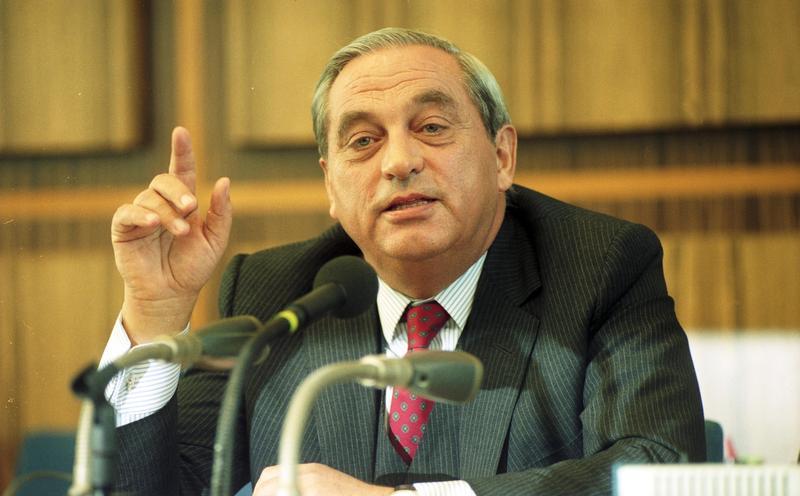
Early life and career
Pöhl was born in Hanover, a city in northern Germany, and grew up in the region of Lower Saxony. He trained as an economist and rose through the ranks of Germany's central banking system. His professional experience at the Bundesbank before 1980 gave him a detailed understanding of both domestic monetary policy and Germany's role in the international financial system. For more on his hometown, consult Hanover and the wider area of Lower Saxony.
Role and responsibilities
As Bundesbank president, Pöhl had responsibility for guiding monetary policy in pursuit of price stability, advising on interest-rate decisions, and representing Germany in international monetary fora. Under his leadership the Bundesbank maintained a strong anti-inflation posture and defended the stability of the Deutsche Mark, which was a central concern for policy makers and markets during that era.
Policies, influence and debates
Pöhl was widely regarded for insisting on the primacy of low and stable inflation as the Bundesbank's central objective. His approach influenced discussions on monetary policy coordination in Europe and informed arguments for central bank independence that later shaped the design of the European Central Bank. He frequently participated in international meetings where exchange-rate and macroeconomic policy coordination were debated.
Legacy and criticism
Supporters credit Pöhl with reinforcing the credibility of German monetary policy and helping to anchor expectations about inflation. Critics argued that an excessive focus on currency strength and tight monetary settings could exacerbate unemployment or place pressures on trading partners. His tenure is often studied as an example of how national central banks balance domestic objectives with international responsibilities.
Later life and death
After leaving the Bundesbank in 1991, Pöhl remained an influential voice on financial and economic matters and continued to appear in discussions about monetary policy and European integration. He died on 9 December 2014 in Zurich at the age of 85; further information can be found via additional sources.
- Key positions: President of the Deutsche Bundesbank (1980–1991)
- Main concerns: price stability, central bank independence, exchange-rate stability
Related articles
Author
AlegsaOnline.com Karl Otto Pöhl — German central banker and Bundesbank president Leandro Alegsa
URL: https://en.alegsaonline.com/art/52339