
Kaharoa eruption (New Zealand, c. 1314)
A widespread tephra-producing eruption centered on the Tarawera area around 1314 CE. The Kaharoa ash layer is a key chronological marker for archaeology and environmental studies across the North Island.
Overview
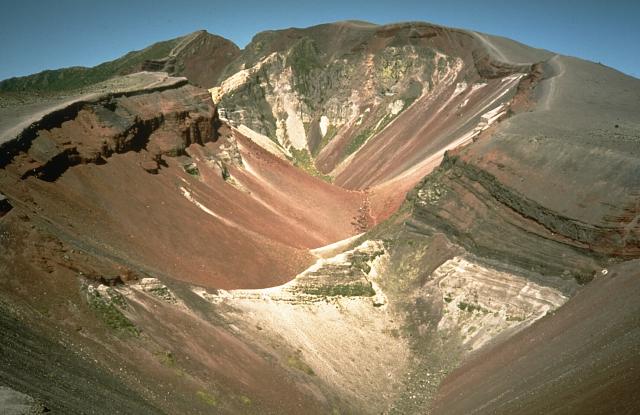
The Kaharoa eruption was a volcanic event dated to about 1314 CE that deposited a distinctive layer of ash and tephra across large parts of New Zealand's North Island. The material is commonly referred to as the Kaharoa tephra or Kaharoa ash. Much of the fallout is traced back to vents in the Tarawera complex, including Mount Tarawera, and the layer is widely recognized in soils, lake sediments and peat deposits across the eastern and northern regions of the island.
Image gallery
10 Images



Characteristics and distribution
The Kaharoa deposit appears as a fine- to medium-grained tephra horizon that can be thin and diffuse in some settings and thicker closer to source vents. It is identifiable not only by stratigraphic position but also by its geochemical signature, which allows researchers to distinguish it from other volcanic deposits. The ash was dispersed by prevailing winds and is recorded hundreds of kilometres from the eruption centre, providing a broad regional marker horizon.
Dating and correlation
This tephra is a crucial chronological marker because its emplacement coincides with the early period of human occupation in New Zealand. Radiocarbon and other dating methods place the deposit in the early 14th century, which helps link archaeological deposits above or below the layer to a specific time slice. By correlating the Kaharoa horizon between sites, investigators can synchronize settlement, land-use and environmental records across a wide area.
Uses in research and archaeology
- Stratigraphic marker: The Kaharoa layer provides a time-parallel surface used to date cultural and natural deposits.
- Paleoenvironmental reconstruction: Pollen, charcoal and sediment analyses on either side of the tephra help reveal ecological change and human impacts around the time of deposition.
- Geomorphology and sediment studies: The layer aids in measuring sedimentation rates and mapping landscape responses to both volcanic input and human activities.
Notable facts and distinctions
The Kaharoa tephra is one of several marker horizons used in New Zealand tephrochronology and is often cited in discussions of Polynesian settlement because it provides a temporal anchor for early Māori archaeology. Its wide distribution and reliable identification make it especially valuable to researchers conducting cross-disciplinary studies of past environments and human ecology. For more on how this horizon is applied in fieldwork and interpretation, see archaeological studies.
Because volcanic deposits can vary in thickness and preservation, identification sometimes requires a combination of field stratigraphy, microscopic examination and chemical fingerprinting. When correctly recognized and correlated, the Kaharoa layer remains one of the most useful markers for reconstructing New Zealand's late prehistoric sequence.
Related articles
Author
AlegsaOnline.com Kaharoa eruption (New Zealand, c. 1314) Leandro Alegsa
URL: https://en.alegsaonline.com/art/51886