
Junior Eurovision Song Contest 2006 — Bucharest, Romania
The fourth Junior Eurovision Song Contest, held on 2 December 2006 in Bucharest, Romania. A youth music competition organized by Romanian Television and the EBU for singers aged 8–15.
Overview
The Junior Eurovision Song Contest 2006 was the fourth edition of the annual contest for young singers aged 8 to 15. It was staged on 2 December 2006 in Bucharest, Romania, marking the second time the competition took place in a national capital (capital city). The event brought together national broadcasters and young performers from across Europe to present original songs in a televised live show.
Image gallery
2 Images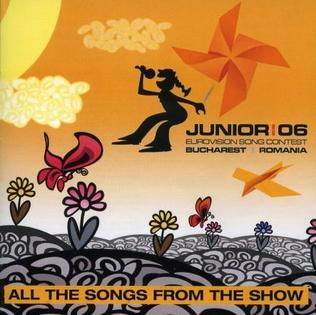

Organization and venue
The show was produced by the host broadcaster Romanian Television (TVR) in cooperation with the European Broadcasting Union (EBU). TVR secured hosting rights after a bid process in which other broadcasters expressed interest. The production followed the contest’s established format of live performances, interval acts and a central voting sequence to determine the overall winner.
Format, participants and voting
As with other Junior Eurovision editions, each participating country submitted a single act—typically a solo singer or small group—performing a song live on the night. Entrants were children and teenagers within the event’s age limits. The outcome was decided through a public voting mechanism combined with national juries, designed to balance popular televotes with professional assessment. The 2006 contest is noted for its professional staging and the international exposure it gave young artists.
Hosting bids and interest
Romania won the right to host the 2006 contest over competing bids; for example, broadcasters such as AVRO from the Netherlands had been considered (AVRO). Other countries, including Croatia, had also shown interest in hosting before TVR was confirmed. The selection process reflected both logistical capacity and broadcasters’ willingness to stage an event suitable for families and younger performers.
Results and legacy
The competition helped raise the profile of participating young artists and occasionally launched music careers. One notable outcome of the 2006 edition was that the winning act later continued to participate in adult international contests, illustrating how Junior Eurovision can serve as an early platform for developing performers. The 2006 show reinforced the event’s role as a pan-European showcase for youth music and live television production.
Questions and answers
Q: What is the Junior Eurovision Song Contest 2006?
A: The Junior Eurovision Song Contest 2006 is the fourth edition of the Junior Eurovision Song Contest, a singing competition for young singers between 8 and 15.
Q: When was the Junior Eurovision Song Contest 2006 held?
A: The Junior Eurovision Song Contest 2006 was held on 2 December 2006.
Q: Where was the Junior Eurovision Song Contest 2006 broadcasted from?
A: The Junior Eurovision Song Contest 2006 was broadcasted live from Bucharest, Romania.
Q: Who organised the Junior Eurovision Song Contest 2006?
A: The Junior Eurovision Song Contest 2006 was organised by the Romanian national broadcaster, Romanian Television (TVR), in co-operation with the European Broadcasting Union (EBU).
Q: Who won the rights to host the Junior Eurovision Song Contest 2006?
A: TVR won the rights to host the Junior Eurovision Song Contest 2006 over AVRO of the Netherlands.
Q: Did Croatia also show an interest in hosting the Junior Eurovision Song Contest 2006?
A: Yes, Croatia also showed an interest in hosting the Junior Eurovision Song Contest 2006.
Q: What is the age range for the participants in the Junior Eurovision Song Contest?
A: The age range for the participants in the Junior Eurovision Song Contest is between 8 and 15.
Related articles
Author
AlegsaOnline.com Junior Eurovision Song Contest 2006 — Bucharest, Romania Leandro Alegsa
URL: https://en.alegsaonline.com/art/51652
Sources
- esctoday.com : 'EBU Confirms: Romania to host Junior 2006'
- esctoday.com : 'Croatia and Romania want to host junior 2006'