
Józef Kowalski — Polish veteran of the Polish–Soviet War
Biography of Józef Kowalski, a Polish soldier who fought in the Polish–Soviet War (1919–1921), his longevity claims, later life, recognition and the historical context of his service.
Józef Kowalski was a Polish soldier who served during the chaotic years that followed World War I and who later became widely reported as one of the last surviving veterans of that era in Poland. He is most often associated with service in the Polish–Soviet War (1919–1921), a conflict that shaped the borders of the newly reconstituted Polish state. In press accounts and commemorations he was described as a veteran of the immediate post‑World War I period and attracted attention late in life because of claims about his advanced age.
Image gallery
1 Image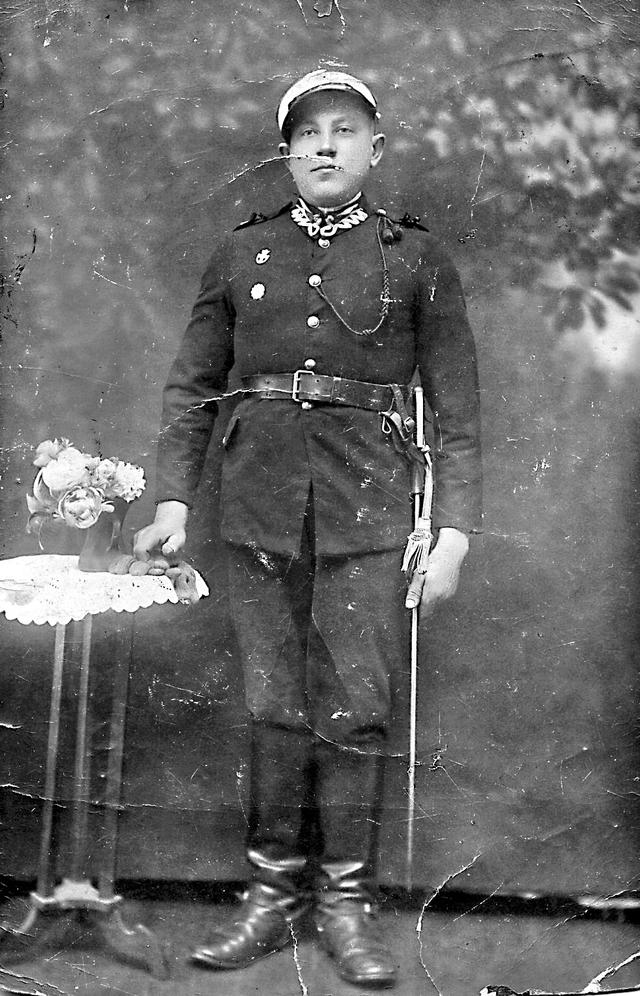
Military service and historical context
The Polish–Soviet War arose in the aftermath of the First World War and the collapse of empires, as Poland sought to secure its independence and frontiers while Bolshevik Russia aimed to export revolution westward. Soldiers like Kowalski were part of mobilisations that drew on volunteers, conscripts and former wartime fighters. Exact details of Kowalski's unit, rank or battles are not universally documented in public records, a common situation for many lower‑rank veterans from that period.
Later life and longevity claims
In later decades Kowalski lived in western Poland. He received media attention when he was presented as one of the last veterans of the post‑World War I conflicts in Poland. Some sources reported that he lived in a care home in Tursk near Sulęcin. Accounts of his birth year vary; several reports cite 1900 as his year of birth, and he celebrated an advanced age in his final years. After the death of American veteran Gertrude Noone, some commentators suggested Kowalski might have been the oldest living military veteran worldwide, though that status depended on verification of his age.
Verification and records
Longevity claims for individuals born around 1900 are often hard to confirm because civil and church records can be incomplete, lost, or contradictory. Organizations that track supercentenarians, such as the Gerontology Research Group, and adjudicators of world records, such as Guinness World Records, apply strict documentary standards before recognizing the ‘‘oldest’’ titles. Available public reporting indicates that these bodies did not formally verify Kowalski as the oldest living man. Media pieces also compared his age claims to other long‑lived contemporaries, notably Japanese supercentenarian Jiroemon Kimura, who for a period held widely accepted records.
Recognition and legacy
Even without universal verification of his exact age, Kowalski became a symbol of the dwindling generation that directly experienced the formative conflicts of early 20th‑century Poland. Public interest in his life highlights how nations remember and commemorate veterans from foundational wars. For many Poles, surviving fighters of the Polish–Soviet War represented a living link to the struggles that secured Poland’s interwar borders and independence.
Key facts
- Service: participated in the period of conflict commonly referred to as the Polish–Soviet War (1919–1921).
- Residence: later years spent in the region of Tursk near Sulęcin and in a care facility.
- Longevity claims: reported to have been born around 1900 and became the subject of aged‑veteran reports; official global verification bodies did not confirm an ‘‘oldest man’’ title.
- Context: his story illustrates challenges in verifying ages of early 20th‑century veterans and the broader cultural role of such figures in national memory.
For broader context on the conflict in which Kowalski fought, see general histories of the Polish–Soviet War and sources that discuss veteran affairs in Poland in the 20th century. Contemporary reports and obituaries that mentioned Kowalski often framed him within a small cohort of remaining veterans from the immediate post‑World War I period; these accounts are useful for understanding public commemoration even when precise documentary confirmation is limited. Additional reading can be found through veteran associations and national archives that collect service records and oral histories relating to that era.
References in press coverage sometimes use the phrase "Polish veteran" to describe Kowalski and others from his generation; for further reading on veterans and commemoration practices in Poland, consult specialist works and archival material on 20th‑century Polish military history, as well as organizations that monitor verified supercentenarians and service records (Polish veteran resources).
Related articles
Author
AlegsaOnline.com Józef Kowalski — Polish veteran of the Polish–Soviet War Leandro Alegsa
URL: https://en.alegsaonline.com/art/51330
Sources
- wiadomosci.wp.pl : "Pan Józef ma 107 lat i czuje się znakomicie"
- gazetalubuska.pl : "200 lat dla pana Józefa! Najstarszy Lubuszanin mieszka w Tursku"