
Józef Piłsudski — Polish statesman and military leader
Józef Piłsudski (1867–1935) was a leading figure in Polish independence, a military commander and political leader of the Second Polish Republic, remembered for restoring statehood and shaping interwar Poland.
Overview
Józef Klemens Piłsudski (5 December 1867 – 12 May 1935) is one of the central personalities in modern Polish history. He is widely regarded in Poland as a founding father of the reconstituted state that emerged at the end of World War I. His career combined underground political activism, military leadership and high state office; his influence shaped the formative decade of the Second Polish Republic and continued until his death in 1935. Outside Poland his name is associated with the struggle to restore Polish independence after more than a century of partition.
Image gallery
10 Images
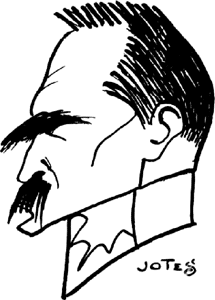


Early life and revolutionary activity
Born into a family of the Polish landed gentry in the part of the former Commonwealth controlled by the Russian Empire, Piłsudski grew up at a time when Polish national institutions were suppressed and assimilation policies were promoted. From an early age he became involved in socialist and independence circles. His opposition to the Russian Imperial authorities led to arrest and exile to Siberia in the late 19th century, an experience that deepened his commitment to national renewal. After returning from exile he remained active in clandestine political organizations and published periodicals that argued for autonomy and eventual independence for Poland.
World War I and the Polish Legions
Piłsudski believed that the collapse of one or more of the partitioning powers might open the way to re-establishing Polish statehood. When World War I began, he organized and led the Polish Legions within the Austro-Hungarian theatre; these formations were composed of volunteers who hoped to use the conflict to advance the Polish cause. He commanded the renowned I Brigade, which became symbolic of the broader effort to restore sovereignty. His pragmatic relationship with the Central Powers was controversial: he cooperated with Austria-Hungary and, to a degree, Germany, while refusing to submit to Russian domination. At a turning point he broke with the Central Powers, was briefly arrested by the Germans, and spent time in detention before political circumstances changed at the end of the war.
Restoration of the state and early republican politics
In November 1918 Piłsudski returned to Warsaw and assumed a leading role in the transfer of authority to Polish hands after the collapse of the occupying empires. As head of state (often referred to by the Polish title Naczelnik Państwa), he presided over the difficult task of organizing an administration, creating national armed forces, and negotiating the uncertain military and diplomatic situation that followed. The early years of the republic were turbulent; the assassination of President Gabriel Narutowicz and other political crises contributed to Piłsudski's temporary withdrawal from everyday politics, though he remained a respected national figure.
May Coup and the authoritarian turn
By the mid-1920s political paralysis, economic strain and factional conflict prompted many veterans and politicians to look to Piłsudski for decisive leadership. In May 1926 he led a military coup that forced the resignation of President Stanisław Wojciechowski and a reshaping of the government. Piłsudski himself did not become president; instead he exercised substantial power behind the scenes. His supporters argued that this intervention stabilized the state, while critics viewed it as a setback for parliamentary democracy. During the subsequent decade the government implemented constitutional and administrative changes aimed at strengthening central authority and the armed forces.
Roles, policies and public image
Piłsudski held a variety of formal and informal roles: military commander, statesman, and mentor to a generation of officers and politicians. His policies combined nationalist aims with a pragmatic approach to alliances and social reform; he promoted a professional army and sought to balance hostile neighboring powers without fully aligning with any single great power. A brief list of notable aspects of his career includes:
- Revolutionary and exile: early involvement in socialist and independence movements, imprisonment and Siberian exile for anti-tsarist activities (Tsarist authorities).
- Military leadership: founder and commander within the Polish Legions during World War I; advocated creating national armed forces to secure independence.
- State founder: central to the reestablishment of an independent Poland after partitions that had left the country stateless since 1795 (not independent).
- Political authority: chief figure in the 1926 takeover and in shaping interwar governance.
Context and legacy
The story of Piłsudski cannot be separated from the history of the partitions of Poland, when the former Commonwealth was divided among Russia, Prussia and Austria-Hungary. His life spanned the last decades of imperial rule and the turbulent birth of a modern nation-state. He opposed both the Germanic and Russian models of domination—tensions that defined his strategic choices—and his biography reflects the larger clash of empires that produced a reconfigured Central and Eastern Europe after 1918. For readers who wish to explore the background in more detail, consider sources on the partitions of Poland, the roles of Russia, Prussia and Austria-Hungary in Polish history, and the development of Polish political life in the interwar era (see political movements and constitutional debates).
Assessment
Piłsudski remains a polarizing but prominent figure: admired by many for securing independence and stabilizing the state, criticized by others for his extra-parliamentary methods and concentration of power. His military achievements, administrative reforms and personal charisma left a durable imprint on Poland's institutions and national memory. Monuments, place names and public commemorations attest to the central place he occupies in Polish public life, while historians continue to debate the long-term effects of his policies on democracy and international alignment.
Further reading and archival material are available through specialized institutions and historical collections; for targeted inquiries consult military histories, biographies and studies of Central European diplomacy in the early 20th century.
Questions and answers
Q: Who was Józef Klemens Piłsudski?
A: Józef Klemens Piłsudski was an important leader of Poland who is seen in Poland as the father of the Polish state, since he declared Poland's independence at the end of World War 1.
Q: What happened to Poland between 1795 and 1918?
A: Between 1795 and 1918, Poland was not an independent country. The partitions of Poland divided it into three parts between Russia, Prussia (Germany) and Austria-Hungary.
Q: How did Piłsudski get involved in politics?
A: Piłsudski got involved in politics when he returned from Siberia after being sent there for helping people who tried to overthrow the Russian Tsar. He then became a soldier and wanted to make Poland independent again.
Q: What army did Piłsudski create during WWI?
A: During WWI, Piłsudski created a Polish army in Austria called the Polish Legions. He is famous for leading the I. Brigade of the Polish Legions.
Q: What happened when WWI ended?
A: When WWI ended, Piłsudski was freed and came to Warsaw in November 1918 where he helped organize a newly independent Poland after 123 years of partitioning by other countries.
Q: Who became president after Gabriel Narutowicz was assassinated? A: After Gabriel Narutowicz was assassinated Stanisław Wojciechowski became president but later resigned due to pressure from people wanting Pilsudki back so Ignacy Mościcki, Pilsudki's close friend, became president instead.
Related articles
Author
AlegsaOnline.com Józef Piłsudski — Polish statesman and military leader Leandro Alegsa
URL: https://en.alegsaonline.com/art/51333