
Sir John Steell (1804–1891), Scottish sculptor
Sir John Steell was a leading 19th‑century Scottish sculptor whose public monuments and portrait work shaped Edinburgh's civic landscape, notably statues of the Duke of Wellington and Sir Walter Scott.
Overview
Sir John Steell (1804–1891) was a prominent Scottish sculptor whose career shaped much of Edinburgh's nineteenth‑century public sculpture. Born in Aberdeen, he moved to Edinburgh early in life and established a workshop there. Over several decades he produced portrait busts, memorials and large bronze and stone monuments commissioned by civic bodies, private patrons and national institutions.
Image gallery
10 Images

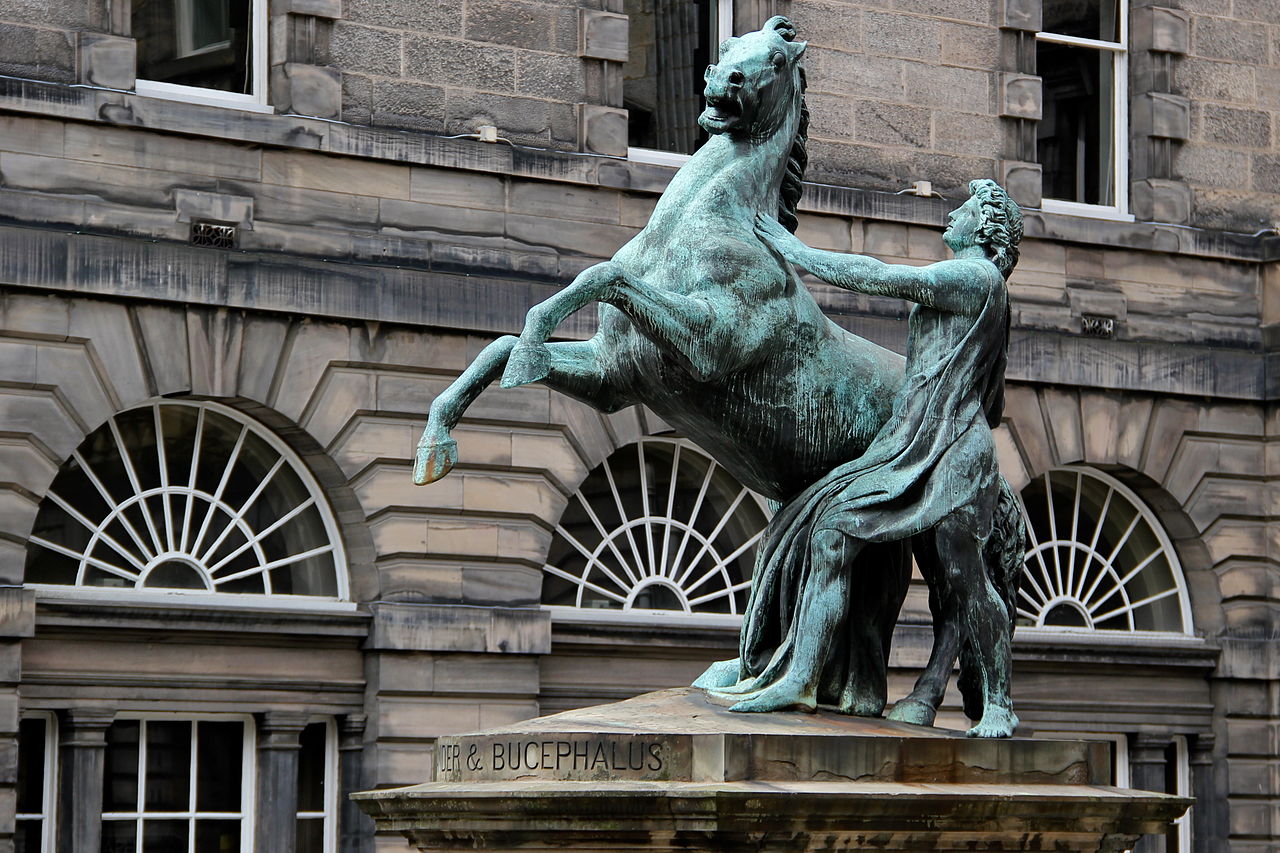


Training and career development
Steell trained in the technical skills of carving and modelling that were standard for sculptors of his generation and absorbed classical influences common to European academic practice. He combined careful attention to likeness with the requirements of public commemoration, producing works intended to be read and understood by a broad Victorian audience. His studio in Edinburgh became a centre for major local commissions and for the casting and finishing of bronzes destined for city streets and squares.
Notable works
Steell's output includes several high‑visibility public monuments that remain landmarks. Examples include:
- the equestrian statue of the Duke of Wellington outside Register House in Edinburgh, a well‑known civic landmark;
- the seated figure of Sir Walter Scott within the Scott Monument, a key element of the monument's narrative;
- numerous portrait busts and memorials in churches, colleges and public buildings across Scotland.
Style and influence
Steell worked within the broad conventions of nineteenth‑century British public sculpture: a neoclassical sense of proportion and form combined with a Victorian emphasis on character, dignity and recognisability. His commissions required technical mastery—especially in bronze casting—and an ability to scale figures for outdoor display. As one of Scotland's leading sculptors of the era, his practice influenced how successive generations thought about commemorative sculpture in urban settings.
Legacy
Today Steell's statues remain prominent features of Edinburgh's historic centre and of other Scottish towns. They are frequently cited in discussions of Victorian civic art and conservation. While tastes in public commemoration have changed, his work is valued both for its craftsmanship and for the role it played in forming a visual identity for nineteenth‑century Scotland.
Further reading and archival material about his life and commissions can be found through specialist art histories and local museum collections. For concise biographical summaries and catalogues of works, consult museum and heritage resources or dedicated studies of nineteenth‑century British sculpture.
Related articles
Author
AlegsaOnline.com Sir John Steell (1804–1891), Scottish sculptor Leandro Alegsa
URL: https://en.alegsaonline.com/art/50815