
John Ross (Cherokee chief)
John Ross (1790–1866) was the long-serving Principal Chief of the Cherokee Nation who led legal and political resistance to forced removal and guided the nation through removal and Civil War upheaval.
John Ross (1790–1866) was the principal chief of the Cherokee Nation for nearly four decades. Of mixed Cherokee and European ancestry, Ross became the foremost political leader and diplomat for the Cherokee people during a period of intense pressure from states and the federal government. He is best known for opposing removal, pursuing legal avenues in the U.S. courts, and guiding the nation through the traumatic relocations known as the Trail of Tears.
Image gallery
7 Images


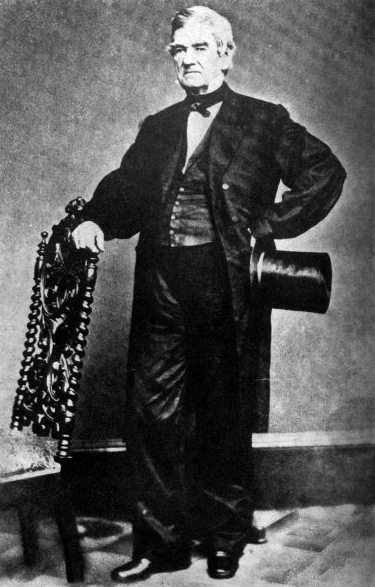
Early life and rise to leadership
Born in the southeastern Cherokee homeland, Ross grew up bilingual and bicultural, which allowed him to serve as an interpreter and negotiator. As Cherokee political institutions evolved in the early 19th century, he helped to shape the Nation’s written constitution and was elected principal chief in 1828. His leadership combined traditional Cherokee values with an understanding of American law and diplomacy.
Legal and political resistance
Ross led sustained opposition to removal policies such as the federal Indian Removal Act, using petitions, delegations to Washington, and litigation. Under his direction the Cherokee pursued cases in the United States courts, including actions that produced decisions affecting tribal sovereignty in the early 1830s. Despite favorable rulings in some instances, pressure from state governments and a treaty signed by a small minority of Cherokees in 1835 forced removal on the majority who had opposed it.
Removal, rebuilding, and Civil War
Though Ross vigorously protested the 1835 Treaty of New Echota and refused to accept its terms, enforcement eventually led to the forced relocation of thousands of Cherokee people in 1838–1839. After resettlement in Indian Territory, Ross worked to restore Cherokee government, schools, and legal institutions. During the American Civil War the Nation became internally divided; Ross struggled to preserve unity and to protect Cherokee interests amid competing pressures from Union and Confederate authorities.
Legacy and notable facts
- Ross served as principal chief from 1828 until his death in 1866, making him one of the most enduring leaders in Cherokee history.
- He rejected the 1835 treaty negotiated by a small faction and argued that it did not represent the Cherokee people as a whole.
- Ross’s diplomatic efforts included repeated travels to Washington to appeal to presidents and Congress for recognition and relief.
John Ross remains a central figure in Cherokee history: a leader whose career illustrates the limits of legal and political resistance when confronted by powerful state and federal forces, and whose efforts helped preserve Cherokee institutions through displacement and war. For further context on the policies that led to removal see the Indian Removal Act.
Related articles
Author
AlegsaOnline.com John Ross (Cherokee chief) Leandro Alegsa
URL: https://en.alegsaonline.com/art/50792