
John Pope (Union Army general)
Union general John Pope (1822–1892) was a career Army officer noted for Western successes and his defeat at Second Bull Run; later assigned to frontier commands and remained in the regular army after the Civil War.
John Pope was a professional U.S. Army officer who rose to prominence during the American Civil War. A West Point graduate and veteran of antebellum frontier duty, he is best known for a mixture of early Union successes in the Western theater and a high-profile defeat after being transferred east. His career illustrates the shifting fortunes of several Civil War commanders and the challenges of moving commanders between theaters.
Image gallery
4 Images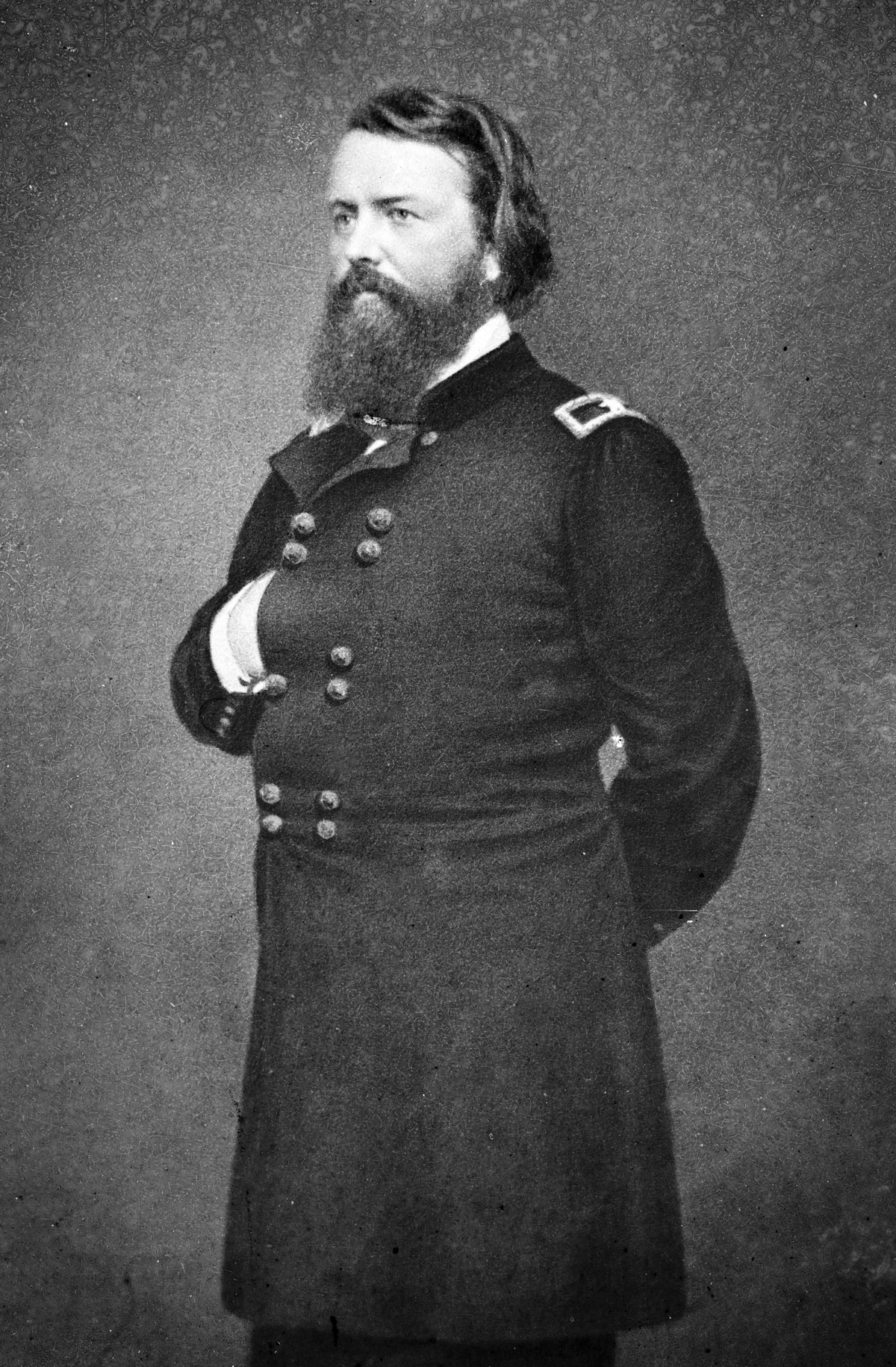


Early life and military background
Pope graduated from the United States Military Academy and served in the Mexican–American War and on frontier postings before the Civil War. He developed a reputation for strict discipline and administrative ability. That background prepared him to organize and lead volunteer troops when large-scale mobilization began in 1861.
Civil War service: successes and setback
In the Western theater Pope achieved notable operational success, most famously in operations that contributed to the Union capture of strategic positions on the Mississippi River. Those accomplishments led to his reassignment to command in Virginia, where he was given charge of multiple departments and armies and expected to take the offensive.
- Western operations: demonstrated effectiveness in combined operations on the Mississippi.
- Eastern transfer: placed in command of Union forces in northern Virginia.
- Second Bull Run (Second Manassas): suffered a decisive defeat against Confederate forces under Robert E. Lee, an episode that overshadowed earlier achievements.
Aftermath and later career
Following the defeat in Virginia, Pope was removed from front-line command and reassigned to other duties, including frontier posts and departmental commands in the Northwest. He continued to serve in the regular Army after the war, holding administrative and command posts during peacetime and remaining a controversial but consequential figure in mid-19th-century U.S. military history.
Legacy and significance
Pope's career is often discussed in studies of Civil War leadership because it highlights the impact of personality, theater experience, and political pressures on command appointments. His mixture of early operational skill and later high-profile failure has made him a frequent subject of military biographies and analyses of the 1862 campaigns.
For more detailed examinations of his life and campaigns, see contemporary collections and military histories: further reading on John Pope and archival materials at reference sites: archival resources.
Related articles
Author
AlegsaOnline.com John Pope (Union Army general) Leandro Alegsa
URL: https://en.alegsaonline.com/art/50772