
John Oxley — Royal Navy officer and early Australian explorer
John Oxley (1784–1828) was a Royal Navy officer who became Surveyor‑General of New South Wales and led significant inland and coastal explorations, including the Lachlan and Brisbane river regions.
Overview
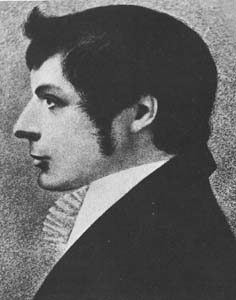
John Joseph William Molesworth Oxley (1784–1828) was a British naval officer and colonial surveyor who played a leading role in early exploration of eastern Australia. He arrived in Sydney in 1802, served in the Royal Navy, and later held the office of Surveyor‑General for the colony. His surveys and expedition reports improved European understanding of river systems, coastlines and inland country during the first decades of settlement.
Image gallery
6 Images


Early career and survey work
Oxley combined nautical training with practical surveying at a time when maps of the continent were incomplete. As Surveyor‑General he was responsible for coastal charts, land grants and exploratory reconnaissance. His official position gave him authority and resources to lead overland journeys and to record observations that would shape colonial policy and settlement patterns.
Major expeditions and discoveries
In a series of expeditions in the 1810s and early 1820s Oxley investigated rivers that penetrate the interior. He is particularly associated with the exploration of the Lachlan River, and he reported on the Macquarie and other waterways. In 1823 his coastal survey of the eastern seaboard led to the charting of Moreton Bay and the discovery of the Brisbane River entrance, a finding that later enabled the establishment of the town that became Brisbane.
Impact and influence
Oxley’s observations of topography, soils and river behaviour influenced subsequent expeditions and mapmaking. His reports and sketches provided useful starting points for later inland explorers such as Charles Sturt and Major Thomas Mitchell, who carried Australian interior exploration farther inland and into the interior river systems.
Legacy and commemoration
Oxley died in Sydney in 1828. His name survives in many Australian place names and institutions; in 1901 an Australian federal electoral district was named the Division of Oxley in his honour. Histories of early colonial exploration commonly cite him as one of the key figures who mapped and reported on eastern Australia during the settlement era.
Notable facts and assessment
- Role: naval officer turned colonial surveyor and explorer.
- Contributions: systematic surveys, river reconnaissance, and coastal charting.
- Limitations: many reports reflected the tools and knowledge of the time; later explorers revised and extended his findings.
Related articles
Author
AlegsaOnline.com John Oxley — Royal Navy officer and early Australian explorer Leandro Alegsa
URL: https://en.alegsaonline.com/art/50756