
John Babcock (Canadian First World War veteran)
John “Jack” Babcock (1900–2010) was the last surviving Canadian veteran of the First World War. He later settled in the United States, remained active into old age, and received several postwar honours.
Overview
John Henry Foster "Jack" Babcock (23 July 1900 – 18 February 2010) is widely remembered as the last surviving Canadian veteran of the First World War. Born in Ontario, he enlisted as a teenager with the Canadian Expeditionary Force and later made his life in the United States, where he served in the U.S. Army and became a naturalized citizen. In his later years he received recognition from Canadian veterans' organizations and government officials and regained Canadian citizenship while maintaining his American residency.
Image gallery
2 Images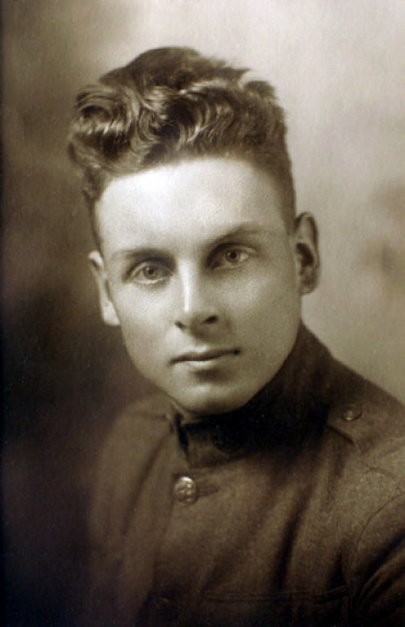
Early life
Babcock was born into a large farming family near Kingston, Ontario, one of thirteen children. His childhood included hardship; his father died in an accident when he was young, and the family relied on farm work for income. Like many young people of his era, he had limited formal schooling at first but later pursued education through correspondence and local courses.
Military service in the First World War
At age 15 Babcock joined the 146th Battalion of the Canadian Expeditionary Force in Sydenham, Ontario. After travelling to England he was assigned to reserve and training units, including the contingency often known as the "Boys' Battalion" for underage recruits waiting to be old enough for frontline duty. The war ended before he was posted to a combat unit at the front, so his wartime experience was shaped primarily by training and service in England.
Postwar life, emigration and continued service
After the war Babcock relocated to the United States. He served in the United States Army from 1921 to 1924 and became an American citizen in 1946. He settled in Spokane, Washington, where he worked, raised a family and remained active in his community. In later decades he pursued personal interests that attracted attention: he completed his high school diploma by correspondence, took college courses, learned to fly at the age of 65 and maintained a sharp memory into advanced age, reportedly able to recite the alphabet backwards and spell his name in Morse code.
Honours, recognition and public role
As the number of surviving veterans of the First World War dwindled, Babcock became a public figure and a symbol of a vanishing generation. His recognitions included a Minister of Veterans Affairs Commendation awarded in April 2008 and a reinstatement of Canadian citizenship in a small ceremony later that year. In September 2008 the Royal Canadian Regiment Association accorded him the honorary title of regimental patriarch, a distinction presented as unprecedented in Canada at that time.
Legacy and notable facts
John Babcock's life illustrates several broader themes in twentieth-century history: the youth of many who enlisted during wartime, the movement of veterans across borders in the postwar decades, and evolving approaches to remembrance and veteran recognition. His long life—spanning more than a century—helped maintain public memory of the First World War into the 21st century. Key points about him include:
- Early enlistment in the Canadian Expeditionary Force and service in training units in England.
- Postwar emigration to the United States and U.S. Army service in the early 1920s.
- Becoming an American citizen in 1946 while later having Canadian citizenship reinstated.
- Recognition by Canadian veterans' organizations and the federal Minister of Veterans Affairs.
For more information about the wartime context and the Canadian military formations Babcock joined, see resources on Canadian participation in the First World War and commemorative projects that document the lives of individual veterans.
Related articles
Author
AlegsaOnline.com John Babcock (Canadian First World War veteran) Leandro Alegsa
URL: https://en.alegsaonline.com/art/50540
Sources
- veterans.gc.ca : "Last Known Canadian First World War Veteran - The First World War - History - Remembrance - Veterans Affairs Canada"