
Johann Bernoulli
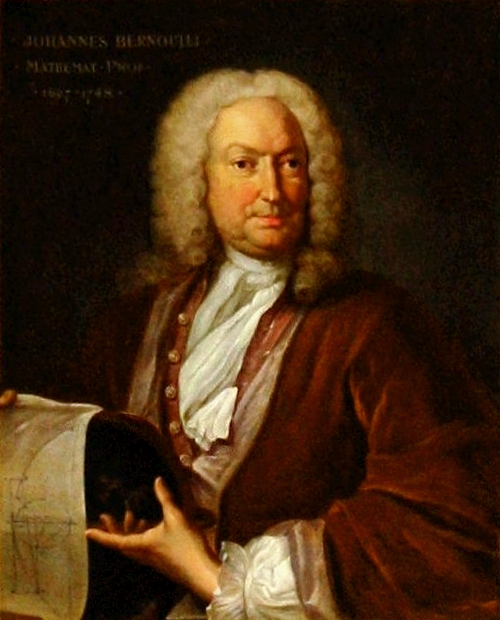
Swiss mathematician Johann Bernoulli (1667–1748) was a leading expositor of infinitesimal calculus, a teacher of Leonhard Euler, and a central figure in the Bernoulli family of mathematicians.
Overview
Johann Bernoulli (6 August 1667 – 1 January 1748) was a prominent Calvinist mathematician from Basel. A member of the well known Bernoulli family of scholars, he helped establish and spread the ideas of infinitesimal methods and calculus across continental Europe. He combined original research with energetic teaching and a wide correspondence that connected many leading scientists of his time.
Image gallery
8 Images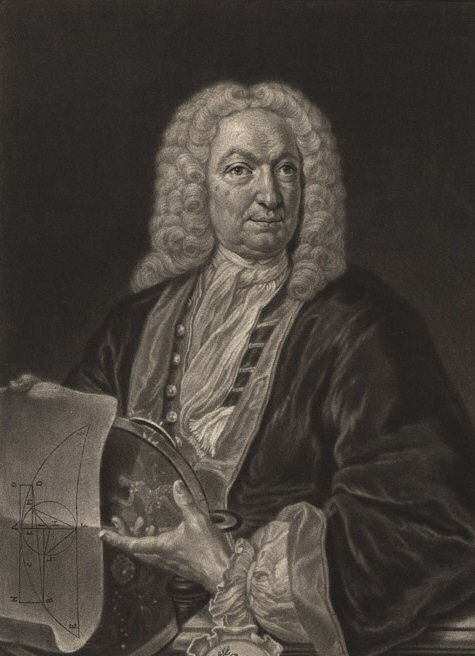



Major contributions
Bernoulli was an early and persuasive advocate of Leibnizian calculus. He worked on problems that today fall under calculus of variations and the theory of curves, and he applied differential techniques to physical questions. His investigations helped shape methods for solving differential equations and optimization problems; several classical problems of the late 17th and early 18th centuries were solved or clarified through his work.
Teaching, students and influence
Johann is widely remembered as a teacher as well as a researcher. Among his pupils was the young Leonhard Euler, whom he encouraged in analysis and who went on to become one of the greatest mathematicians. Johann's clear expositions and published lessons played an important role in transmitting calculus techniques to the next generation.
Family and professional context
Mathematics ran in his family: his brother Jacob (Jakob) Bernoulli and his son Daniel Bernoulli were also notable mathematicians. The Bernoulli household became a European center of mathematical exchange, marked by both close collaboration and intense rivalry. Johann maintained extensive correspondence with other scholars and participated in contemporary debates about priority and foundations of the new calculus.
Legacy and notable facts
Johann Bernoulli's teaching and writings helped institutionalize infinitesimal methods in continental mathematics. His influence is visible in the work of his students and descendants, and in how analytical techniques developed through the 18th century. Modern histories of calculus and classical mechanics frequently cite his role as an expositor and problem-solver during the formative years of mathematical analysis.
Selected themes and topics
- Calculus of variations and classical optimization problems
- Applications of differential calculus to physics and geometry
- Teaching, textbooks and mathematical correspondence
- The Bernoulli family as a mathematical dynasty
Related articles
Author
AlegsaOnline.com Johann Bernoulli Leandro Alegsa
URL: https://en.alegsaonline.com/art/50506