
Leonhard Euler: Life, Work, and Legacy
Comprehensive overview of Leonhard Euler, the Swiss mathematician and physicist: biography, major contributions, notation, applications, and lasting influence on mathematics and science.
Overview
Leonhard Euler (1707–1783) was a Swiss-born mathematician and physicist whose research reshaped multiple fields of science. Born in Basel, he became one of the most prolific and influential scholars of the 18th century. Throughout a career spanning more than five decades he produced an enormous body of work that systematized methods, introduced notation still in use, and connected disparate branches of mathematical thought. He spent long periods working in leading European centers of science, including stints in St. Petersburg and Berlin.
Image gallery
10 Images




Major contributions and characteristics
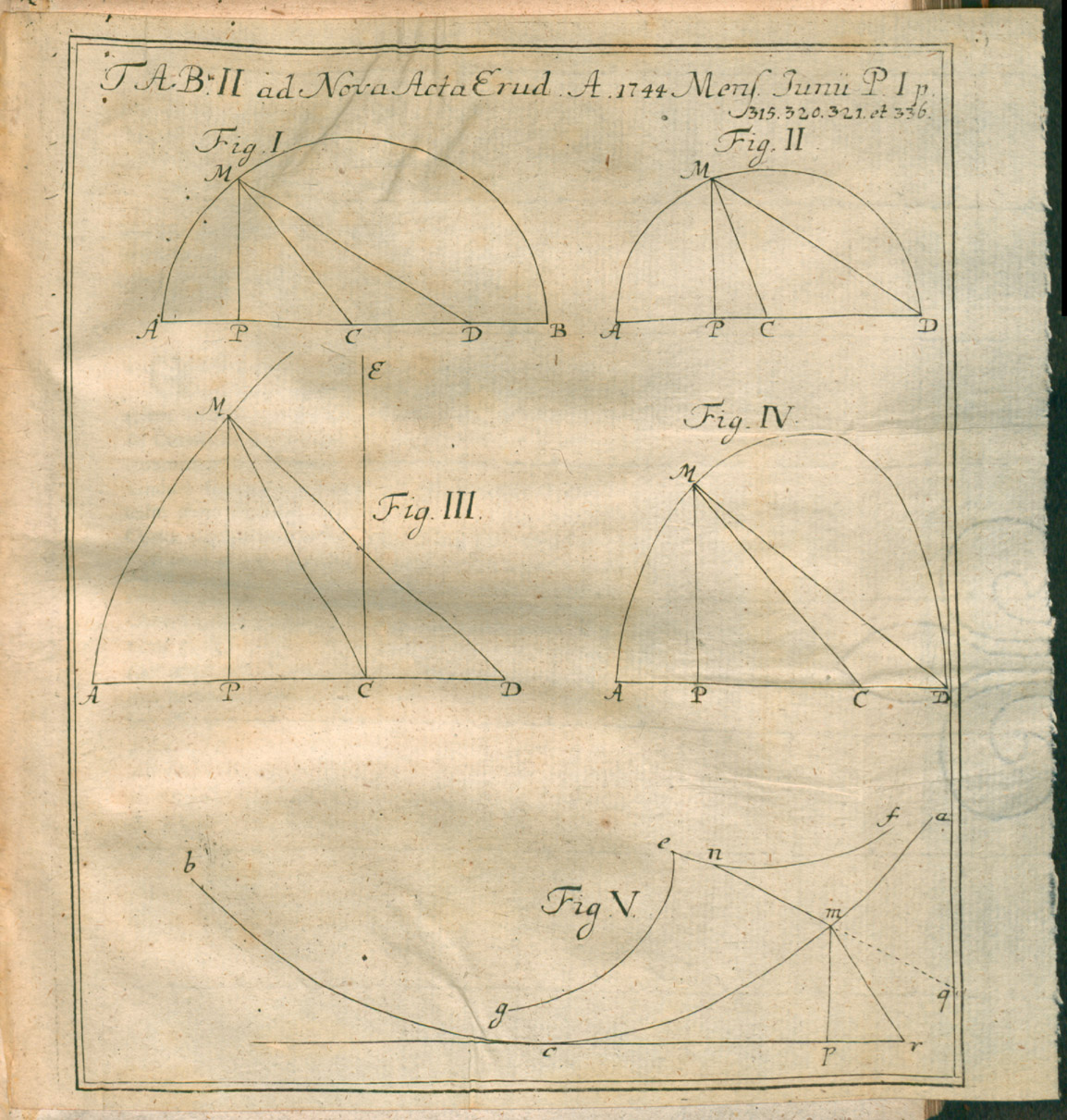
Euler made foundational advances across pure and applied mathematics. His work included rigorous development and widespread application of infinitesimal calculus, systematization of analytic methods, and early investigations that helped found the field later called topology. He contributed key ideas in number theory, graph theory, and complex analysis, and he was instrumental in popularizing symbols and notations that make modern mathematics readable and concise.
- Calculus and analysis: results on series, convergence, functions and the use of analytic methods.
- Number theory: work on partitions, primes and arithmetic functions.
- Graph theory and topology: early problems that exposed combinatorial structure in networks.
- Applied fields: classical mechanics, optics, fluid dynamics and astronomy where he developed equations and solution techniques.
Notation, exposition and influence
One of Euler’s lasting legacies is his role as a communicator: he introduced concise notations and standardized terminology that remain central to mathematics. Examples include much of the modern function notation, the symbol e for the base of natural logarithms, and widespread use of letters for variables and parameters. Beyond notation, Euler’s style—systematic, example-driven and computational—helped make advanced methods accessible to subsequent generations of scientists and engineers.
Life and career
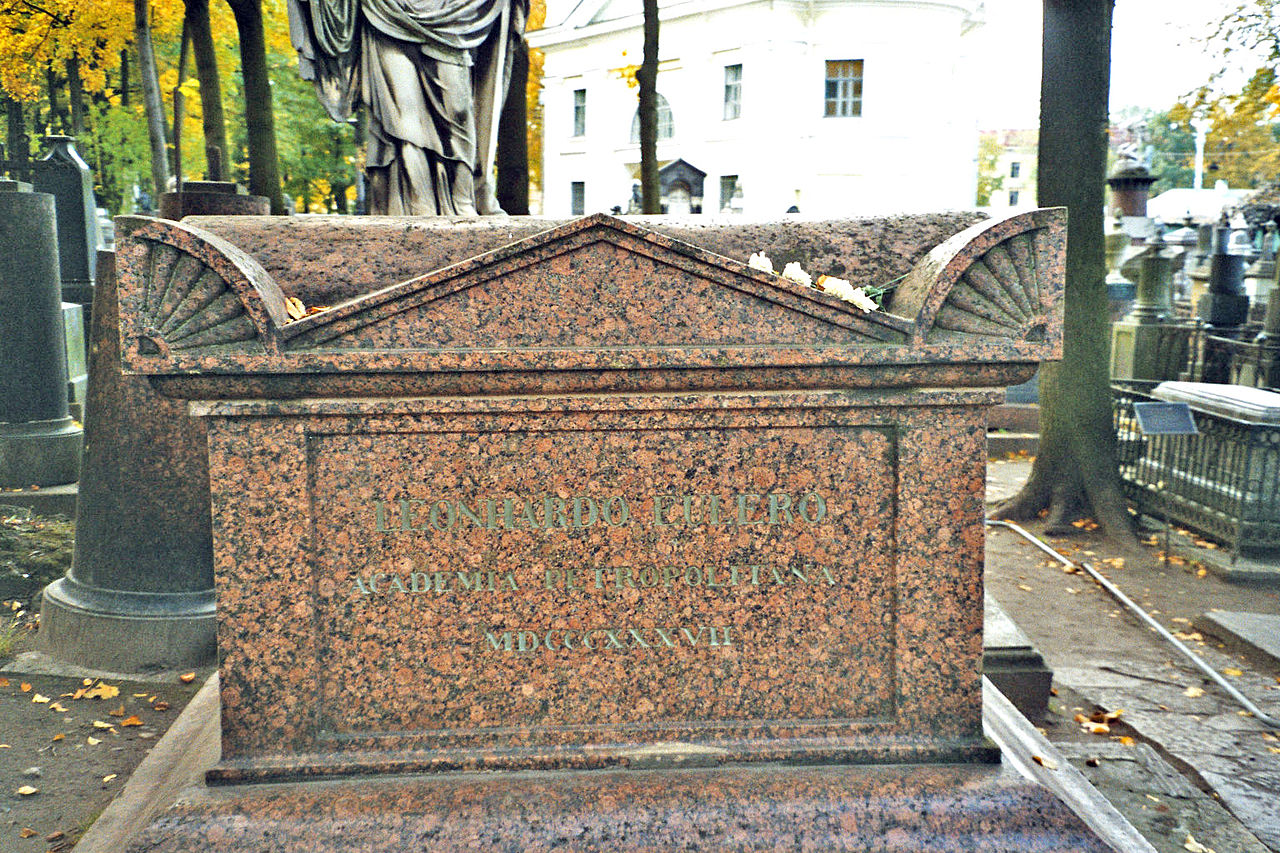
Euler trained in Basel and accepted positions that took him to the Russian Academy of Sciences in St. Petersburg and later to the Prussian Academy in Berlin. His professional life alternated between periods in Russia and Germany, where he collaborated with contemporaries and supervised students. Despite losing much of his sight later in life, Euler continued to produce influential work; his mental calculation and exposition skills allowed him to dictate numerous papers and treatises.
Applications, examples and distinctions
Euler’s methods underpin modern techniques in engineering, physics and computer science. His formulas and identities appear in problems ranging from the analysis of bridges and orbits to the behavior of waves and electrical circuits. He is often cited alongside other great mathematicians of his era for both depth and breadth of output, and his collected writings fill a large multi-volume corpus that remains a reference for historical and technical study.
Honors and remembrance
Euler’s reputation earned him numerous commemorations. He appears on national currency and postage, and scientific bodies and astronomical objects have been named in his honor. His stature among later mathematicians is reflected in repeated recommendations to study his original works to understand classical approaches and problem-solving techniques.
Further reading and references
For introductions, primary-source collections and biographies, consult specialist histories of mathematics and the published editions of Euler’s works. Basic biographical and thematic summaries are available through national academies and historical compilations.
Related links: Swiss connection, mathematician, physicist, Russia, Germany, calculus, topology, mathematical notation, mechanics, optics, fluid mechanics, astronomy, music theory, Laplace, Swiss franc, postage stamps, asteroid 2002 Euler.
Questions and answers
Q: Who was Leonhard Euler?
A: Leonhard Euler was a Swiss mathematician and physicist.
Q: Where did Euler spend most of his adult life?
A: Euler spent most of his adult life in Russia and Germany.
Q: What important discoveries did Euler make?
A: Euler made important discoveries in calculus and topology.
Q: What words did Euler create in mathematics?
A: Euler created many of the words used in math today and introduced the notation we use to write mathematical functions.
Q: What other fields did Euler work in?
A: Euler is also known for his works in mechanics, optics, fluid mechanics, astronomy, and music theory.
Q: How is Euler regarded in the history of mathematics?
A: Euler is considered to be the most important mathematician of the 18th century, one of the greatest mathematicians of all time, and one of the most prolific writing mathematicians.
Q: In what ways have Euler been celebrated and honored?
A: Euler was featured on the sixth series of the Swiss 10-franc bill, on numerous Swiss, German, and Russian postage stamps, and the asteroid 2002 Euler was named in his honor. He is also celebrated by the Lutheran Church on their Calendar of Saints on May 24.
Related articles
Author
AlegsaOnline.com Leonhard Euler: Life, Work, and Legacy Leandro Alegsa
URL: https://en.alegsaonline.com/art/124234
Sources
- snb.ch : "Swiss National Bank Website"
- wikidata.orgQ7604.html : wikidata.orgq7604.html
- authority.bibsys.no : 90743512
- bncatalogo.cl : 000209972
- catalogo.bne.es : XX893649
- catalogue.bnf.fr : cb12157666x
- data.bnf.fr : (data)
- cantic.bnc.cat : a10458827
- ci.nii.ac.jp : DA01184372
- dblp.org : 07/718
- d-nb.info : 118531379
- hls-dhs-dss.ch : 018751
- isni.org : 0000 0001 2124 5291
- id.loc.gov : n50010222
- kopkatalogs.lv : 000073695