
Johann Palisa (1848–1925): Austrian discoverer of asteroids
Johann Palisa was an Austrian astronomer who visually discovered 122 asteroids between 1874 and 1923. This article summarizes his life, methods, principal finds and lasting legacy.
Overview
Johann Palisa (6 December 1848 – 2 May 1925) was an Austrian astronomer born in Troppau in Austrian Silesia (today Opava in the Czech Republic). He built a reputation in the late 19th and early 20th centuries as one of the most prolific visual discoverers of small Solar System bodies. Over a career spanning several decades he identified 122 numbered asteroids, a total that placed him among the leading asteroid hunters of his era.
Image gallery
4 Images


Work and principal discoveries
Palisa made his first notable find, 136 Austria, in 1874 and continued discovering throughout his life, with his final numbered discovery recorded as 1073 Gellivara in 1923. His discoveries include a number of objects that later became important in studies of asteroid families, composition and orbital dynamics. Several of his best-known finds are listed below.
- 216 Kleopatra — an elongated, dog-bone–shaped main-belt asteroid now known for its unusual shape.
- 243 Ida — a main-belt asteroid that later became famous for carrying a tiny moon discovered by spacecraft imaging.
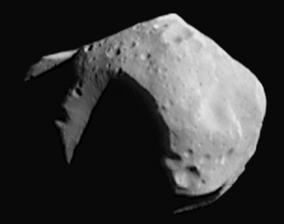
- 253 Mathilde — a dark, carbonaceous asteroid visited by a spacecraft flyby in the late 20th century.
- 324 Bamberga — a large and relatively bright main-belt asteroid studied for its reflective properties.
- 719 Albert — cataloged among near-Earth and related-interest objects; its classification has drawn attention in studies of orbital groups.
Methods and historical context
Palisa belonged to the generation of astronomers who discovered minor planets primarily by direct visual observation. Working with optical telescopes and careful comparison to star charts, he scanned the sky night after night for points of light that moved against the stellar background. His career bridged a technological shift: late 19th-century searches relied on the observer’s skill and patience, while photographic techniques gradually became dominant and automated searches later expanded discovery rates far beyond what was possible by eye.
Legacy and honors
Palisa’s long and productive career left a clear imprint on planetary astronomy. In recognition of his contributions an asteroid was named 914 Palisana, and a lunar impact feature is known as the Palisa crater — honors that reflect his standing among contemporaries and later generations of astronomers (Palisa crater). His systematic approach and the large number of objects he added to catalogs helped build the foundation for statistical studies of the asteroid population.
Though the tools and methods used to discover asteroids have changed dramatically, Palisa’s work remains an example of meticulous visual observing and cataloging. Modern researchers continue to study many of the objects he found, applying spectroscopy, spacecraft observations and orbital analysis to learn about their composition, history and role in the Solar System.
Questions and answers
Q: Who was Johann Palisa?
A: Johann Palisa was an Austrian astronomer born in Troppau in Austrian Silesia (now in the Czech Republic).
Q: What was Johann Palisa known for?
A: Johann Palisa was known for being a good finder of asteroids, finding 122 in all from 136 Austria in 1874 to 1073 Gellivara in 1923.
Q: Can you name some notable asteroids found by Johann Palisa?
A: Some notable asteroids found by Johann Palisa include 153 Hilda, 216 Kleopatra, 243 Ida, 253 Mathilde, 324 Bamberga, and the Amor asteroid 719 Albert.
Q: Has anything been named after Johann Palisa?
A: Yes, the asteroid 914 Palisana and the Palisa crater on the Moon were named in his honour.
Q: When was Johann Palisa born?
A: Johann Palisa was born on December 6th, 1848.
Q: When did Johann Palisa die?
A: Johann Palisa died on May 2nd, 1925.
Q: What was Johann Palisa's nationality?
A: Johann Palisa was Austrian.
Related articles
Author
AlegsaOnline.com Johann Palisa (1848–1925): Austrian discoverer of asteroids Leandro Alegsa
URL: https://en.alegsaonline.com/art/50512
Sources
- astrometrica.at : "Johann Palisa, the most successful visual discoverer of asteroids"
- link.springer.com : Dictionary of Minor Planet Names – (320) Katharina
- link.springer.com : Dictionary of Minor Planet Names – (321) Florentina
- link.springer.com : Dictionary of Minor Planet Names – (996) Hilaritas
- adsabs.harvard.edu : "Anzeige des Todes von Johann Palisa"