
James Branch Cabell
American writer (1879–1958) noted for elegant, ironic fantasy set in the imaginary province of Poictesme, best known for the controversial novel Jurgen and a long cycle of linked works.
James Branch Cabell (1879–1958) was an American novelist and short-story writer whose essays and imaginative tales won attention for their ornate language, wit, and subtle satire. He worked in the decades around World War I and the interwar years, producing a distinctive body of fiction that recasts myth and medieval romance in a modern, often ironic light. His surname is pronounced "CAB-ble".
Cabell was born and spent much of his life in Richmond, Virginia, where he moved in local literary circles before achieving wider notice. Over the course of his life and career he experimented with forms ranging from short stories and essays to long linked novels. He cultivated a cultivated, baroque prose style that both celebrated and gently mocked heroic narratives.
Image gallery
4 Images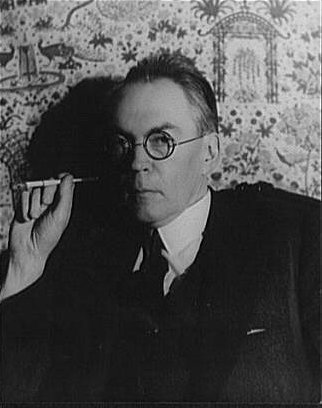


Major works and setting
His best-known achievement is a sequence of interrelated novels and tales set in the fictional province of Poictesme. Collected as a loosely unified cycle, these books create recurring characters and themes about fate, desire, and reputation. The novel Jurgen, subtitled a Comedy of Justice, brought him fame and notoriety and remains the single work most often cited by readers and critics.
Style and themes
Cabell’s writing blends elements of romance, allegory, and parody. He used classical and medieval motifs to probe contemporary anxieties about destiny, identity, and social pretension. Critics note his delight in wordplay, philosophical asides, and an ambivalent view of heroism that set his fantasy fiction apart from straightforward genre tales.
In the 1920s Jurgen attracted an obscenity prosecution that generated publicity; the book was vigorously defended and ultimately the matter was resolved without long-term legal penalties, but the episode shaped how Cabell was perceived by the reading public and reviewers.
Today Cabell’s reputation fluctuates: for some he is a cult figure whose ironic, elegiac fictions anticipate modern fantasy and metafiction; for others his dense, allusive prose is a barrier. Scholars and enthusiasts continue to reexamine his work for its influence on 20th-century imaginative literature.
Related articles
Author
AlegsaOnline.com James Branch Cabell Leandro Alegsa
URL: https://en.alegsaonline.com/art/49188
Sources
- library.vcu.edu : James Branch Cabell
- library.vcu.edu : Friends and Rivals: James Branch Cabell and Ellen Glasgow
- ead.lib.virginia.edu : "A Guide to the James Branch Cabell Papers, 1860s-1960s", James Branch Cabell Library. Retrieved on 2007-09-10