
Jadwiga of Poland (1374–1399): King, Reformer, and Saint
Jadwiga was crowned King of Poland as a child in 1384, married Lithuanian Grand Duke Jogaila, promoted education and Christianity, and was canonized in 1997 for her piety and public works.
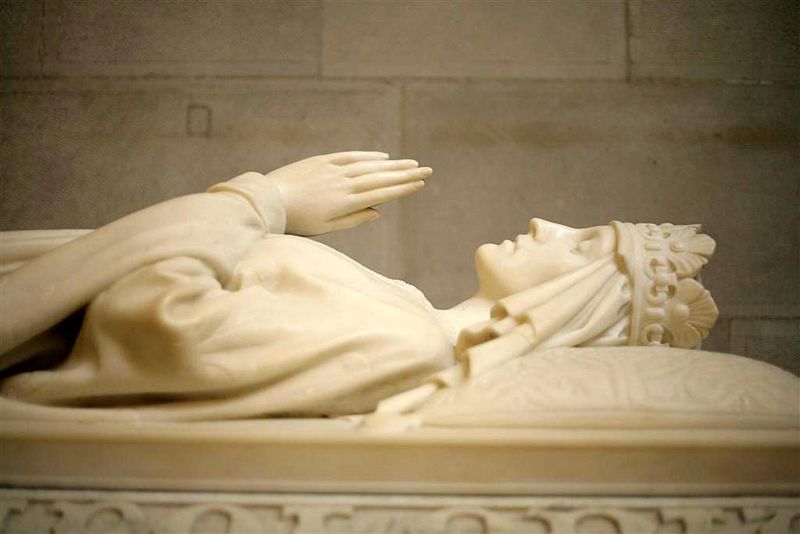
Jadwiga of Poland (born c. 1374, died 17 July 1399) was one of late medieval Poland’s most influential rulers. Unusually for a female sovereign of her time, she was crowned with the title of "king" rather than "queen" to underline her status as the independent monarch of the realm. She acceded to the Polish throne in October 1384 while still a child and carried out a brief but consequential reign that shaped Central European politics, religion, and education.
Image gallery
10 Images


Coronation, title, and status
In 1384 Jadwiga received a royal coronation that used the masculine form of the title, reflecting legal and political considerations that allowed a woman to exercise full royal authority. Her Latin style emphasized her role as sovereign and heir to various Polish lands. She was the youngest daughter of King Louis I of Hungary and came to rule Poland in a period of dynastic transition, when the kingdom sought a stable native authority.
Marriage and the Polish–Lithuanian connection
Jadwiga’s marriage was the linchpin of a major diplomatic realignment. In 1386 she married the Grand Duke of Lithuania, Jogaila (who took the Christian name Władysław Jagiełło on baptism), an alliance arranged to bring Lithuania into the western Christian sphere and to secure mutual defenses. Their union initiated a long-lasting political association between Poland and Lithuania that would evolve over the following centuries. The marriage is often associated with the agreements that led to Lithuania’s formal conversion to Christianity and stronger ties with Poland.
Patronage, reforms, and public works
Jadwiga is remembered for her active patronage of the Church, educational institutions, and charitable causes. She supported the restoration of academic life in Kraków and provided funds to churches and hospitals. Her reign emphasized the promotion of learning and the reinforcement of ecclesiastical structures, contributing to the cultural life of Poland. These initiatives made her a popular figure in both contemporary chronicles and later national memory.
Death and succession
Jadwiga died in 1399 following complications in childbirth. Her husband continued as king of Poland after her death, reigning as Władysław II Jagiełło. The dynastic and political consequences of their marriage endured, setting the stage for the multiethnic Polish–Lithuanian state that emerged in the following centuries. Her early death cut short a reign that had already enacted lasting change.
Legacy and sanctification
Jadwiga’s reputation combined royal authority with personal piety and public charity. Over later centuries she became an emblematic figure in Polish cultural and religious memory. In the 20th century the Roman Catholic Church recognized her life of Christian service and role in supporting the Church; she was canonized by Pope John Paul II. Contemporary commemorations recall her as a patron of education and an important agent in the Christianization and political alignment of Central Europe.
Notable facts
- She was crowned at a young age with the title of king to signify sovereign power.
- Her marriage to the Lithuanian ruler linked two major medieval states and influenced Lithuania’s conversion to Christianity; see Lithuanian Grand Duke Jogaila.
- She supported the revitalization of academic life in Kraków and funded churches and hospitals.
- Jadwiga was canonized in 1997; information about her sainthood can be found via official church sources and writings of Pope John Paul II.
Jadwiga’s short reign combined dynastic diplomacy, cultural patronage, and religious engagement. Because of these elements, historians continue to regard her as a pivotal figure in the formation of medieval Central Europe and in the shared history of Poland and Lithuania.
Related articles
Author
AlegsaOnline.com Jadwiga of Poland (1374–1399): King, Reformer, and Saint Leandro Alegsa
URL: https://en.alegsaonline.com/art/49071
Sources
- biographybase.com : "Jadwiga of Poland Biography"
- commons.wikimedia.org : Jadwiga Andegaweńska