
Jacques Friedel: French physicist and materials scientist
Jacques Friedel (1921–2014) was a French physicist and materials scientist known for work on defects in solids, Friedel oscillations and the theory of metals; he led the French Academy of Sciences.
Jacques Friedel was a leading French physicist and materials scientist whose research helped shape modern condensed-matter physics and materials science. He is best known for theoretical descriptions of how conduction electrons respond to impurities and defects, notably Friedel oscillations, and for relations between scattering phase shifts and electronic counts. Friedel combined analytical theory with close attention to physical experiments and to problems of real materials, earning international recognition and long-term influence on both fundamental and applied work.
Image gallery
1 Image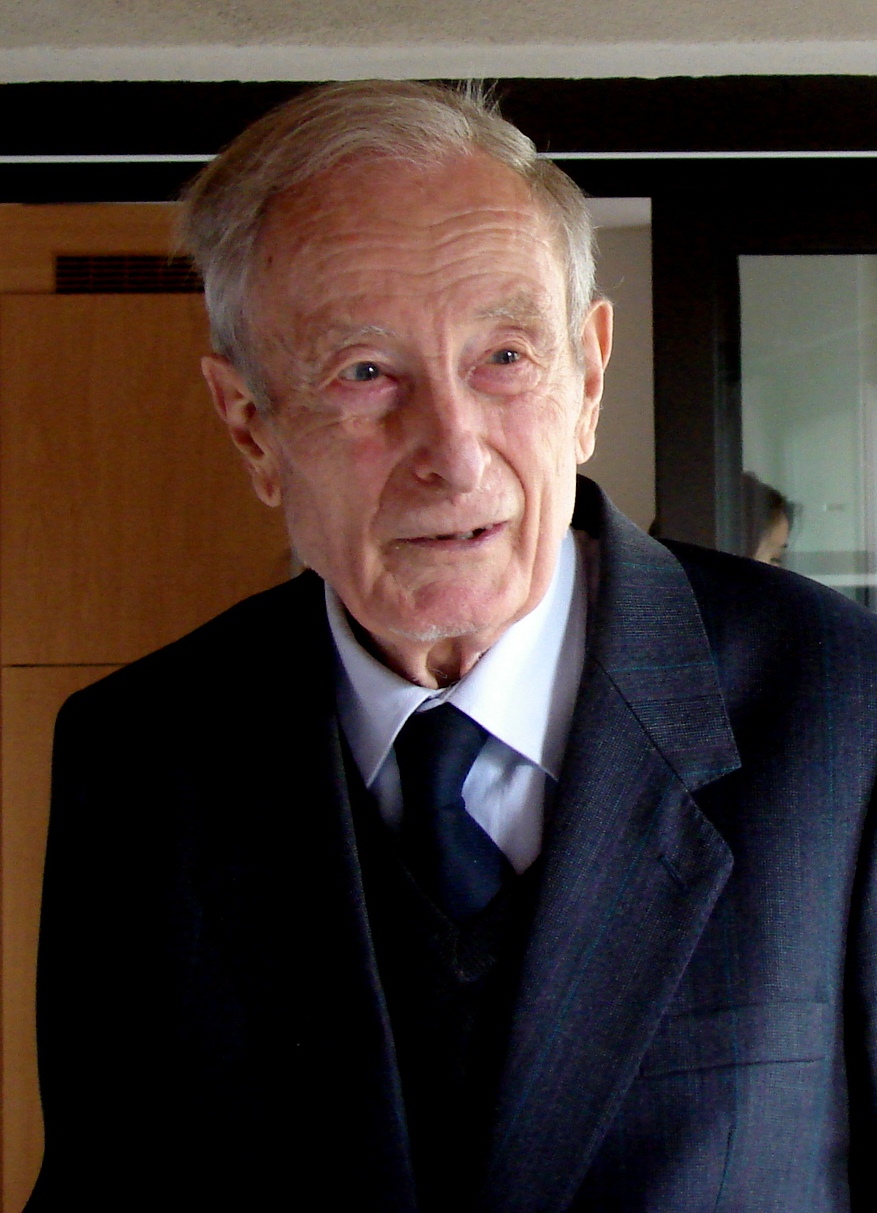
Scientific contributions
Friedel's work addressed the electronic structure of metals, scattering of electrons by point defects, and the role of dislocations and grain boundaries in materials. Important concepts associated with his name include the spatial electron-density modulations near impurities, the sum rules that relate scattering to localized charge, and insights into how defects influence electrical and mechanical behavior. These ideas remain central in studies of surfaces, low-dimensional systems and nanostructures.
- Friedel oscillations — oscillatory variations in electron density induced by an impurity, relevant for surface and nanoscale physics.
- Friedel sum rule — a connection between scattering phase shifts and the number of electrons involved in binding by an impurity, widely used in condensed-matter theory.
- Work on defects such as dislocations and grain boundaries that influence mechanical strength, electrical transport and alloy behavior.
Career and education
Born in Paris, Friedel came from a family with academic traditions and trained at the prestigious École Polytechnique in the mid-1940s. He held posts at several French institutions and research centers and spent much of his career working to bridge theory and experiment in materials science. He was active as an educator and mentor, supervising students and helping to establish research directions in French laboratories and at multiple universities.
Throughout his career Friedel was recognized for both original theoretical contributions and for his efforts to organize and lead scientific activities. He served in senior institutional roles and participated in national discussions on research priorities and education.
Recognition and leadership
Friedel received international honors and memberships, reflecting the broad impact of his work. He was elected a Foreign Member of the Royal Society and served as a leader of scientific bodies in France. From 1992 until 1994 he was President of the French Academy of Sciences, where he advocated for interdisciplinary research and for stronger links between basic science and technological applications.
Publications, teaching and legacy
Friedel published more than two hundred journal articles and numerous reviews that continue to be cited in condensed-matter and materials research. He also made contributions as a teacher and laboratory director, shaping curricula and mentoring generations of scientists. His ideas are still taught in courses on solid-state physics, surface science and materials engineering, and they inform contemporary work on impurities in semiconductors, nanoscale devices and correlated electron systems.
In addition to his scientific roles, Friedel contributed to institutional development and public understanding of science, promoting rigorous theoretical analysis tied to experimental reality and technological needs. He is remembered for clear physical intuition, a broad view of materials problems, and a commitment to education.
He died in Paris on 27 August 2014 of pneumonia, aged 93. His career left a durable imprint on condensed-matter theory and materials research worldwide, and many concepts that bear his name remain central tools for scientists and engineers. For further biographical and institutional information see sources at the relevant research organizations and academy pages and materials science histories available through scholarly collections and archives.
Friedel's role as a materials scientist and public figure in French science reflected a lifelong commitment to advancing understanding of the solid state and to training successive generations of researchers.
Related articles
Author
AlegsaOnline.com Jacques Friedel: French physicist and materials scientist Leandro Alegsa
URL: https://en.alegsaonline.com/art/49044