
Ivar Aasen: Architect of a Norwegian Written Language
Ivar Aasen (1813–1896) was a Norwegian philologist and lexicographer who created a written standard drawn from rural dialects, the foundation of today's Nynorsk and a central figure in Norway's language history.
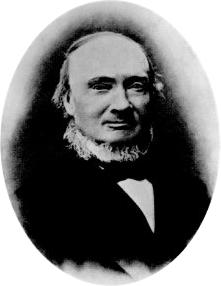
Ivar Aasen (5 August 1813 – 23 September 1896) was a Norwegian philologist and lexicographer best known for developing a written form of Norwegian based on the nation's rural spoken varieties. Working in the mid‑19th century, Aasen sought to produce a national written standard that reflected how ordinary people across Norway actually spoke, rather than the Danish-influenced written language then used in official life.
Image gallery
5 Images



Overview and aims
Aasen travelled widely to study dialects and used comparative methods to identify common grammatical structures and vocabulary. His goal was not mere preservation of local speech but the construction of a usable, systematic written language rooted in Norway's vernaculars. That effort produced what he initially called "Landsmål," later evolving into what is commonly known today as Nynorsk.
Method and major works
Rather than relying only on classical scholarship, Aasen combined fieldwork with analysis. He collected words and expressions from farmers, fishermen and rural communities, comparing forms from different regions to establish patterns. He published a grammar and a dictionary that summarized his findings and provided rules and vocabulary for writers and teachers. These works made his reconstructed written form accessible and teachable.
Historical context
For centuries the official written standard in Norway had been influenced by Danish, a consequence of the historical union with Denmark until 1814. As Norway sought cultural and political independence, language became a central symbol of identity. Aasen wanted a written variety that resembled the spoken Norwegian of many communities and could serve as an alternative to Danish-influenced written norms. The dominance of Danish meant that only parts of the population — often the middle class and upper classes — had fluency in the official written idiom, widening a cultural gap that Aasen's work aimed to bridge. His project thus intersected with broader movements for national self-definition after the union with Denmark.
Legacy and reception
Aasen's ideas inspired a language movement that adopted his forms for literature, education and administration in parts of Norway. Reception was mixed: some embraced a written standard derived from native dialects as an expression of national identity, while others preferred gradual adaptation of Danish forms (later known as Bokmål). Over time, Aasen's reform contributed to a lasting dual-language situation in Norway, with Nynorsk and Bokmål both officially recognized.
Importance and distinctions
- Scientific contribution: Aasen is remembered as a pioneer of dialectology and a practical language planner.
- Cultural impact: His work affected literature, education and public debate about identity and language policy.
- Contemporary status: Nynorsk remains an official written standard and is actively used in publishing and schooling alongside Bokmål.
For further reading about Aasen's life and publications see introductory resources on his biography and his role in Norwegian language history: Danish influence, the historical union with Denmark, and modern discussions of language policy in Norway (social context, class and literacy).
Related articles
Author
AlegsaOnline.com Ivar Aasen: Architect of a Norwegian Written Language Leandro Alegsa
URL: https://en.alegsaonline.com/art/48702
Sources
- commons.wikimedia.org : Ivar Aasen