
Isosceles triangle
A triangle with two equal sides; this article explains definitions, key properties, basic formulas, historical background and common uses in geometry, architecture and polyhedral geometry.

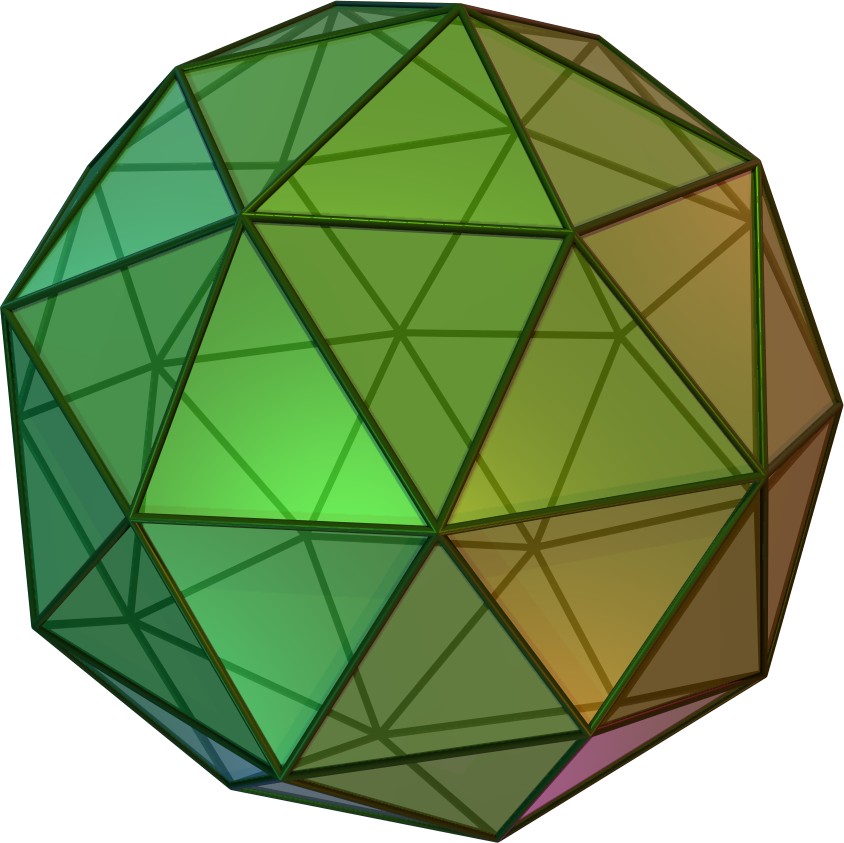
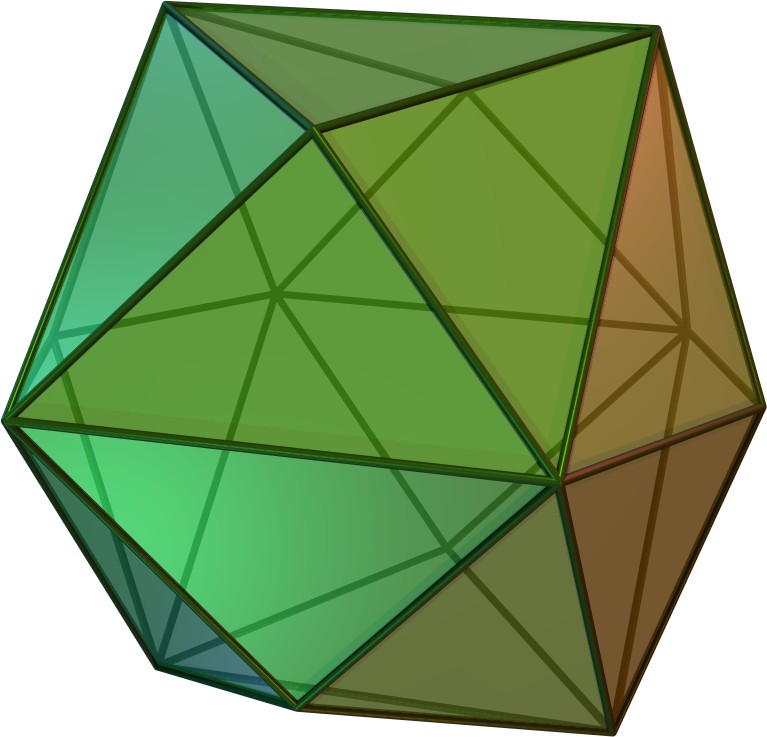
An isosceles triangle is a plane figure in which two sides have the same length. Authors vary in whether the term excludes or includes equilateral triangles: some define it as having exactly two equal sides, while others allow at least two equal sides and therefore treat an equilateral triangle as a special case. For general background see geometry and the entry for triangle. Common named examples are the isosceles right triangle and the golden triangle; faces of some bipyramids and certain Catalan solids are also isosceles.
Image gallery
8 Images




Basic parts and notation
In a typical description the two equal sides are called the legs and the unequal side is called the base. The vertex where the legs meet is often called the apex. The two angles opposite the equal sides are the base angles and, in any nondegenerate isosceles triangle, these base angles are congruent and always acute. The axis of symmetry is the line through the apex that is the perpendicular bisector of the base; it plays a central role in many of the triangle's properties.
Key geometric properties
The isosceles triangle theorem and its converse are foundational: equal sides imply equal base angles, and equal base angles imply equal sides. The altitude from the apex has several coincident roles: it is simultaneously an altitude, a median to the base, an angle bisector of the vertex angle, and the perpendicular bisector of the base. Important centers — the circumcenter, incenter and centroid — all lie on the symmetry axis, though at different distances from the base except in the equilateral case where they coincide.
Simple formulas
When the legs both have length a and the base has length b, elementary formulas express the height, area and perimeter in terms of a and b. Dropping the altitude from the apex divides the base into two equal segments of length b/2 and gives the height h by h = sqrt(a^2 - (b/2)^2) when the triangle is nondegenerate. The area can then be written as A = (1/2) b h = (b/4) sqrt(4a^2 - b^2). The perimeter is P = 2a + b. These relations are convenient in construction, coordinate placement and engineering calculations.
History and mathematical development
Isosceles triangles appear early in the study of plane figures. Ancient mathematicians used them in practical mensuration and in theorems recorded in classical texts. The formal properties became part of Euclidean geometry: many elementary proofs about congruence and symmetry use isosceles triangles as basic building blocks. Over time they have remained a common classroom subject for teaching congruence, similarity and trigonometry.
Uses, examples and notable distinctions
Isosceles triangles are prominent in design and construction because their symmetry gives both structural and aesthetic advantages. They appear in pediments, roof gables and truss forms, and as repeating motifs in tiling and ornament. In mathematics and crystallography they occur as face shapes of certain polyhedra and as elements of geometric constructions; the golden isosceles triangle relates to pentagonal symmetry and the golden ratio. The triangle may be classified by its apex angle as acute, right or obtuse; that classification depends only on the angle between the equal sides, while the two base angles remain acute. For further technical material see treatments of the equilateral case and detailed discussions of angles (acute versus obtuse) and polyhedral faces (Catalan solids).
Useful observations and problems
- The perpendicular from the apex is the triangle's line of symmetry; reflecting the triangle across this line produces the same shape.
- Because two sides are equal, many congruence methods (for example side-angle-side) reduce to simpler verifications in isosceles cases.
- Coordinate placement is straightforward: placing the base on a horizontal axis and centering it at the origin yields symmetric coordinates for easy algebraic manipulation.
For visual reference and worked examples consult general geometry resources or specialized articles on triangular constructions and symmetry. See also related entries on triangles and polygonal symmetry (geometry, triangle).
Related articles
Author
AlegsaOnline.com Isosceles triangle Leandro Alegsa
URL: https://en.alegsaonline.com/art/48490