
Irula language
A Dravidian language of southern India spoken by the Irula people, closely related to Tamil and Malayalam, with distinct grammar, oral traditions, and a vulnerable sociolinguistic status.
Overview
The Irula language is spoken by the Irula tribal community native to parts of southern India, primarily in the Nilgiri Hills and neighbouring districts of Tamil Nadu and Kerala. It is a member of the Dravidian family and is generally considered distinct from the dominant regional languages, although many Irula speakers are bilingual in Tamil or Malayalam. The language is best known for its oral transmission and close connection to traditional ecological knowledge and community life.
Image gallery
1 Image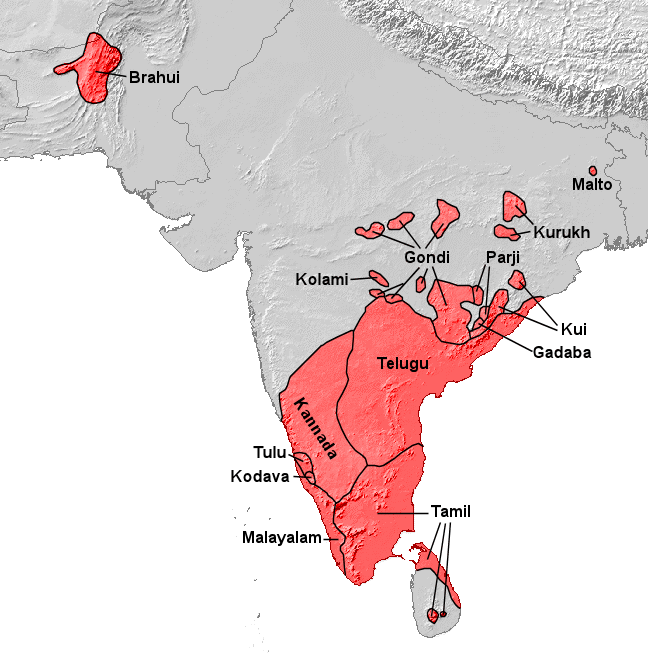
Classification and linguistic features
Linguists place Irula within the southern branch of the Dravidian languages, showing affinities with the Tamil–Malayalam group while retaining unique features. Like other Dravidian languages, Irula is primarily agglutinative: words are formed with a linear sequence of suffixes that express case, tense, mood and other grammatical relations. Basic word order is subject–object–verb, and the language relies on postpositions rather than prepositions.
Phonology and script
Irula phonology shares the common Dravidian inventory of stops, nasals and retroflex consonants and a vowel system similar to neighbouring languages. Traditionally the language has been oral; when written, community members and researchers usually adopt the Tamil script (or sometimes Malayalam script) to represent Irula sounds. There is no widely standardized orthography in general use.
History and sociolinguistic context
The Irula community has long inhabited forested and hilly zones, practicing hunting, gathering and small-scale agriculture. Over time, increased contact with surrounding populations, education in regional languages, and socio-economic change have affected language use. Many younger Irula speakers are bilingual or primarily use Tamil or Malayalam for schooling and employment, which influences language maintenance.
Uses, vitality and documentation
Irula functions mainly in home and community contexts, ceremonial speech, and specialized domains such as knowledge about flora, fauna and medicinal plants. Its vitality is vulnerable: transmission to younger generations is uneven, and community-driven and academic documentation efforts aim to record vocabulary, narratives and grammatical patterns. Educational and cultural programs sometimes use bilingual materials to support language maintenance.
Distinctive notes
- Irula should not be conflated with nearby tribal languages; it is a separate speech variety with its own identity.
- Because it has been primarily oral, pronunciation, idioms and storytelling are important carriers of cultural knowledge.
- Research continues into its internal dialects, historical development and relationship to Tamil and Malayalam.
Related articles
Author
AlegsaOnline.com Irula language Leandro Alegsa
URL: https://en.alegsaonline.com/art/48275
Sources
- unicode.org : "Proposal to add two numbers for the Phoenician script" · archive.org
- books.google.com : Numerical Notation: A Comparative History
- books.google.com : Numerical Notation: A Comparative History
- omniglot.com : "Burmese/Myanmar script and pronunciation"