
Isan language
Isan is a group of closely related Tai dialects spoken in northeastern Thailand and nearby areas; closely related to Lao, used mainly in informal contexts and written most often with the Thai script.
The term Isan refers to a cluster of closely related regional speech varieties native to the Thai Northeast (Isan) region. These varieties are often treated as dialects rather than as a single standardized language. Speakers across the region can generally understand one another despite local differences. The group is intimately related to the Lao language of neighboring Laos and shares core grammar, tones, and much vocabulary with other Tai languages.
Image gallery
10 Images
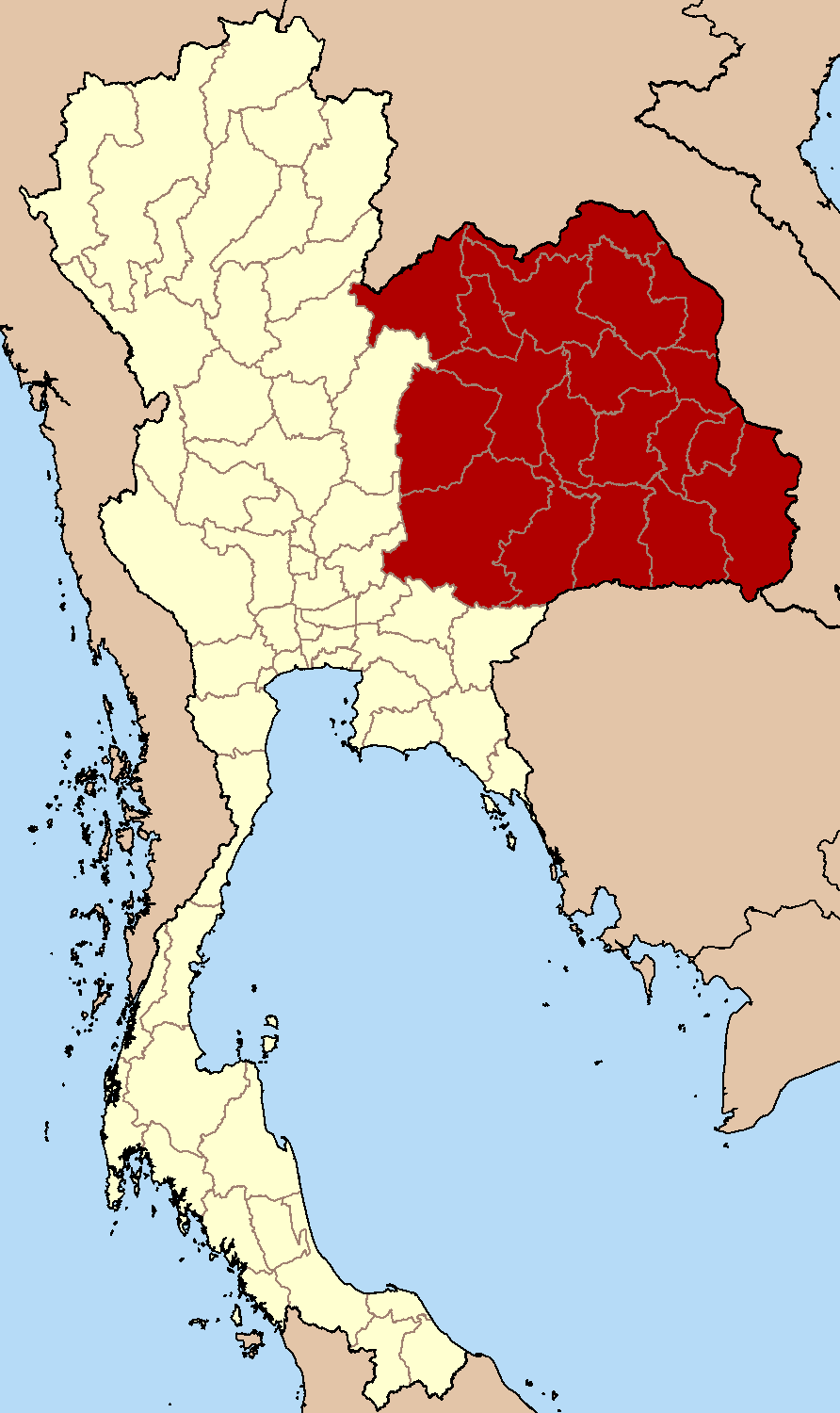


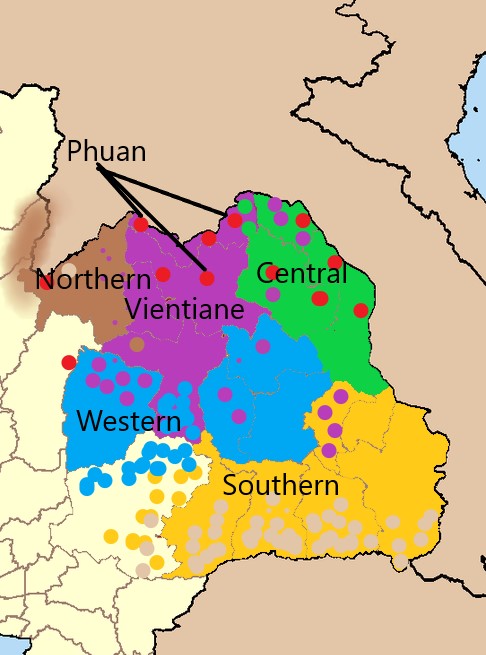
Characteristics
Isan varieties are tonal and analytic, like other Tai languages: pitch contrasts help distinguish words, and word order and particles are central to grammar. Lexically and structurally they resemble Lao; many everyday words are identical or only slightly different from Lao equivalents. Regional variation exists in pronunciation, tone contours, and some lexical items, but mutual intelligibility among Isan varieties and with Lao remains high. Language use is predominantly oral; formal registers and government, education, and print media generally employ Central Thai.
History and development
The speech forms grouped as Isan descend from Tai languages that spread across mainland Southeast Asia. Centuries of movement, settlement, and interaction with Mon-Khmer (Austroasiatic) and Central Thai speakers shaped the region’s speech. Political boundaries placed many Lao-speaking communities inside what is now modern Thailand; over time those communities developed a shared regional identity labeled Isan. National language policies in Thailand promoted Central Thai in schools and administration, producing extensive bilingualism and influence of Thai vocabulary and pronunciation on local speech.
Writing and status
Isan has no single standardized orthography. When written, Isan is most often rendered with the Thai alphabet because that script is the national writing system. In some contexts and among scholars or cross-border communities, the closely related Lao script may appear. Written use remains limited compared with spoken use, and Isan has no official status within Thailand: Central Thai is the official language of government and education, while Isan serves primarily in everyday and cultural domains.
Uses, culture, and importance
Isan is the first language for many people in northeastern Thailand — commonly estimated at around 20 million speakers — and is central to regional identity, folk literature, and musical traditions such as mor lam and other local performance arts. It is widely used in homes, markets, festivals, and rural communities. Because of its closeness to Lao, speakers on both sides of the border often understand one another; linguistic continuity across the Mekong River underscores cultural ties despite national borders.
Relations and distinctions
Scholars and speakers differ on whether to describe Isan as a dialect of Lao, a group of Lao dialects, or as regional varieties of Thai heavily influenced by Lao. The distinctions reflect linguistic criteria as well as politics and identity: some view Isan as a Lao variety within Thailand, while official classifications in Thailand frequently treat it as part of the broader Thai dialect continuum. For further reading on regional variation and classifications, see materials that survey Tai languages and regional linguistics: dialects overview and regional studies of the Northeast of Thailand.
- No single official standard; Thai script commonly used for writing.
- High mutual intelligibility with Lao, shared cultural traditions.
- Dominant in informal contexts; Central Thai used for official functions.
Questions and answers
Q: What is Isan language?
A: Isan language is a group of closely related dialects spoken in Northeast Thailand.
Q: Is Isan language only used for informal communication?
A: Yes, Isan language is mostly used for informal communication.
Q: How many dialects does Isan consist of?
A: Isan consists of a number of dialects, but no official language.
Q: What is the writing system used for Isan language?
A: When Isan is written down, the Thai alphabet is mostly used, but the Lao alphabet is also used rarely.
Q: How many people speak Isan language as their first language?
A: About 20 million people speak Isan language as their first language.
Q: What percentage of the speakers of Laotian understand Isan language?
A: About 80% of the speakers of Laotian understand Isan language.
Q: What is the percentage of the Thai population that speaks Isan language?
A: One-third of the population of Thailand speaks Isan language.
Related articles
Author
AlegsaOnline.com Isan language Leandro Alegsa
URL: https://en.alegsaonline.com/art/48332