
Iron Range: Minnesota’s Lake Superior iron-mining districts
A concise overview of the Iron Range: location, geology, history, mining methods, economic and cultural impact, and environmental challenges tied to taconite pellet production.
Overview
The Iron Range describes a set of iron-mining districts near Lake Superior in northeastern Minnesota. These districts developed around widely distributed iron formations and became a major source of ore for the American steel industry. The phrase commonly refers to several contiguous ranges and the towns, railroads, mills, and communities that grew with them. For regional context see mining districts and the nearby Lake Superior.
Image gallery
4 Images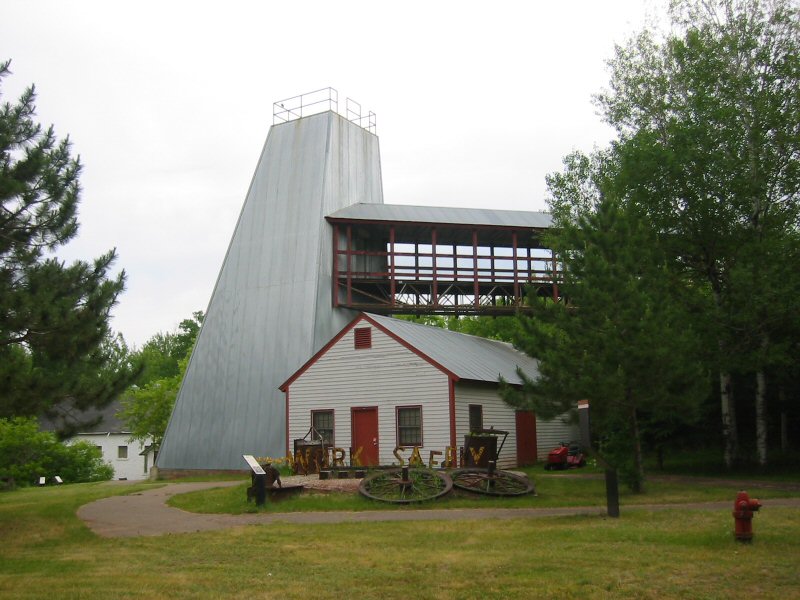


Geology and ore
Bedrock iron deposits in the area include natural magnetite and hematite and, more recently, lower-grade taconite. Taconite is a hard, silica-rich rock in which finely dispersed iron is recovered by grinding and concentration. Concentrated iron-bearing material is commonly formed into compact pellets to improve handling and blast-furnace performance; further information on iron and ore types can be found at iron resources and on pelletizing at pellet production.
Major ranges and characteristics
- Mesabi Range – the largest and most productive, historically the heart of iron mining in the region.
- Vermilion Range – earlier high-grade ore deposits that spurred early development.
- Cuyuna Range – known for smaller deposits and later tourism after mining declined.
- Gunflint Range – geologically related outcrop across the region.
These ranges differ in age, ore quality and mining methods. High-grade ores favored early underground mining, while lower-grade bodies led to open-pit extraction and industrial processing.
History, labor and communities
Commercial mining accelerated in the late 19th and early 20th centuries as rail lines, ports on Lake Superior and steel mills expanded. The work attracted waves of immigrants and formed tight-knit communities centered on company towns and union halls. Mining shaped local culture, politics and identity for generations.
Mining methods, economy and environment
Modern operations emphasize beneficiation of taconite, pelletizing, and shipping. Open-pit mines, concentration plants and pelletizing facilities are common, along with rail and port infrastructure. The Iron Range remains economically important, though employment has fluctuated with global demand and automation. Environmental concerns — tailings management, water quality, and landscape reclamation — have driven regulations and reclamation programs aimed at restoring mine lands and supporting post-mining uses such as recreation and wildlife habitat.
Related articles
Author
AlegsaOnline.com Iron Range: Minnesota’s Lake Superior iron-mining districts Leandro Alegsa
URL: https://en.alegsaonline.com/art/48225